

Signatera™ for Bladder Cancer
A personalized way to monitor bladder cancer over time.
After bladder cancer treatment, follow-up can include cystoscopy, scans, urine testing and office visits. Even with a clear plan, many patients still feel anxious between appointments.
Signatera™ is a personalized blood test that looks for small pieces of tumor DNA (ctDNA) in your blood.
Questions Signatera™ may help support in bladder cancer care
When used alongside your doctor’s follow-up plan, Signatera™ may help support questions like:
- Before surgery: Signatera™ may be used to support bladder sparing strategies.
- After surgery or treatment: Is there a molecular signal of cancer still in the body (MRD), even if scans or cystoscopy do not show clear evidence of disease yet?
- During surveillance: Is there an early sign the cancer may be returning?
- During treatment (in some cases): Are ctDNA results changing over time in a way that may support treatment response discussions, including immunotherapy in some settings?
Signatera™ is not a replacement for cystoscopy, scans or pathology. It is one more source of information for your care team.

How Signatera™ can add useful information

Bladder cancer follow-up can feel uncertain
Cystoscopy and scans are essential, but they happen at set intervals. Many patients want more clarity between visits.

Remaining cancer cells may be too small to see
Very small amounts of cancer may not be visible on imaging. ctDNA testing looks for tumor DNA in the blood.

Trends over time can help
Repeat Signatera™ testing can help your doctor track whether ctDNA stays undetected, appears or changes over time.

Support treatment conversations
In IMvigor011, ctDNA status was used to identify patients with MIBC who were more likely to benefit from adjuvant immunotherapy after surgery.
Jon’s story: MIBC and a bladder-sparing path
Jon is a muscle-invasive bladder cancer survivor who chose a bladder-sparing treatment path. In his story, he shares how Signatera™ became part of his survivorship monitoring and how serial testing helped support ongoing follow-up conversations after treatment.
Brent’s story: An early warning signal during follow-up
Brent shares how a positive Signatera™ result acted as an early warning signal during surveillance, which helped prompt follow-up with his care team and contributed to decisions that got him back on immunotherapy sooner.
What research says about ctDNA and bladder cancer monitoring
Bladder cancer is one of the strongest evidence areas for Signatera™, especially in muscle-invasive bladder cancer (MIBC). Natera has published and presented research on MRD testing, surveillance and treatment response monitoring in bladder cancer.
IMvigor011 (MIBC after cystectomy)
ctDNA-guided adjuvant immunotherapy IMvigor011 is a phase 3 trial that used Signatera™ to identify ctDNA-positive patients after surgery for muscle-invasive bladder cancer and evaluate adjuvant atezolizumab (Tecentriq) vs placebo.
For ctDNA-positive patients, adjuvant atezolizumab improved disease-free survival (DFS) compared with placebo (median DFS 9.9 months vs 4.8 months;
In the same ctDNA-positive group, atezolizumab improved overall survival (OS) compared with placebo (median OS 32.8 months vs 21.1 months.
ctDNA-negative patients had strong outcomes without adjuvant immunotherapy in the study and persistently ctDNA-negative patients during surveillance had low recurrence risk at 1 and 2 years
This study supports the idea that MRD testing may help identify who is more likely to benefit from adjuvant immunotherapy after surgery and who may avoid unnecessary treatment.
Read about the study
Bladder cancer recurrence risk and surveillance research
Natera has reported and published bladder cancer studies evaluating whether ctDNA detection before or after surgery is associated with recurrence risk and disease-free survival. These studies support ctDNA as a meaningful signal in follow-up and surveillance discussions.
Treatment response monitoring in urothelial cancer
Natera has published data on ctDNA dynamics during treatment, including immunotherapy response monitoring in advanced disease settings.
Personalized first, then monitored with blood draws
Signatera™ is built specifically for your tumor and then can be used for repeat ctDNA monitoring over time.
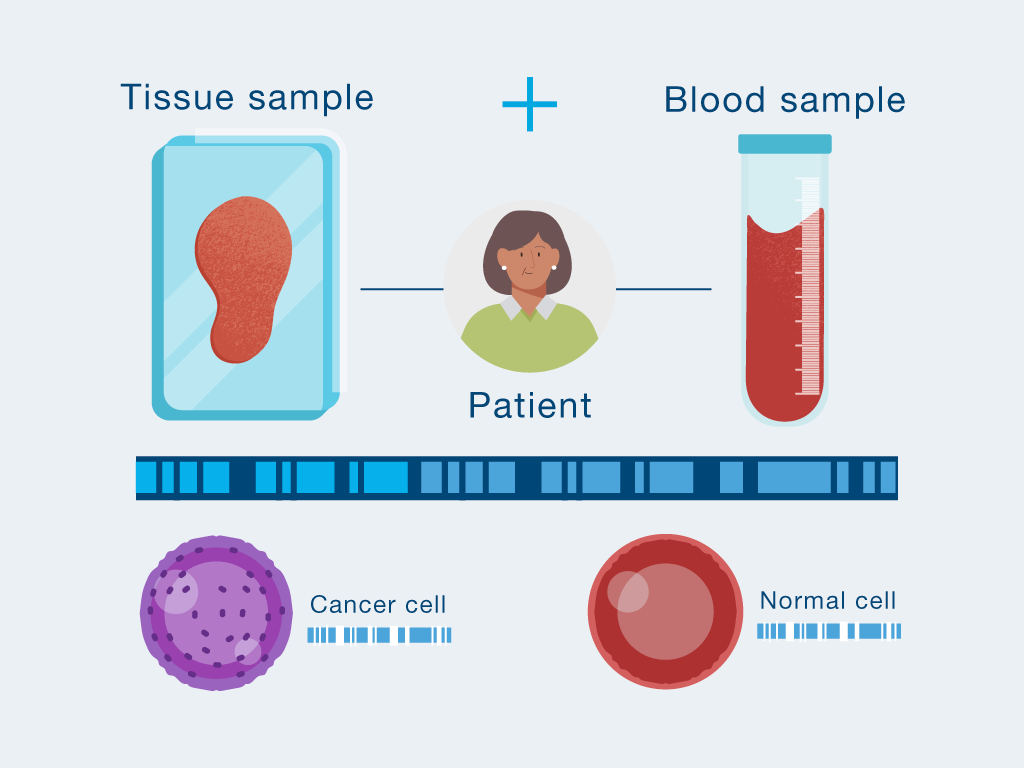
Step 1: Personalized test design
A tumor tissue sample is used to build your personalized Signatera™ test. A blood sample may also be collected during setup.

Step 2: Blood draw testing
A blood sample is checked for ctDNA that matches your tumor’s DNA fingerprint.
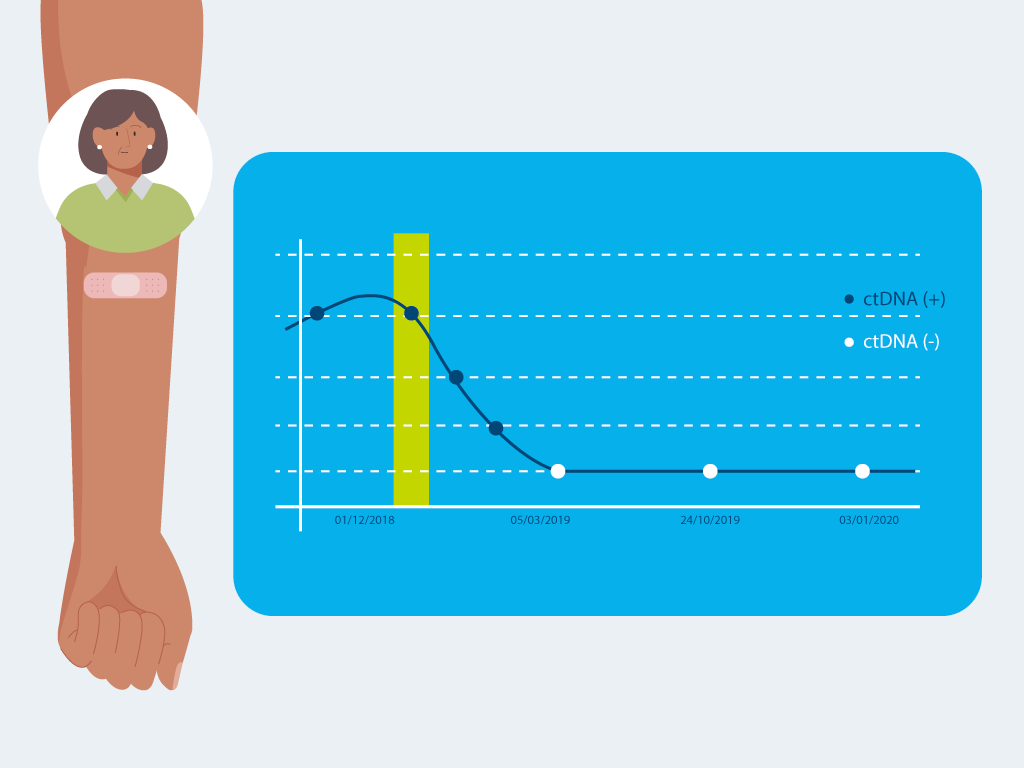
Step 3: Repeat monitoring over time
Your doctor may order Signatera™ again during follow-up to track ctDNA results over time.
Access Personalized Testing
Medicare Coverage
- Signatera™ is covered by Medicare for patients with muscle invasive bladder cancer.
- We welcome all insurance plans. Please refer to our list of in-network plans that we participate with, or call your insurance provider.
- We offer financial assistance programs for those who qualify.
More Information
- Find answers to your questions about eligibility, results, ordering, and more
- Don’t see your question?
- Contact us here.
Bladder cancer ctDNA monitoring and Signatera™ FAQs
What is ctDNA in bladder cancer?
ctDNA stands for circulating tumor DNA. These are small pieces of DNA that can come from cancer cells and enter the bloodstream. Signatera™ is designed to look for ctDNA that matches your bladder cancer tumor.
What is MRD after bladder cancer treatment?
MRD means molecular residual disease. It refers to very small amounts of cancer that may remain after treatment and may not be visible on scans or cystoscopy. Signatera™ is designed to detect MRD in the form of ctDNA.
Does Signatera™ replace cystoscopy or scans?
No. Cystoscopy, imaging and pathology remain essential in bladder cancer follow-up. Signatera™ is used alongside standard follow-up care as one more source of information.
What does a positive Signatera™ result mean in bladder cancer?
A positive result means ctDNA was detected in that blood sample. In bladder cancer studies, ctDNA positivity has been associated with higher recurrence risk. Your doctor will interpret the result with cystoscopy, scans, pathology and your full clinical picture.
What does a negative Signatera™ result mean?
A negative result means ctDNA was not detected at that time point. That can be reassuring, but no test can guarantee the cancer will not return. Your doctor will still recommend routine follow-up.
Can Signatera™ be used after bladder-sparing treatment?
It may be used in some cases, depending on your diagnosis and follow-up plan. Your doctor may use ctDNA monitoring as an added source of information during surveillance.
Can Signatera™ help with immunotherapy decisions after surgery?
In IMvigor011, Signatera™ ctDNA status was used to identify patients with muscle-invasive bladder cancer who were more likely to benefit from adjuvant atezolizumab after surgery. Ask your doctor if this evidence is relevant to your situation.
How often is Signatera™ testing done in bladder cancer?
Testing schedules vary based on your cancer type, stage and treatment plan. Many patients use Signatera™ as repeat testing over time so their care team can monitor trends, not just a single result.
Do I need tumor tissue for Signatera™?
Yes. Signatera™ is tumor-informed, so it is built using your tumor tissue first. After the personalized test is created, follow-up testing is done with blood draws.
Looking for more information?
Call Natera at 650-489-9050 or fill out our contact form.
1Powles T, Kann AG, Castellano D, et al. ctDNA-guided adjuvant atezolizumab in muscle-invasive bladder cancer. New England Journal of Medicine. Published online October 20, 2025. doi:10.1056/NEJMoa2508652.
2Galsky MD, Gschwend JE, Milowsky MI, et al. Adjuvant nivolumab versus placebo for high-risk muscle-invasive urothelial carcinoma: 5-year efficacy and ctDNA results from CheckMate 274. Annals of Oncology. Published online October 17, 2025. doi:10.1016/j.annonc.2025.09.139.
3Powles T, et al. European Urology. 2023. doi:10.1016/j.eururo.2023.06.007.
4Powles T, et al. Presented at the European Association of Urology Annual Conference; 2024.
5Christensen E, Birkenkamp-Demtröder K, Sethi H, et al. Early detection of metastatic relapse and monitoring of therapeutic efficacy by ultra-deep sequencing of plasma cell-free DNA in patients with urothelial bladder carcinoma. Journal of Clinical Oncology. 2019.