

Signatera™ for immunotherapy (IO) monitoring
Starting immunotherapy can bring a lot of questions. Many people want to know as early as possible whether treatment is helping. Scans are important, but they may not show changes right away.
Signatera™ is Natera’s personalized blood test that looks for tiny fragments of tumor DNA (ctDNA) in your blood.
Finding hope with Signatera™
After being diagnosed with metastatic Melanoma, Steven felt overwhelmed and discouraged. Then his oncologist ordered Signatera™, a circulating tumor DNA (ctDNA) test that could detect small fragments of tumor DNA in his blood earlier than standard of care tools. Steven found the peace of mind and the confidence to embrace his treatment journey. Watch Steven’s story now to learn more.
“When you are fighting the cancer, you want to stack the deck in your favor – you want all the details so you can make the call.”
Steven
Melanoma Survivor using Signatera™ to monitor ctDNA, ensuring that he remains NED.
Learn how Signatera™ works
Signatera™ is built using your tumor tissue, then your doctor can order repeat blood tests to track ctDNA over time.
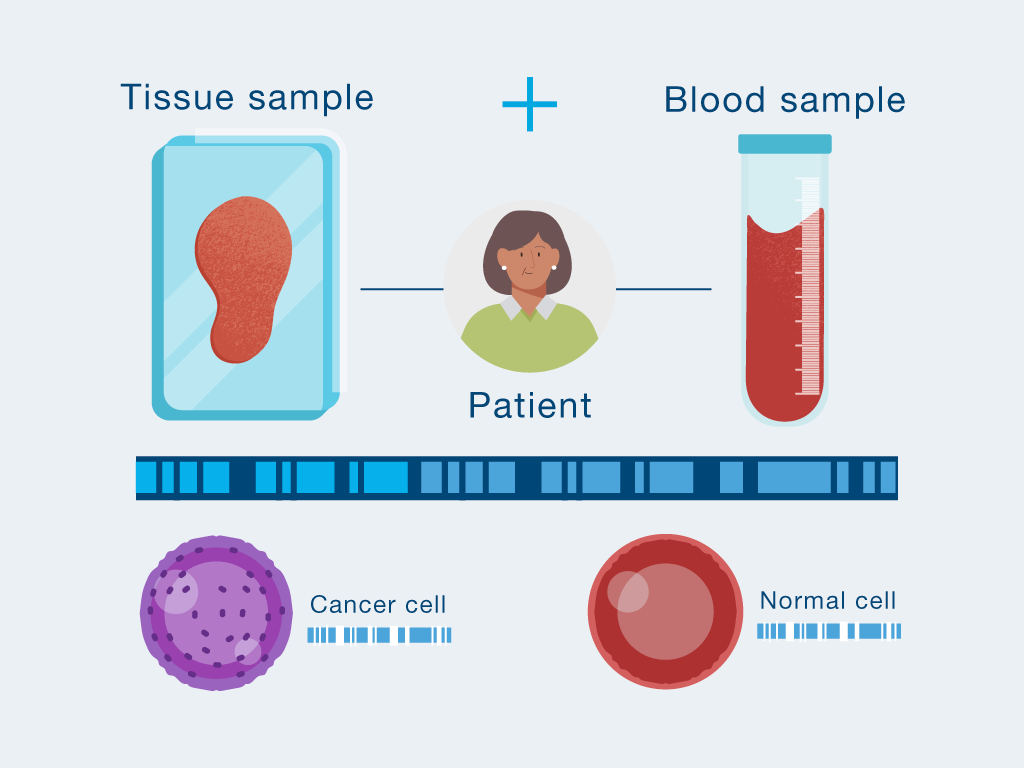
Build your test from tumor tissue
A tumor tissue sample is used to create your personalized Signatera™ test.

Test with a blood draw
Your blood sample is checked for ctDNA that matches your tumor.
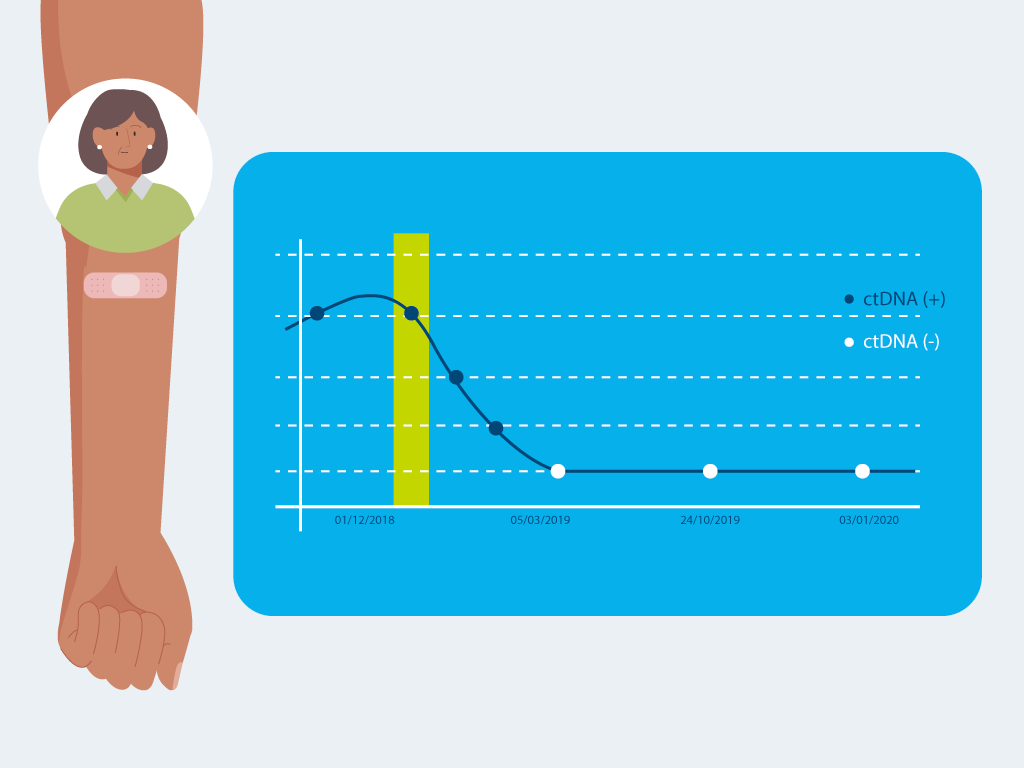
Monitor over time
Your doctor may order repeat testing during immunotherapy to follow ctDNA trends and use that information with scans and other monitoring tools.
Learn how Signatera™ monitors response to immunotherapy
Why Signatera™ ctDNA monitoring can help

Earlier insight during treatment
ctDNA has been studied as an early biomarker of immunotherapy response in solid tumors, including assessment after early treatment cycles.

Another data point between scans
Scans are essential but usually happen at set time points. A ctDNA result may add information between imaging visits.

Trends over time matter
Repeat testing can show whether ctDNA is decreasing, staying the same or increasing during treatment.

Broad solid tumor use
Medicare covers Signatera™ for immunotherapy response monitoring in patients with any solid tumor.
Coverage for immunotherapy response monitoring
Medicare Coverage
- We welcome all insurance plans. Please refer to our list of in-network plans that we participate with, or call your insurance provider.
- We offer financial assistance programs for those who qualify.
More Information
- Don’t see your question? Contact us here.
Questions Signatera™ may help support during IO therapy
Your doctor may use Signatera™ as one more tool, alongside scans and clinical follow-up, to help answer questions like:
- Before treatment starts: Is ctDNA detectable at baseline before immunotherapy begins?
- Early during treatment: Are ctDNA levels changing after the first cycles of treatment?
- During ongoing treatment: Do ctDNA trends support what your doctor is seeing on scans and exams?
- When imaging is unclear (in some cases): Can ctDNA trends add another piece of information while your care team decides what to do next?

What research says about ctDNA and immunotherapy response monitoring
Signatera™ IO monitoring has been studied in published research and clinical studies across solid tumors.
INSPIRE trial (pan-cancer immunotherapy response monitoring):
Natera’s IO monitoring clinician page cites the INSPIRE trial and reports:
- 98% baseline ctDNA detection across 94 patients and 25 solid tumor types.
- ctDNA changes early in treatment were evaluated as predictors of response and non-response to immunotherapy.
- ctDNA increase by the beginning of cycle 3 was associated with lack of objective response in most patients in the INSPIRE analysis.
- ctDNA decrease and ctDNA clearance during treatment were associated with improved outcomes in the reported dataset.
Common questions about immunotherapy monitoring and Signatera™
What is ctDNA?
ctDNA stands for circulating tumor DNA. These are small pieces of DNA that can come from tumor cells and may be found in the blood.
What is Signatera™?
Signatera™ is Natera’s personalized, tumor-informed ctDNA blood test. It is built using your tumor tissue so it is designed to look for DNA signals that match your cancer.
Does Signatera™ replace scans during immunotherapy?
No. Scans and clinic visits are still essential. Signatera™ is designed to add information, not replace imaging or routine follow-up.
What does it mean if ctDNA goes down during immunotherapy?
In studies, decreasing ctDNA during treatment has been associated with better outcomes in some settings. Your doctor will interpret that result with scans, symptoms and your full treatment plan.
What does it mean if ctDNA stays high or increases?
An increase in ctDNA may be a sign your care team should look closer. Your doctor may use that information with scans and other tests to decide next steps.
Can Signatera™ be used for different cancer types during immunotherapy?
Yes, Signatera™ can be used across solid tumors and Medicare coverage for immunotherapy response monitoring in patients with any solid tumor. Your doctor can tell you whether it fits your diagnosis and treatment plan.
Do I need tumor tissue for Signatera™?
Yes. Signatera™ is tumor-informed, so tumor tissue is used first to build the test. After that, follow-up testing is typically done with blood draws.
How early can Signatera™ be used to monitor immunotherapy response?
Natera’s IO monitoring materials describe assessment as early as about 6 weeks into treatment in the IO monitoring context. Your doctor will decide the right timing for your care plan.
Questions about Signatera™?
Submit your inquiries here.
1Bratman SV, Yang SYC, Iafolla MAJ, et al. Personalized circulating tumor DNA analysis as a predictive biomarker in solid tumor patients treated with pembrolizumab. Nature Cancer. 2020;1(9):873-881.
2Eroglu Z, Krinshpun S, Kalashnikova E, et al. Circulating tumor DNA based molecular residual disease detection for treatment monitoring in advanced melanoma patients. Cancer. 2023.
3Vokes N, et al. Circulating Tumor DNA (ctDNA) Dynamics and Survival Outcomes in Patients with Advanced NSCLC and High (>50%) PD-L1 Expression, Randomized to Cemiplimab vs Chemotherapy. ASCO Annual Meeting presentation, 2023.
4Powles T, Assaf ZJ, Davarpanah N, et al. ctDNA guiding adjuvant immunotherapy in urothelial carcinoma. Nature. 2021.
5Powles T, Assaf ZA, Degaonkar V, et al. Updated Overall Survival by Circulating Tumor DNA Status from the Phase 3 IMvigor010 Trial: Adjuvant Atezolizumab Versus Observation in Muscle-invasive Urothelial Carcinoma. European Urology. 2023.