
Signatera™ Outperformed AMERK in Predicting MCC Recurrence
Learn MoreSignatera™ Outperformed AMERK in Predicting MCC Recurrence Learn More

Signatera™
for Melanoma and other Skin Cancers
Personalized, tumor-informed ctDNA test designed for each patient’s tumor to help detect recurrence earlier and guide treatment decisions in skin cancer.
Better biomarkers are needed for skin cancer management
Current risk assessment approaches can leave uncertainty in identifying patients at greatest risk of recurrence. Clinical questions after excision or surgery remain.

Clinicopathologic characteristics
After Mohs surgery, SLNB and/or wide local excision, residual risk may persist beyond what is visible on microscopy, exam or imaging.

Imaging
Imaging alone may fail to identify micro metastatic disease and can add radiation burden.

Biomarkers
Established biomarkers, including LDH, PD-L1, and TMB, may have limited predictive value for recurrence.2
Signatera™ adds personalized molecular insights beyond clinicopathologic assessment, imaging, and established skin cancer biomarkers
Inform your skin cancer treatment strategy with Signatera™
From neoadjuvant treatment through surveillance and systemic therapy, Signatera™ can help guide key management decisions across skin cancers including melanoma, Merkel cell carcinoma, and cutaneous squamous cell carcinoma.
Melanoma
Signatera™ predicts pathological response in neoadjuvant setting,1 detects recurrence earlier and predicts response to ICI treatment in adjuvant & surveillance settings.2,3
Merkel Cell Carcinoma
Signatera™ is the only ctDNA test proven to outperform antibody (AMERK)4 surveillance and detects recurrence ahead of standard imaging.
Signatera™ for Melanoma
To guide neoadjuvant or adjuvant treatment, predict treatment response, identify early relapse, and stratify the risk of progression to support skin cancer management.
“Findings support the utility of ctDNA monitoring pre-surgery to inform clinical decision-making on (neo)adjuvant treatment“1
Neoadjuvant: Predict pathological response before surgery
Signatera™ supports the utility of ctDNA monitoring pre-surgery to inform clinical decision-making on (neo)adjuvant treatment1
- Patients who achieved ctDNA clearance before surgery were more likely to achieve a pathological response.
- Early clearance of ctDNA strongly predicted pCR and near pCR (npCR)
Neoadjuvant treatment: Optimize treatment strategies to inform adjuvant treatment decisions
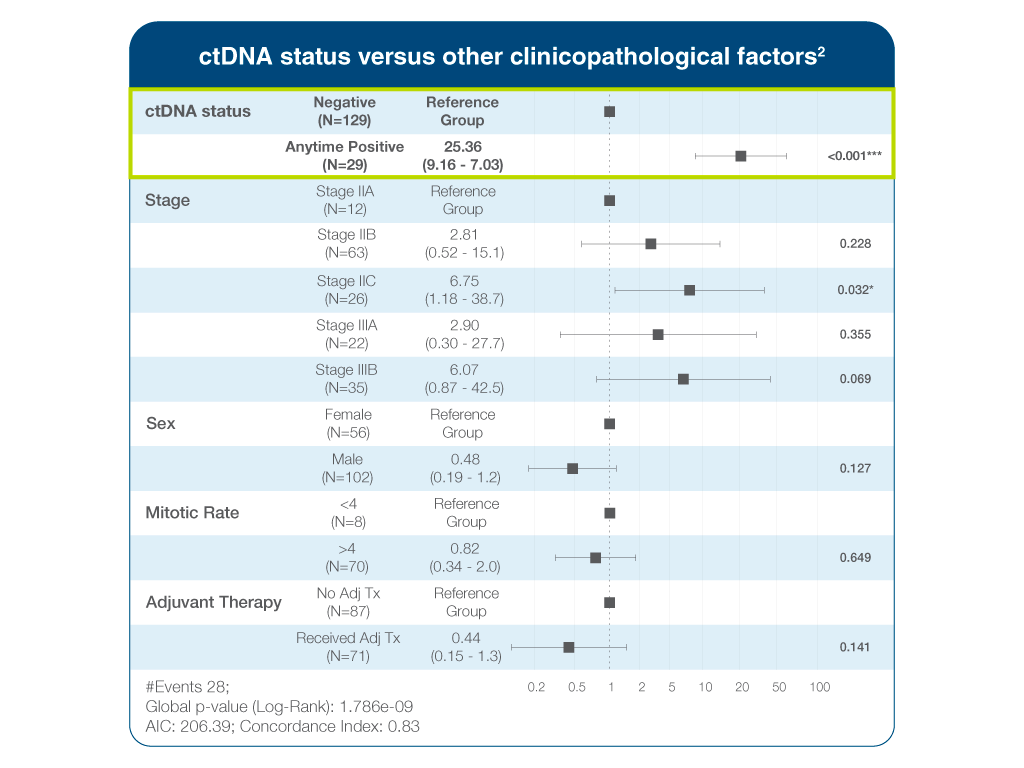
ctDNA-positivity was the most significant prognostic factor associated with RFS among stage I-IIIB resected melanoma patients.¹
- ctDNA-positivity at any postoperative time point was significantly associated with shorter RFS
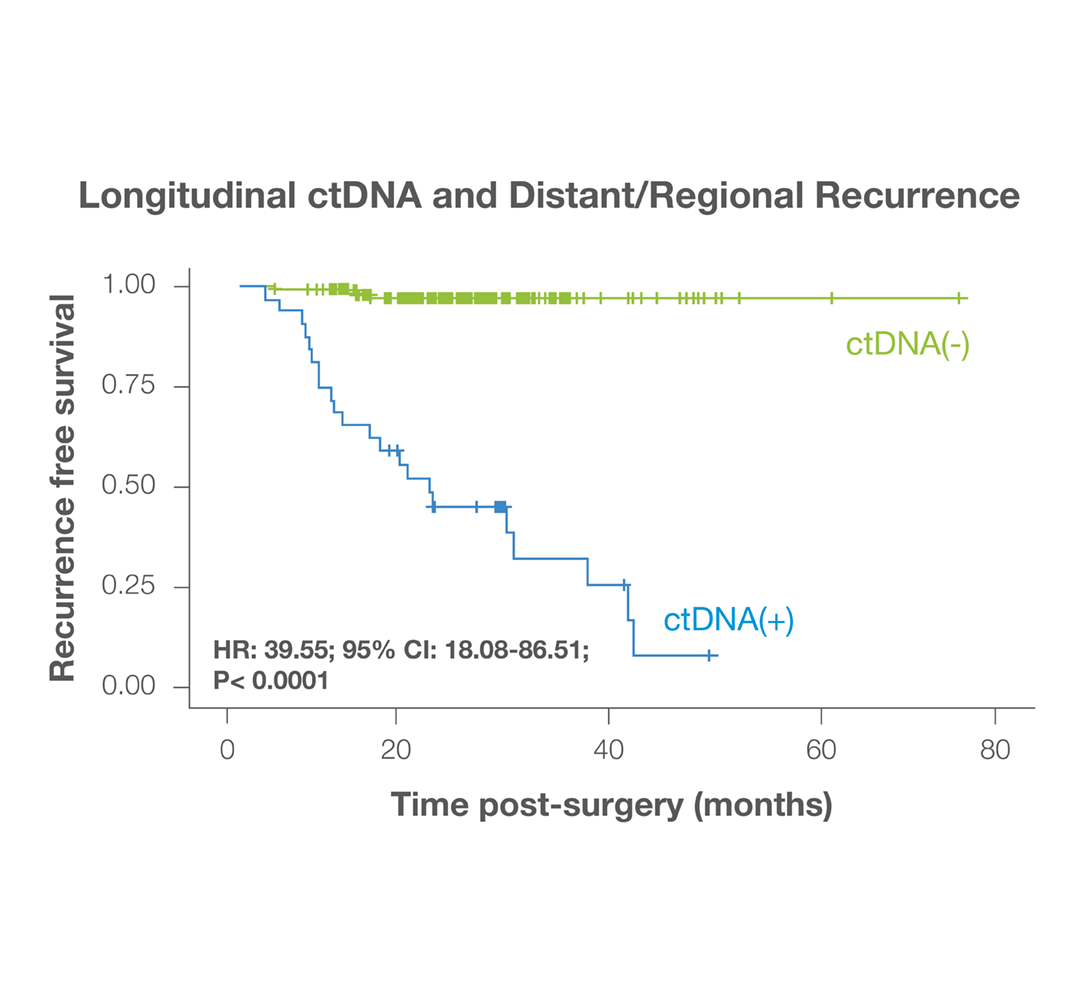
- ctDNA-positivity during surveillance monitoring identified stage I-IIIB melanoma patients with 40x higher risk of recurrence
Surveillance: Detect residual disease before it appears on imaging
- 46x higher recurrence risk in stage I-IIIB melanoma patients with ctDNA-positivity during post-definitive treatment surveillance vs. serially ctDNA-negative.²
Systemic therapy: Predict treatment outcomes within weeks using ctDNA dynamics
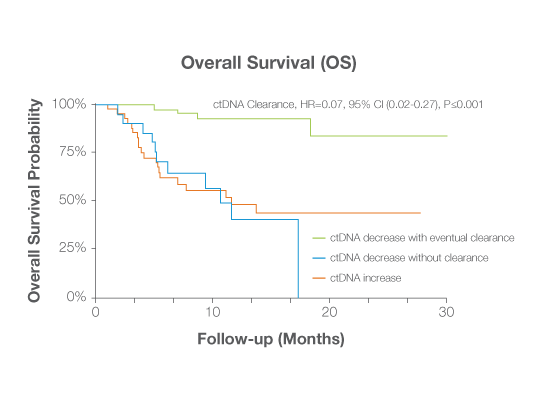
Signatera™ ctDNA dynamics after only 3-4 weeks of ICI treatment initiation in patients with advanced-stage melanoma were prognostic of outcomes.
Signatera™ for Merkel Cell Carcinoma

Inform Merkel Cell Carcinoma surveillance strategy
Circulating tumor DNA (ctDNA) is now recommended by the National Comprehensive Cancer Network (NCCN®) for assessment of disease burden in both virus-positive and virus-negative Merkel Cell Carcinoma (MCC)5
- The NCCN Guidelines® indicated that testing is “often obtained every 3 months.”5
Recurrence detection in Merkel Cell Carcinoma
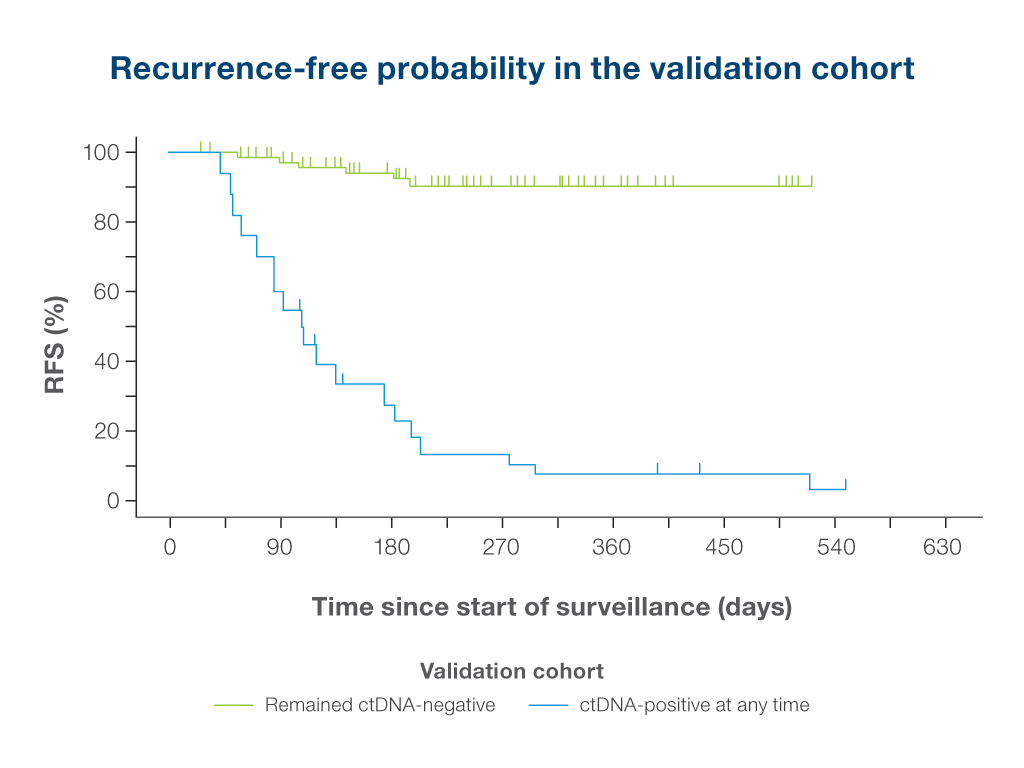
Patients who were Signatera™-positive had up to a 20x higher risk of recurrence (HR:20):5
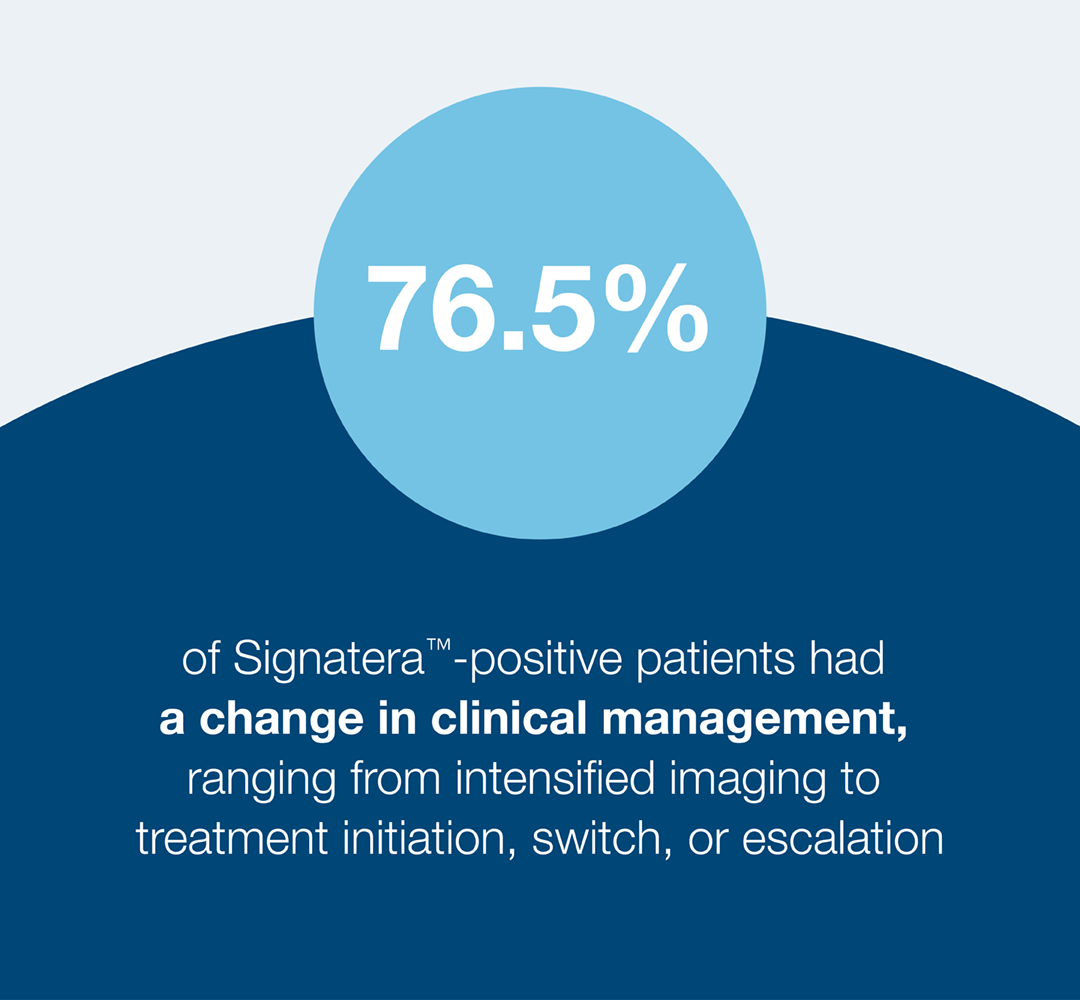
- ctDNA-positive patients had >70% likelihood of recurrence within 6 months of a positive test, while ctDNA-negative patients had a <5% likelihood of recurrence within 3 months of a negative test
- Signatera™ demonstrated a 94% PPV and 93% NPV for recurrence respectively
Signatera™ vs AMERK
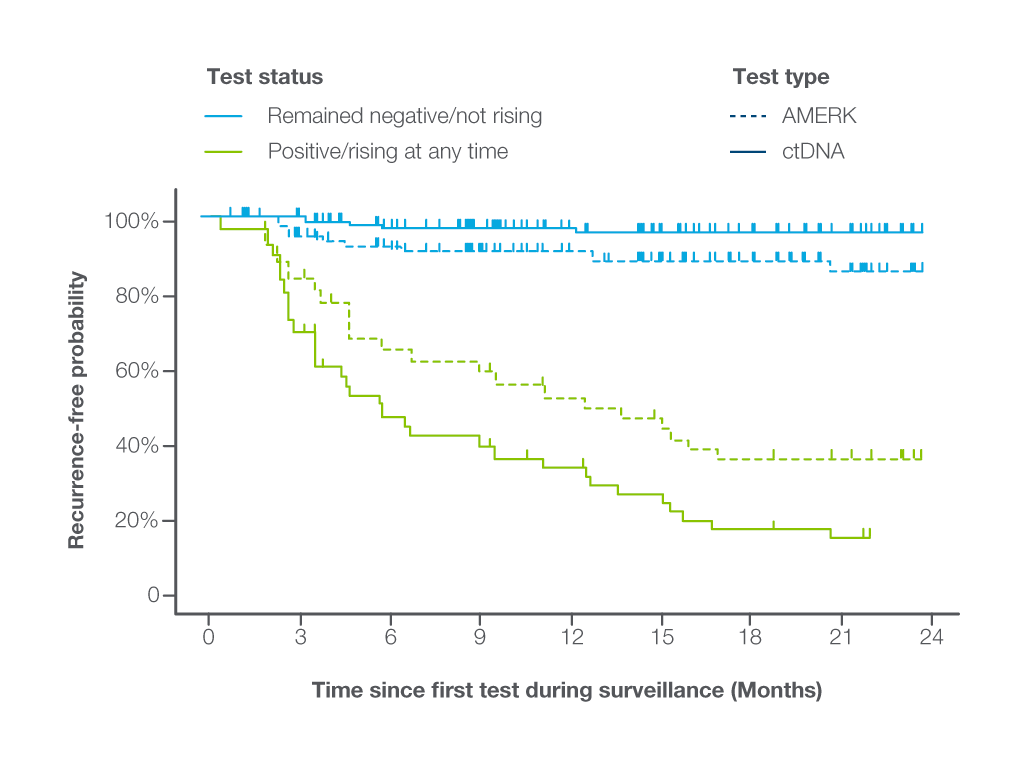
Signatera™: The only ctDNA test proven to outperform antibody surveillance
- Signatera™ ctDNA demonstrated superior prognostic value for recurrence compared to AMERK (HR = 37.2 vs HR = 6.5):6
- Signatera™ demonstrated higher positive and negative predictive value than AMERK at all timepoints
Shaping the future of skin cancer: Tumor-informed ctDNA-guided interventions
Unfamiliar with SignateraTM in Skin Cancer? Listen to a dermatologic surgeon and a medical oncologist on “How I use tumor-informed ctDNA in clinical practice to manage patients with skin cancer”—peer-to-peer insights into melanoma, MCC, cutaneous squamous cell carcinoma (cSCC), and clinical implementation.
Provide confidence for patients with skin cancer
After Jeffrey started dual immunotherapy for his metastatic melanoma, Signatera™ showed a dramatic drop in his ctDNA levels and helped provide assurance that his treatment was working.
Watch Jeffrey’s story to learn how his oncology team used Signatera™ to help guide his care and restore his confidence in his future.

WEBINAR
Exploring ctDNA-Guided Management in Melanoma
New insights, Real cases, Better decisions
60 minute webinar
Featured Webinar
Transformative Real-World Insights and Applications from Longitudinal Tumor-informed ctDNA Monitoring
Explore the findings from a multi-center, real-world study, “Longitudinal ctDNA Monitoring for Post-Surgical Disease Surveillance in Patients with Stage I–IIIB Melanoma”.
- Tumor-informed ctDNA as a biomarker to detect recurrence and progression in melanoma
- Real-world evidence on ctDNA-guided interventions and their potential to improve patient outcomes
- Clinical application of Signatera™ to guide care decisions, including imaging escalation, therapy initiation, and management of molecular recurrence
Is Signatera™ for skin cancer right for your patients?
1Long GV., Nair N., Marbach D., et al. Neoadjuvant PD-1 and LAG-3-targeting bispecific antibody and other immune checkpoint inhibitor combinations in resectable melanoma: the randomized phase 1b/2 Morpheus-Melanoma trial. Nature 2025; 31:3700–3712.
2Ansstas G., Khaddour K., Sudhaman S., et al. Longitudinal ctDNA monitoring for post-surgical disease surveillance in patients with stage I-IIIB melanoma. Clinical Cancer Research. 2026; Advance online ahead of proof.
3Ma VT., Zhou AY., Forati A., et al. Multi-Institutional Study Evaluating the Role of Early Circulating Tumor DNA Dynamics During Treatment With Immune Checkpoint Inhibitors in Patients With Advanced-Stage Melanoma. JCO Precision Oncology. 2026;10:e2500254.
4Chan J, et al. Poster presented at ASCO Annual Meeting, Chicago, IL, 2025.
5Referenced with permission from the NCCN Clinical Practice Guidelines In Oncology (NCCN Guidelines®) for Merkel Cell Carcinoma, V.1.2026, © National Comprehensive Cancer Network, Inc. 2025. All rights reserved. Accessed September 2, 2025. To view the most recent and complete version of the guideline, go online to NCCN.org. NCCN makes no warranties of any kind whatsoever regarding their content, use or application and disclaims any responsibility for their application or use in any way.
6Akaike T, et al. Journal of Clinical Oncology, 2024.