
Inform critical decisions across your skin cancer care

During treatment
Signatera™ can help determine whether you are responding to immunotherapy by assessing changes in levels of ctDNA throughout your treatment.1

After treatment
Signatera™ can help detect if your cancer is returning, possibly earlier than traditional imaging tests like CT scans.2

After surgery
Signatera™ can identify whether small traces of cancer are still present after surgery. This can help your doctor decide if additional treatment may be helpful.2
MRD testing for melanoma: the next step in recurrence prevention
Watch this webinar from the Melanoma Research Foundation to learn more about how MRD is being used to help manage melanoma.
*Clicking this button will open it on YouTube.com
Reduce anxiety from the unknown
Jeffrey was diagnosed with metastatic melanoma after he discovered a growth under his arm. His oncologist used Signatera™ to understand if his immunotherapy was working.
Watch Jeffrey’s story to learn how Signatera™ helped him look forward to the future again.
Personalized first, then tracked with blood draws
The Signatera™ Residual Disease Test is a custom-built blood test for people who have been diagnosed with skin cancers like melanoma or Merkel cell carcinoma. Signatera™ can detect molecular residual disease (MRD) in the form of circulating tumor DNA, small fragments of DNA released by cancer cells.
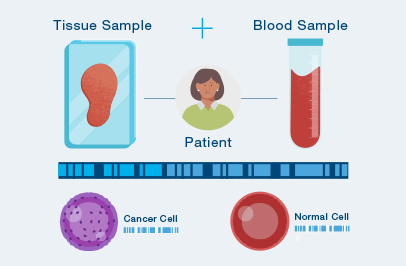
Step 1: Build your test from tumor tissue
A tumor sample is used to create your personalized Signatera™ test.

Step 2: Test with a blood draw
Your blood is checked for ctDNA that matches your tumor fingerprint.
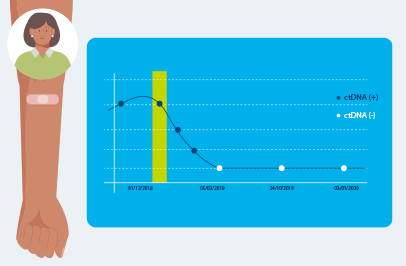
Step 3: Monitor over time
Your doctor may order repeat testing during follow-up to see if results change.
Frequently asked questions
Does Signatera replace skin exams or scans?
No. Signatera is a blood test that may add information. Your doctor will still use exams and imaging.
What does a positive result mean?
A positive result means ctDNA was detected at that timepoint. Your doctor will interpret it alongside exams, imaging, and your overall plan.
What does a negative result mean?
A negative result means ctDNA was not detected at that timepoint. It does not guarantee the cancer will not return, so follow-up still matters.
Can Signatera™ be used during immunotherapy?
In some cases, doctors may use ctDNA trends as one more source of information during immunotherapy. Ask your care team if this applies to your situation.
Where can I learn about inherited melanoma risk?
If melanoma runs in your family, your doctor may talk with you about hereditary testing such as Empower™ and whether genetic counseling makes sense.
Is Signatera™ right for you?
References
1Bratman SV, et al. Personalized circulating tumor DNA analysis as a predictive biomarker in solid tumor patients treated with pembrolizumab. Nat Cancer. 2020;1:873-881. https://doi.org/10.1038/s43018-020-0096-5
2Akaike T, et al. Circulating tumor DNA correlates with Merkel cell carcinoma tumor burden and helps early detection of recurrence. ASCO, Chicago, Illinois, June 3-7, 2022.