
Inform clinical challenges in pancreatic cancer

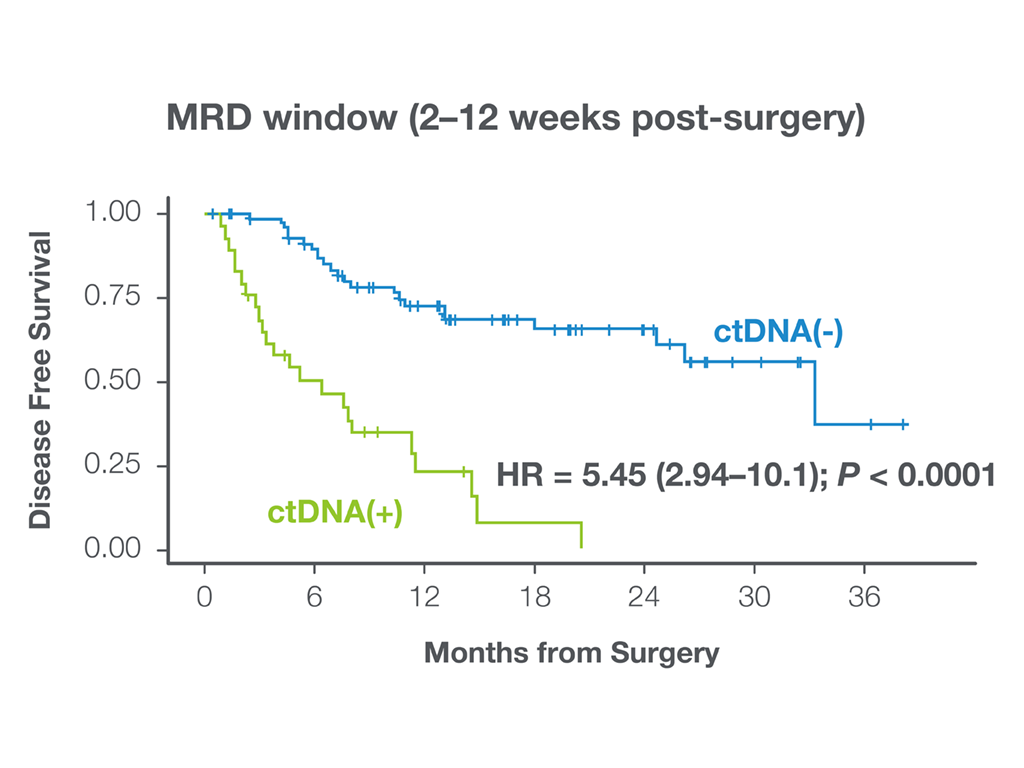
Signatera™-positivity
post-surgery linked to
5.5x
higher recurrence risk; median DFS 6.4 vs 33.3 months.1

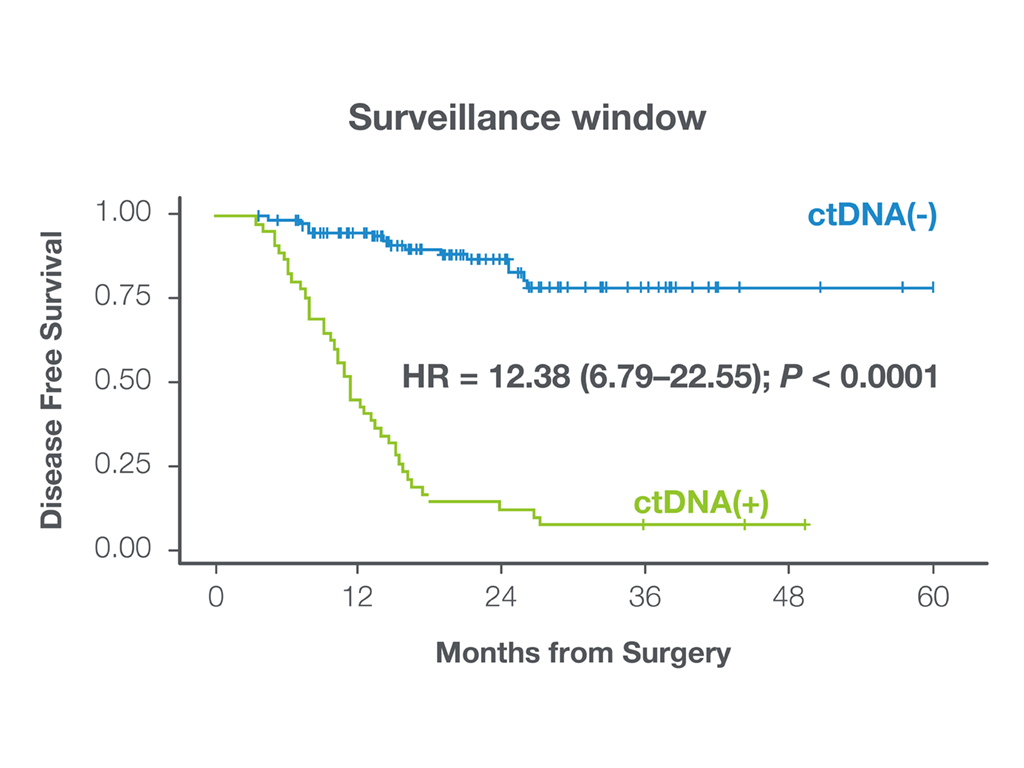
Signatera™-positive
patients during surveillance had a median DFS of
11.4
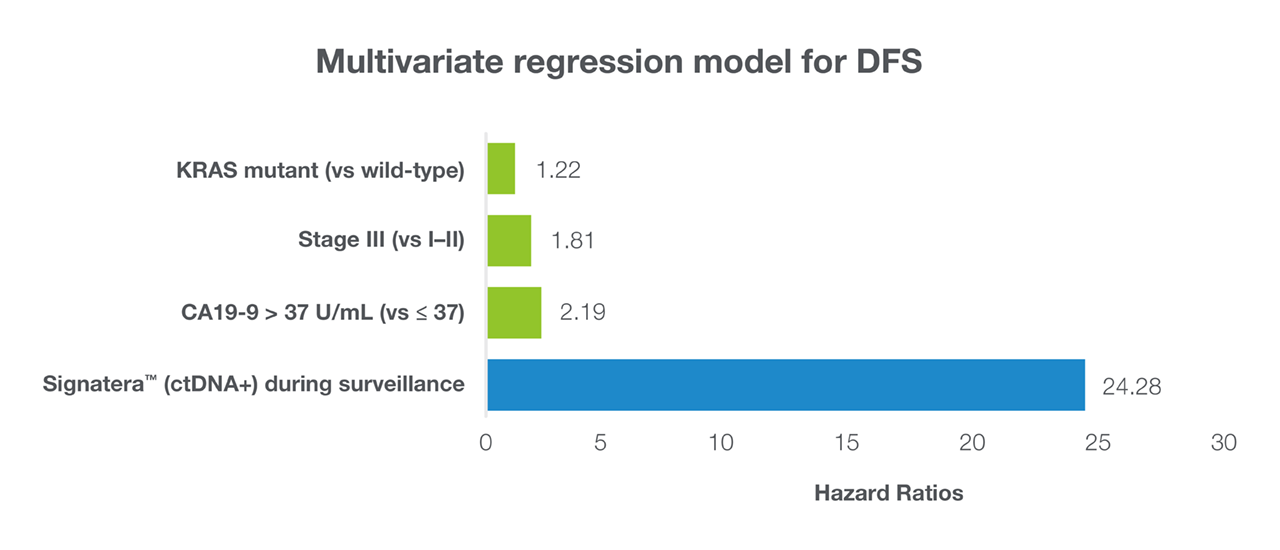
months. In multivariate analysis, Signatera™ was the strongest predictor of recurrence (HR=24.28).1

Signatera™ detected
recurrence a mean of
>101
days before imaging.1
Post-surgical Signatera™ positivity identified the highest risk patients¹
In the largest real-world, personalized tumor-informed ctDNA analysis in pancreatic cancer to date, Botta et al. analyzed 1,329 plasma samples from 298 clinically patients with PDAC
- Signatera™ positivity in the MRD window was associated with significantly inferior disease-free survival — median 6.4 vs 33.3 months.¹
Identify recurrence sooner with Signatera™
During surveillance, median disease-free survival was 11.4 months in Signatera™-positive patients and not reached in Signatera™-negative patients.¹
Signatera™-positivity in surveillance outperformed CA19-9, KRAS, and stage in pancreatic cancer
In multivariate analysis of resected stage I–III PDAC, Signatera™ status was the only independent predictor of DFS.¹
Is Signatera™ for Pancreatic cancer right for your patients?
References
1Botta M, et al. Tumor-informed ctDNA predicts recurrence and survival in resected pancreatic cancer. The Oncologist. 2024. DOI: 10.1093/oncolo/oyae155