
Why ctDNA testing matters in pancreatic cancer
Pancreatic cancer can be hard to follow with scans and CA 19-9 alone. Roughly 5–10% of patients can’t produce CA 19-9 because of their blood type², and even in those who can, levels don’t always rise when cancer returns. Small recurrences can also be hard to see on imaging.
ctDNA testing looks for tiny fragments of tumor DNA in your blood that may appear before other tests change. Signatera™ is tumor-informed — built from your own tumor, so it watches for your cancer’s specific signals. In pancreatic cancer studies, those signals have shown up months before imaging.¹
How Signatera™ may be used in pancreatic cancer care
After surgery for pancreatic cancer, your doctor may use imaging and blood markers like CA 19-9 to track your cancer. These tools are helpful, but they don’t always catch a recurrence early.
-
Signatera™ can help your care team decide if you may benefit from more intensive chemotherapy, see if you qualify for a clinical trial, or plan closer monitoring.
-
In published studies of pancreatic cancer, patients with a positive Signatera™ result had a much shorter time before cancer returned (about 6.4 months) than patients with a negative result (about 33.3 months).¹
During follow-up monitoring:
-
Repeated Signatera™ testing over time can show whether cancer signals are clearing or persisting. A positive result after surgery may signal disease that is harder to treat — and Signatera™ has detected recurrence in the blood more than 100 days before it appeared on imaging.¹
-
This earlier signal can give your care team time to adjust treatment or watch you more closely.

How is the Signatera™ test performed?
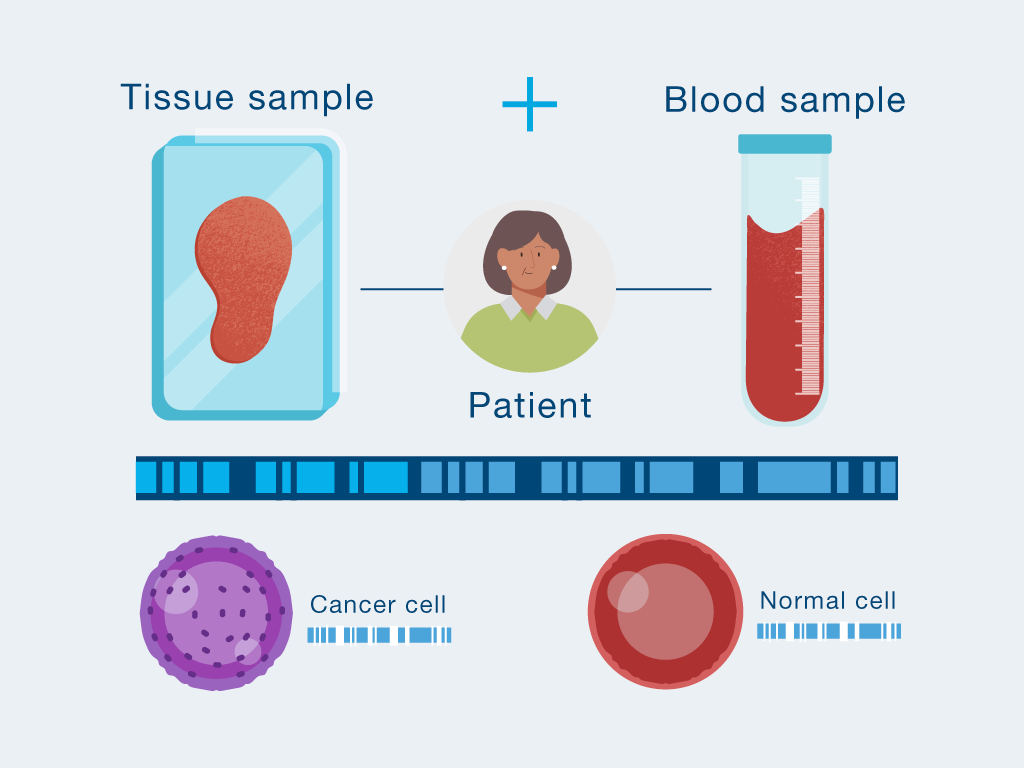
Personalized, tumor-informed test
One-time, primary tissue sample and matched normal sample is required for whole exome or whole genome sequencing and personalized test design.

Ultrasensitive ctDNA detection
Signatera™ is designed to detect ctDNA of somatic and truncal variants to optimize sensitivity. Tumor-informed method enables filtering of CHIP mutations to decrease false positive rates.
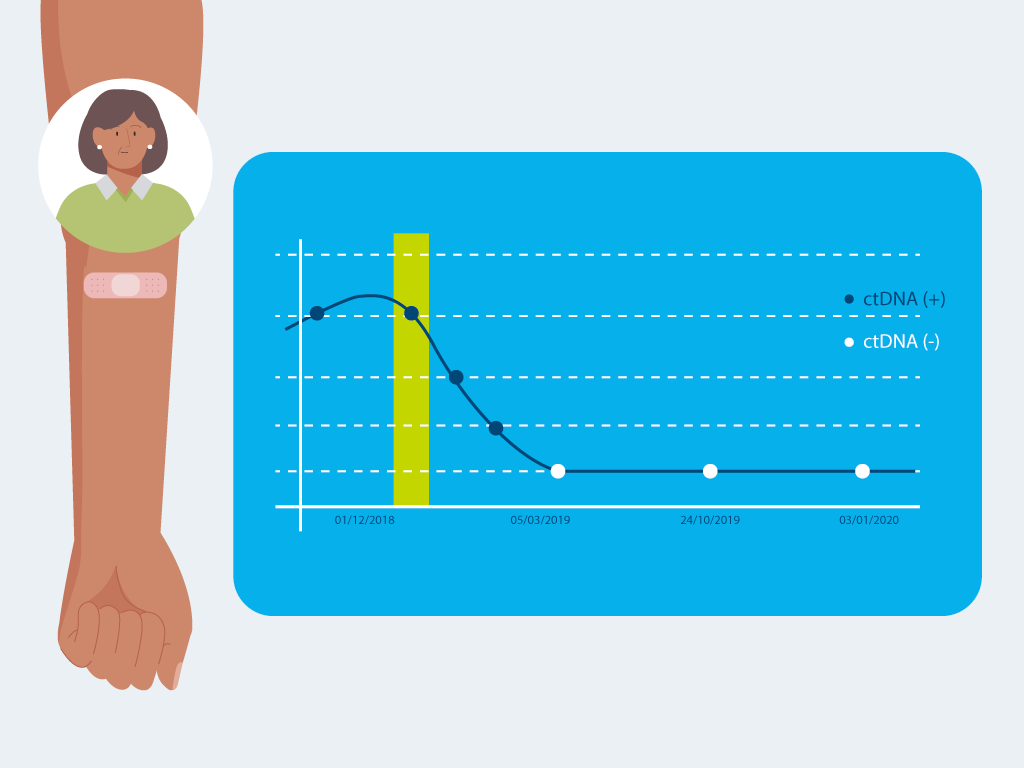
Optimized for longitudinal monitoring
Once the patient’s personalized test has been designed, only a blood sample is needed each subsequent time Signatera™ is ordered for the program or Surveillance program.
Common questions in pancreatic cancer and Signatera™ testing
Has Signatera™ been studied in pancreatic cancer?
Yes. Signatera™ has published research in pancreatic cancer, including studies in resectable pancreatic cancer and studies looking at ctDNA during follow-up.
Why would my doctor order Signatera™ after pancreatic cancer surgery?
After surgery, tumor DNA can sometimes remain even when scans look clear. Signatera™ may be used to look for molecular residual disease (MRD), very small fragments of tumor DNA that could suggest a higher risk that the cancer may return.
What does a positive Signatera™ (ctDNA+) result mean in pancreatic cancer?
A positive result means Signatera™ detected ctDNA that matches your tumor. In published studies in pancreatic cancer, ctDNA detection has been associated with a higher risk of recurrence and with worse survival outcomes over time. A positive result does not replace scans, but it can be a signal your care team may want to watch closely.
What does a negative Signatera™ (ctDNA–) result mean?
A negative result means ctDNA was not detected at that timepoint. That can be reassuring, but it is not a guarantee. Your doctor will still follow standard monitoring, because ctDNA levels can change over time and no single test answers everything.
Can Signatera™ be used more than once during follow-up?
Yes. Many studies evaluate serial monitoring, meaning repeat ctDNA testing over time. Tracking whether ctDNA stays negative, becomes positive or changes can help your care team understand risk during surveillance.
How is this different from CA 19-9?
CA 19-9 is a blood marker that can be helpful for some people with pancreatic cancer, but it does not work the same way for everyone and it is not specific to your tumor DNA. Signatera™ is a tumor-informed test designed from your tumor tissue to look for your cancer’s DNA fingerprint. Natera has presented data comparing MRD testing with standard-of-care biomarkers like CA 19-9 in pancreatic cancer settings.
Can Signatera™ show if treatment is working?
Signatera™ is designed to support treatment monitoring by tracking ctDNA over time. In pancreatic cancer research, ctDNA results and changes have been evaluated in relation to outcomes and disease status. Your doctor will interpret ctDNA trends alongside scans, symptoms, and other lab tests.
How accurate is Signatera™ in pancreatic cancer?
Accuracy can vary based on timing (for example, soon after surgery), how much tumor DNA is shed into the blood, and other clinical factors. In published pancreatic cancer studies, ctDNA results have shown strong links with recurrence and survival outcomes, which is why many care teams focus on trends over time (serial monitoring), not a single result. Your doctor may use Signatera™ alongside imaging and other follow-up tools.
Do I need tumor tissue for Signatera™?
Yes. Signatera™ is tumor-informed, so a tumor tissue sample is used to build your personalized test. After that, follow-up testing is done using blood draws.
Will Signatera™ replace CT scans or other follow-up tests?
No. Scans and regular follow-up visits remain essential. Signatera™ is designed to add information, not replace imaging, exams, or other lab tests.
Is Signatera™ for Pancreatic cancer right for you?
1Botta GP, Abdelrahim M, Drengler RL, et al. Association of personalized and tumor-informed ctDNA with patient survival outcomes in pancreatic adenocarcinoma. The Oncologist. 2024;29(10):859-869. doi:10.1093/oncolo/oyae155. PMID: 39022993.
2Luo G, Liu C, Guo M, et al. Potential Biomarkers in Lewis Negative Patients With Pancreatic Cancer. Annals of Surgery. 2017;265(4):800-805. doi:10.1097/SLA.0000000000001741. PMID: 28267695.