
Inform clinical challenges in biliary tract cancer

Identify high-risk patients
50 – 70%
of patients relapse within 1-2 years after curative resection, often with distant or unresectable disease.1

Risk stratify
94%
of Signatera™-positive patients during surveillance went on to recur, an 18x higher risk than Signatera™-negative patients.1

Catch recurrence sooner
3.7
months was the median lead time Signatera™ detected recurrence ahead of imaging.1
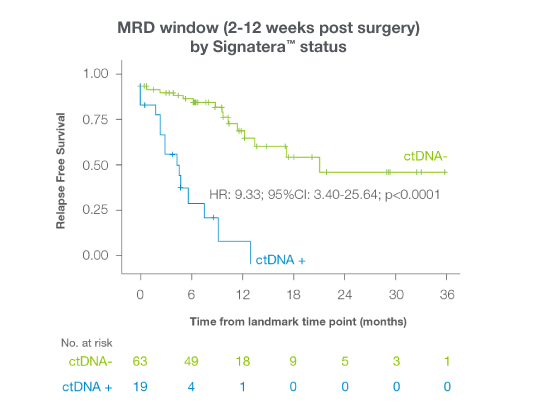
Use Signatera™ to identify patients at the highest risk of disease progression post-surgery
Post-Operative MRD (2–12 Weeks Post-Surgery)
- Signatera™-positive patients were 9x more likely to recur and 5x more likely to die1
- 1-year RFS of 13% vs 75%
- 1-year OS of 56% vs 96%
Signatera™ detected molecular relapse before radiographic progression
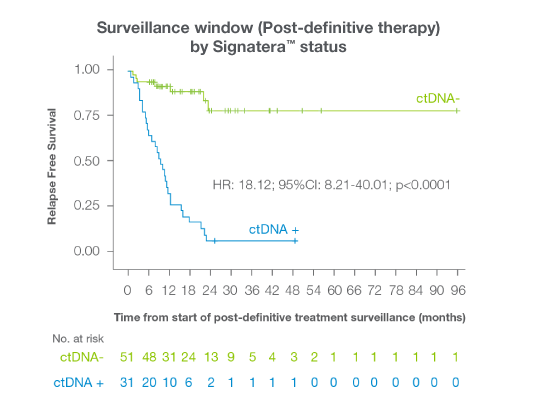
Post-Definitive Treatment Surveillance
- 4% of Signatera -positive patients went on to recur1
- 18x higher risk than negative patients
- Detected a median of 3.7 months ahead of imaging
- 1-year RFS 32% vs 92%
- 1-year OS of 85% vs 98%
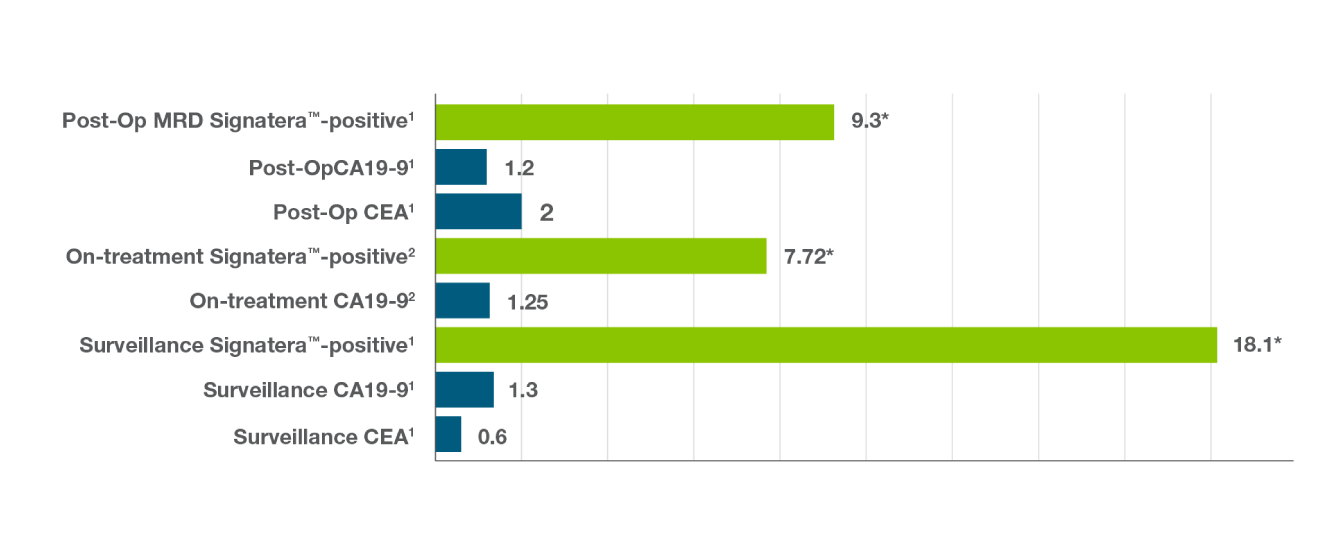
Signatera™ status was prognostic of clinical outcomes at MRD and surveillance windows but common biomarkers such as CA19-9 and CEA were not
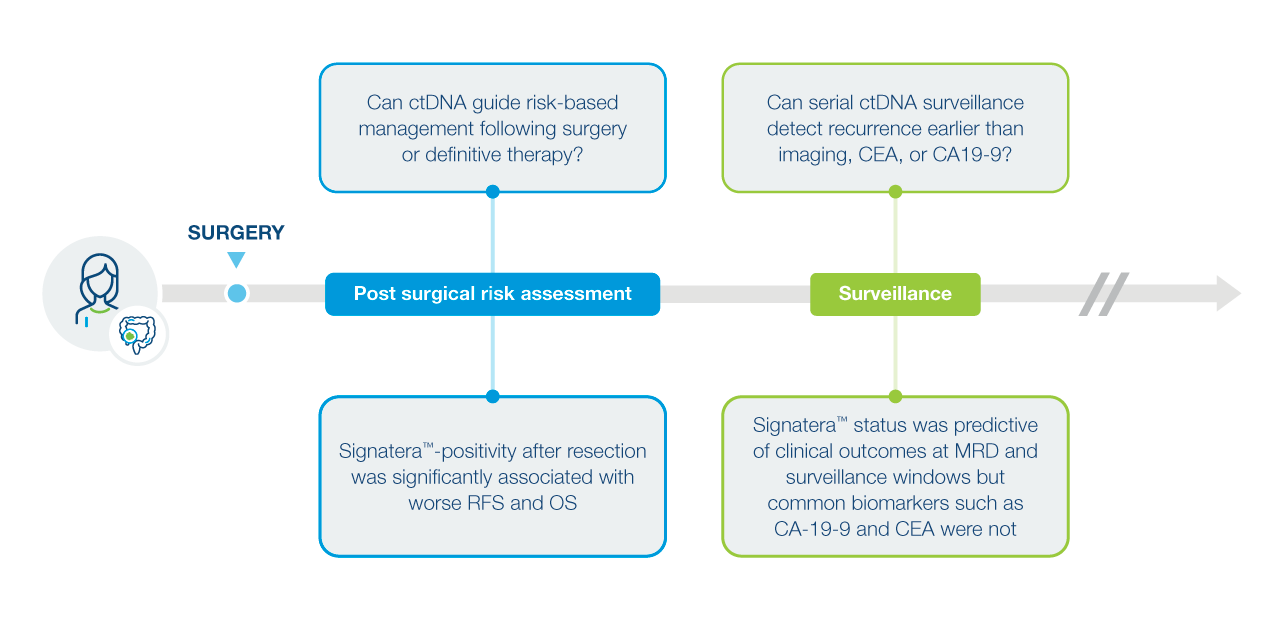
Clinical questions Signatera™ may help answer in biliary cancer
Is Signatera™ for bile duct cancer right for your patients?
References
1Malla M, Esmail A, Tin A, et al. Real-world analysis of ctDNA and other biomarkers in patients with curatively resected stage I-III biliary tract cancer. ESMO Gastrointest Oncol. 2026;13(PB):100344. doi:10.1016/j.esmogo.2026.100344
2Yoo C, et al. Circulating tumor DNA status and dynamics predict recurrence in patients with resected extrahepatic cholang iocarcinoma. J Hepatol. 2025;82(5):861-870. doi:10.1016/j.jhep.2024.10.043