

How Signatera™ may be used in bile duct cancer care
Signatera™ may help your care team answer important questions during follow-up care, such as:
- After surgery or curative-intent treatment (MRD testing): Is there a ctDNA present that may suggest the patient is at a higher risk of recurrence, even if scans look clear right now?
- During follow-up (monitoring over time): Confirm the results stay ctDNA negative, or track changes over time.
- If you are receiving more treatment (in some cases): Are ctDNA results changing while on treatment, alongside scans and other tests?
Why ctDNA testing matters in bile duct cancer
Scans and standard blood tests are important, but they do not always give clear answers when cancer is present at very low levels. ctDNA testing looks for small pieces of tumor DNA that can sometimes be found in the blood.
Signatera™ is tumor-informed, which means it is built using your tumor tissue. That is what makes it personalized and designed to track your cancer’s DNA signal over time.
How Signatera™ is made and used over time
Signatera™ is personalized first, then monitored with blood draws during follow-up.
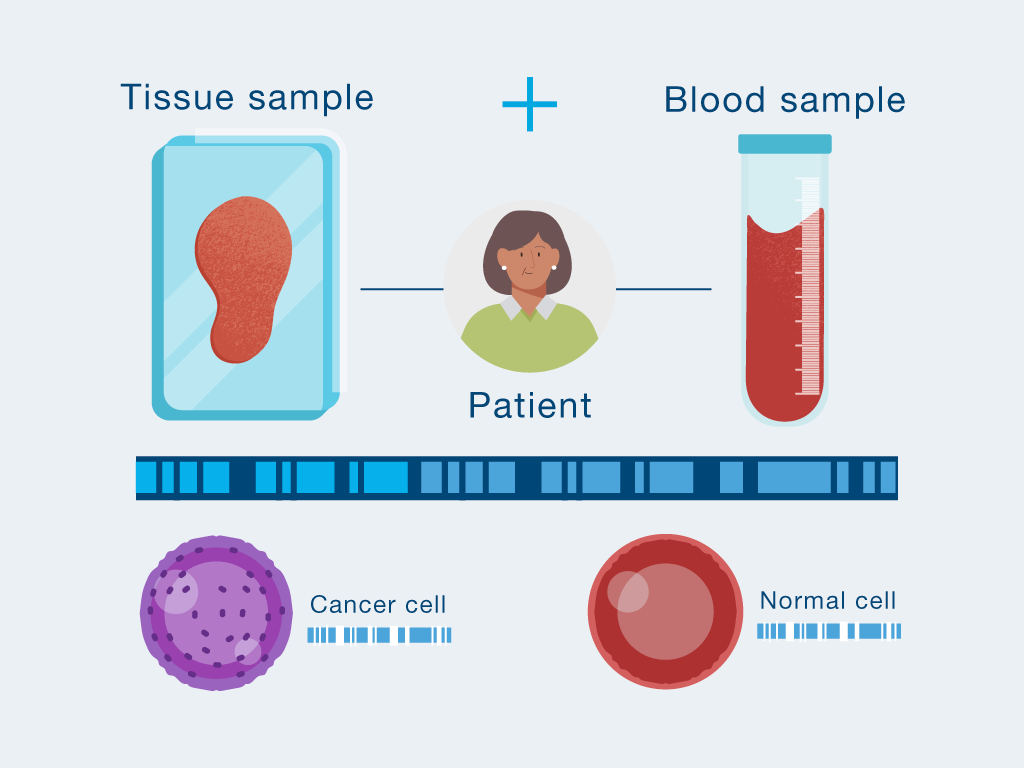
Step 1: Your tumor helps build your test
A sample of your tumor tissue (from surgery or biopsy) is used to create a test designed for your cancer’s DNA “fingerprint.”

Step 2: A blood draw checks for ctDNA
A blood sample is used to test for small fragments of tumor DNA (ctDNA) that match your tumor fingerprint.
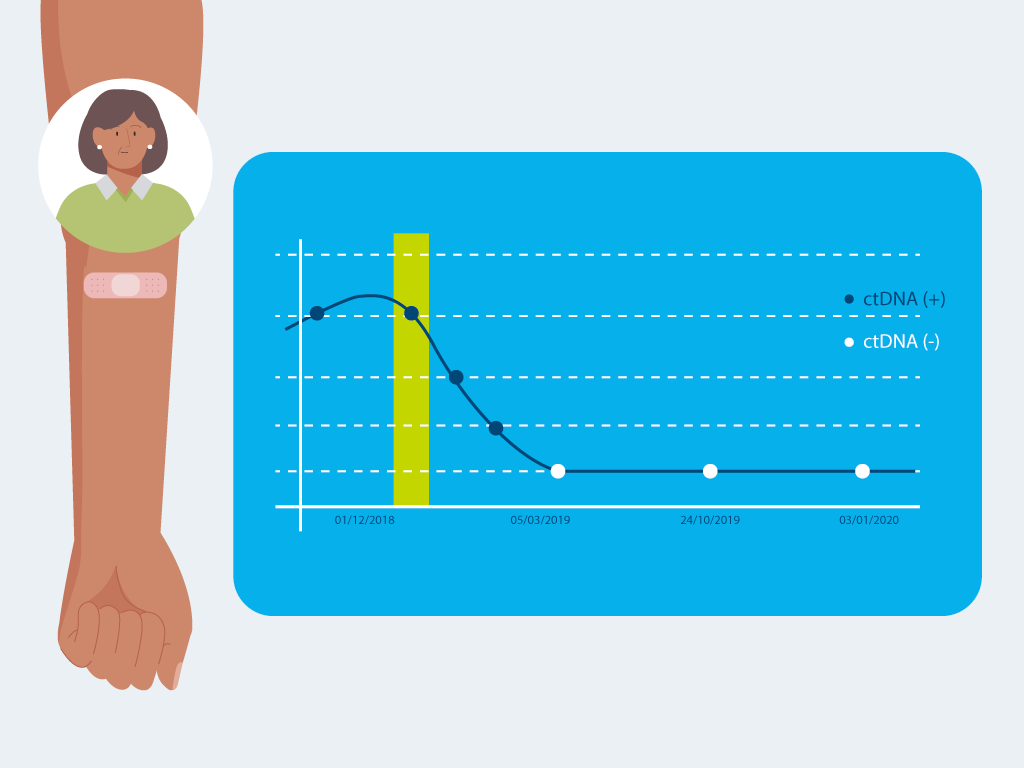
Step 3: Results can be tracked over time
Your doctor may order repeat testing during follow-up to see if results stay the same or change.
When Signatera™ may be used
Your care team may use Signatera™ at different points in care, such as:
After surgery, to check for molecular residual disease (MRD)
During follow-up, to monitor results over time
During treatment (in some cases), to help track changes in ctDNA alongside scans and other tests
Because the test is personalized, it is first built using tumor tissue. After that, ongoing testing can be done with a blood draw
Common questions about Signatera™ in bile duct cancer (cholangiocarcinoma)
What is Signatera™, and what does ctDNA mean?
Signatera™ is Natera’s personalized ctDNA blood test (also called an MRD test). ctDNA is small pieces of tumor DNA that can sometimes be found in the blood.
Has Signatera™ been studied in bile duct cancer or biliary tract cancers?
Yes. Signatera™ has been evaluated in published studies in biliary tract cancers, including cholangiocarcinoma, such as after surgery and during follow-up monitoring.
Why would my doctor order Signatera™ after surgery for cholangiocarcinoma?
After surgery, cancer can sometimes be present even when early scans look normal. Signatera™ may be used to look for molecular residual disease (MRD), very small fragments of tumor DNA that could suggest a higher risk the cancer may come back.
What does a positive Signatera™ result mean?
A positive result means Signatera™ detected ctDNA in your blood that matches your tumor. In published research in biliary tract cancers, ctDNA detection after surgery and during follow-up has been associated with a higher chance of recurrence and with outcomes over time. A positive result does not replace scans, but it can be a signal your doctor may want to follow closely
What does a negative Signatera™ result mean?
A negative result means ctDNA was not detected at that timepoint. This can be reassuring, but it is not a guarantee. Your doctor may still recommend regular follow-up because ctDNA levels can change over time.
If my scan is clear but Signatera™ is positive, what happens next?
This can happen. ctDNA may sometimes be detected before a recurrence is visible on imaging. Your doctor may repeat the test, move up imaging, or order other evaluations based on your situation. Decisions are made after getting the full clinical picture.
Can Signatera™ be used more than once during surveillance?
Yes. Signatera™ is designed for repeat testing over time (serial monitoring). Some studies in biliary tract cancers evaluated how ctDNA results after surgery and changes over time relate to recurrence risk and outcomes.
Do I need a tumor sample for Signatera™?
Yes. Signatera™ is tumor-informed, meaning tumor tissue is used to build your personalized test. After that, follow-up testing is done with blood draws.
Can Signatera™ help guide decisions about additional treatment after surgery?
It may add information to your doctor’s decision-making. For example, a published case report describes how tumor-informed ctDNA results were used to help guide adjuvant treatment decisions in resected stage III cholangiocarcinoma. Your doctor will still consider your stage, surgical findings, scans, and other tests.
What about different types of cholangiocarcinoma (intrahepatic vs extrahepatic)?
Cholangiocarcinoma includes different subtypes. Published Signatera™ research includes studies in extrahepatic cholangiocarcinoma after surgery and studies evaluating ctDNA in resectable intrahepatic cholangiocarcinoma. Your doctor can help you understand what applies to your diagnosis.
Will Signatera™ replace my CT scans or other follow-up tests?
No. Imaging and clinic visits remain essential. Signatera™ is designed to add another source of information, not replace standard monitoring.