

Questions Signatera™ may help support in sarcoma
Your doctor may use Signatera™ as one more tool, along with imaging and how you feel, to help answer questions like:
- After surgery or treatment: Is there a ctDNA signal that may suggest higher risk, even if scans do not show a clear finding?
- During surveillance: Do results stay negative, or do they change over time in a way that may signal recurrence earlier?
- During treatment (in some cases): Are ctDNA results changing in a way that may match response or progression alongside scans?
- Across many subtypes: Because sarcoma is not one disease, a personalized (tumor-informed) test may be evaluated across different sarcoma types.
Why your follow-up may include both scans and a blood test
Scans are important, but scar tissue and healing after treatment can sometimes look similar to cancer making results hard to interpret. Your care team may recommend more than one tool to get a clearer picture.
A blood test for circulating tumor DNA (ctDNA), specifically Signatera™ can detect tiny fragments of tumor DNA in the bloodstream. Signatera™ is built from your own tumor tissue, so it is personalized to your cancer used alongside scans to help spot recurrence earlier.
Questions to ask your care team
Because sarcoma has many subtypes, follow-up plans can look different from one person to the next. If you are considering ctDNA testing, you can ask:
- What is my exact sarcoma subtype and stage?
- What does my follow-up plan include (scans, visits, labs), and how often?
- Would tumor-informed ctDNA testing add useful information for my situation?
- If ctDNA is detected, what would we do next?
How Signatera™ has been studied in sarcoma
Largest sarcoma ctDNA study Natera has shared to date
A Stanford-led study evaluated Signatera™ in over 200 sarcoma patients and more than 2,100 plasma samples across many sarcoma subtypes. Natera reported 89% sensitivity and 100% specificity in the overall cohort.
Compared with imaging across treatment and surveillance
Researchers compared Signatera™ ctDNA results with imaging and followed patients through treatment, disease progression, and surveillance, assessing how ctDNA related to disease status over time.
Personalized first, then tracked with blood draws
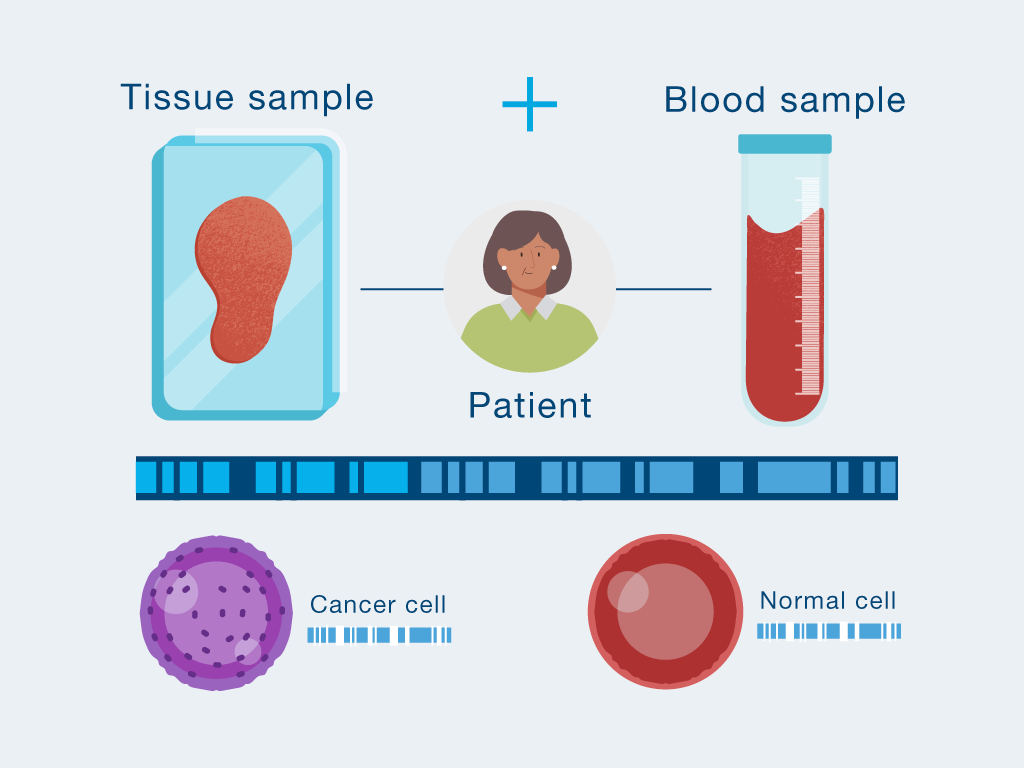
Step 1: Build your test from tumor tissue
A tumor sample (from surgery or biopsy) is used to create your personalized Signatera™ test.

Step 2: Test with a blood draw
Your blood sample is checked for ctDNA that matches your tumor “fingerprint.”
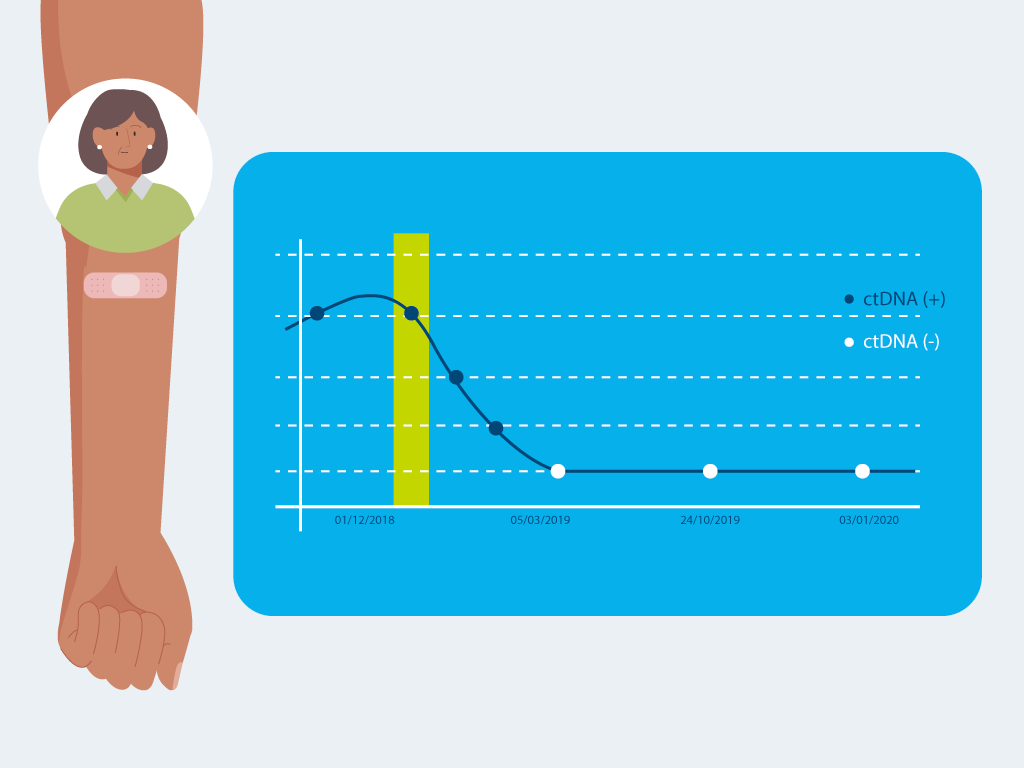
Step 3: Monitor over time
Your doctor may order repeat testing during follow-up to see how results change.
Common questions about Signatera™ in sarcoma
What is a sarcoma?
Sarcoma is a rare cancer that can start in bone or soft tissue. There are many subtypes, so treatment and follow-up can look different from person to person.
Is Signatera™ used across different sarcoma types?
Sarcoma includes many subtypes. In the Stanford-led study Natera shared, Signatera™ was evaluated across multiple soft tissue and bone sarcoma subtypes using a personalized, tumor-informed approach.
Why might my doctor order Signatera™ after sarcoma surgery?
After surgery, your doctor may want more information about recurrence risk during follow-up. Signatera™ may be used to look for molecular residual disease (MRD) by checking for ctDNA that matches your tumor.
What does a positive Signatera™ result mean?
A positive result means ctDNA was detected. In sarcoma research shared by Natera, ctDNA detection was strongly linked with recurrence or progression risk. Your doctor will interpret results alongside imaging and exams.
What does a negative Signatera™ result mean?
A negative result means ctDNA was not detected at that timepoint. This can be reassuring, but it is not a guarantee. Your doctor will still recommend standard follow-up.
Can Signatera™ replace scans like CT or MRI?
No. Imaging remains essential in sarcoma care. Signatera™ is designed to add information, not replace scans.
If my scan is unclear, can ctDNA help?
Sometimes scans can be hard to interpret after surgery or radiation. Your doctor may consider ctDNA testing as another data point during follow-up, depending on your case.
Where can I read sarcoma research on Signatera™?
You can explore sarcoma-related resources and publications in Natera’s Signatera™ resource library and publications hub.
Is Signatera™ for Sarcoma right for you?
1Largest Sarcoma Study to Date with ctDNA Analysis (press release).
2Using Circulating Tumor DNA to Monitor Sarcoma Treatment and Recurrence.