

Signatera™ for Breast Cancer
Empower treatment decisions with tumor-informed molecular residual disease (MRD) testing

WEBINAR
Actionable MRD in breast cancer:
What to do after a positive ctDNA result
Tuesday, October 27, 2026
4:00 PM CT
45 minute webinar
Upcoming Webinar
Join Dr. Prakash Peddi for a focused presentation on real-world evidence (RWE) and patient case studies demonstrating how to translate positive ctDNA / MRD test results into actionable clinical management strategies for breast cancer patients.
Key takeaways include:
- Post-treatment risk stratification
- Clinical decision-making
- Navigating positive Signatera™ findings in everyday practice
Inform Decisions for High Risk Patients

Risk Stratify Patients
5.89x
Signatera™ identified early breast cancer patients with a 5.89x higher risk of recurrence after surgery, regardless of pCR status.1

Predict Recurrence
52x
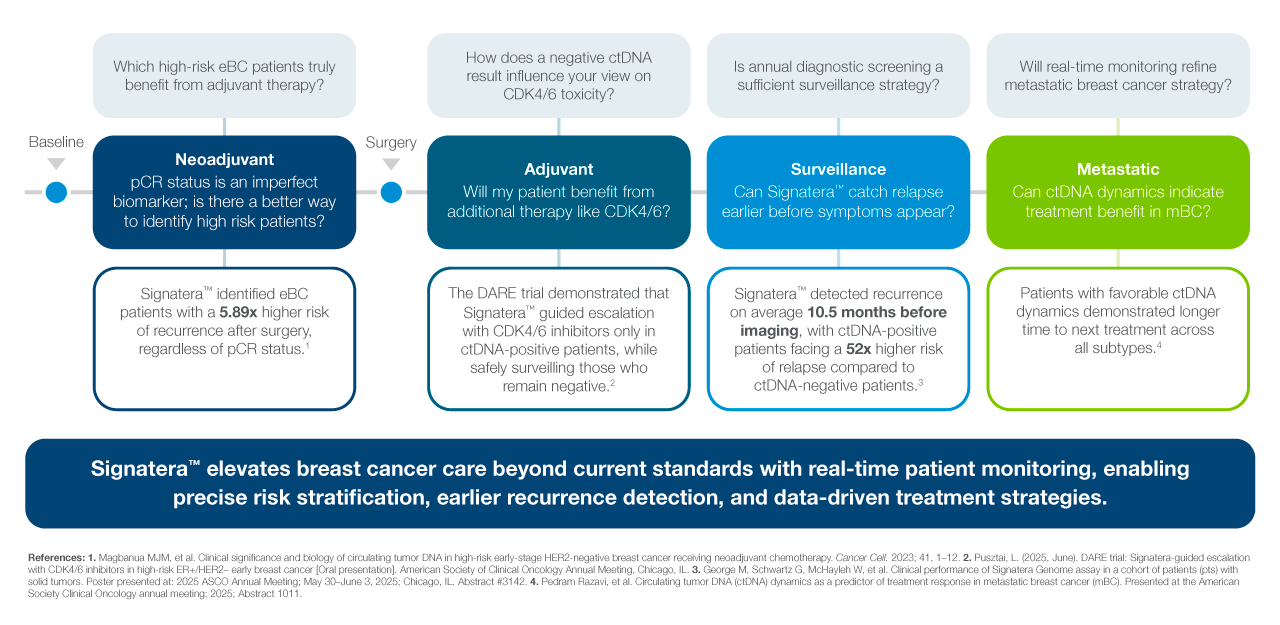
Identify patients at a significantly higher risk of recurrence; ctDNA positive patients are 52x more likely to recur than ctDNA negative patients.2
Signatera™ Genome: The Trusted Leader in Ultra-Sensitivity
Signatera™ Genome provides unparalleled performance in detecting residual disease across all breast cancer subtypes.
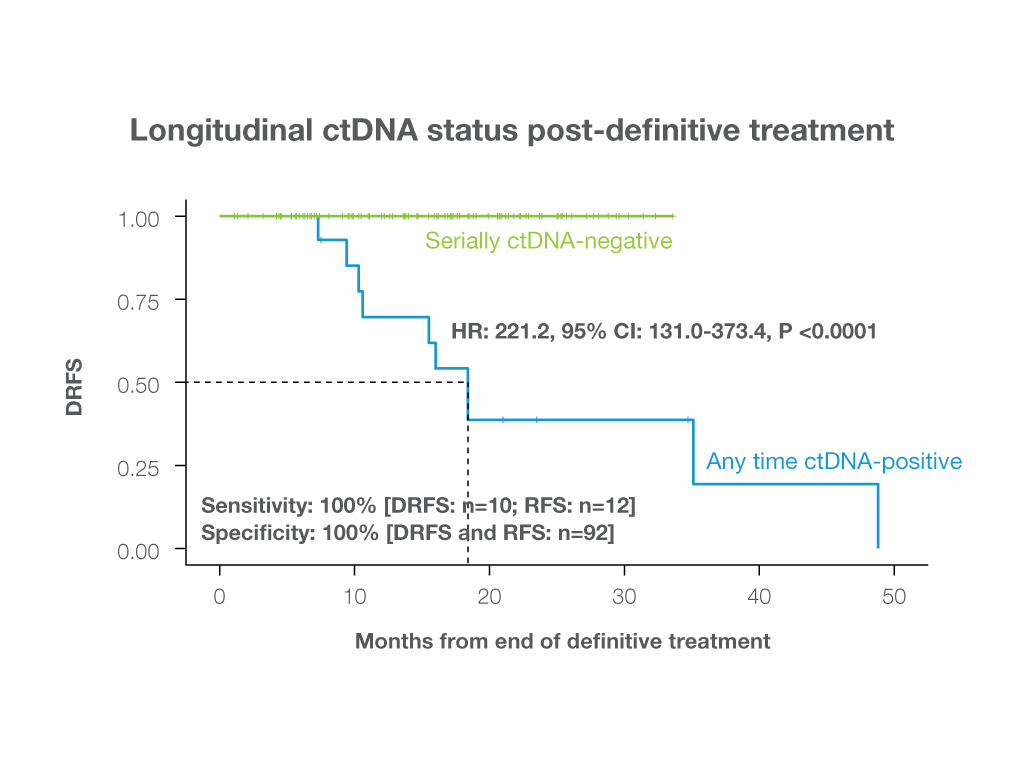
- Unmatched Accuracy: Validated 100% sensitivity and specificity across all subtypes, detecting ctDNA down to 1 ppm.
- Earlier Detection: Identifies recurrence an average of 10.5 months ahead of imaging, allowing for proactive intervention.
- Proven Risk Stratification: Positive results indicate a 221x higher risk of recurrence, with Medicare coverage for both neoadjuvant and surveillance settings.
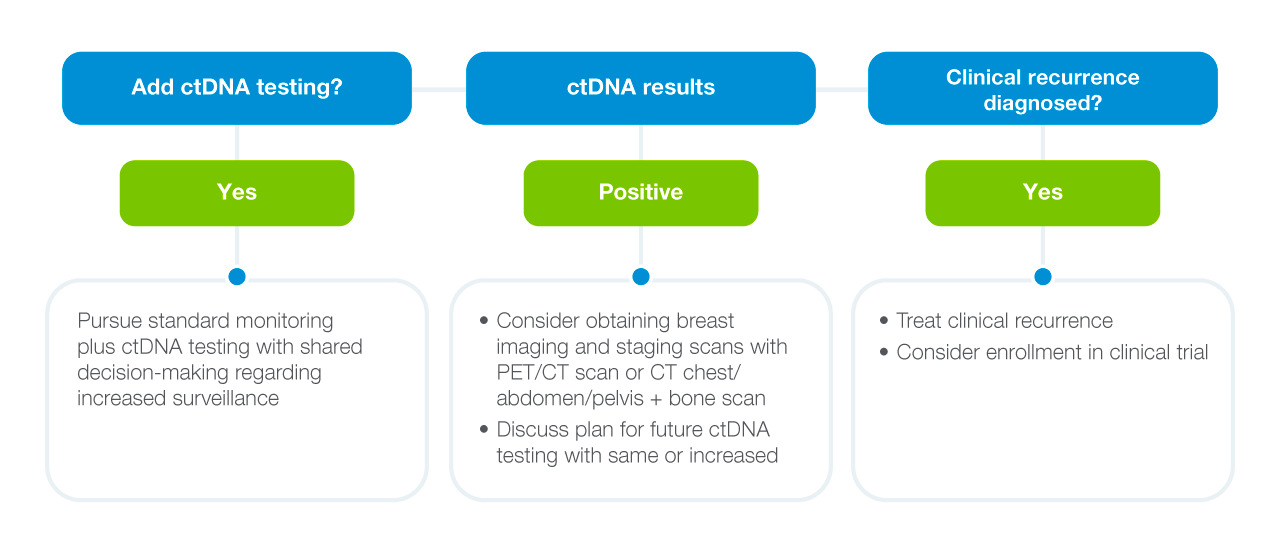
What do I do with a patient who has detectable ctDNA?
Potential management options for patients with MRD.⁸
How often should I test?
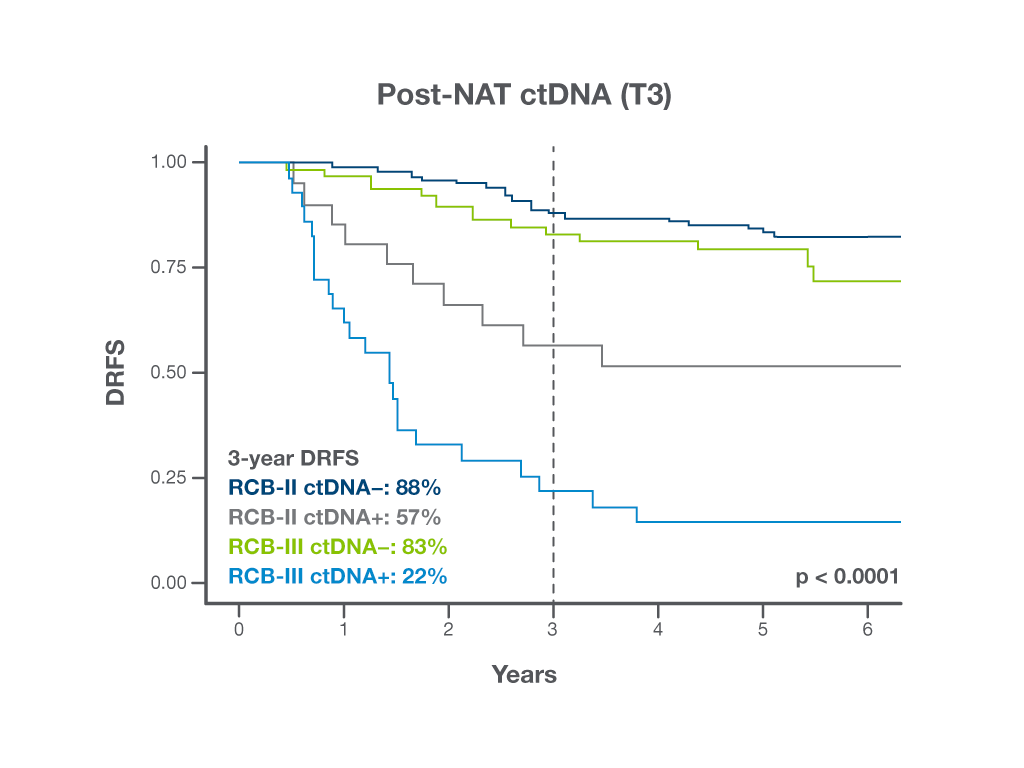
Neoadjuvant Response Monitoring (I-SPY2 Trial)
Detail description about out technology
- Predictive Early Clearance: Early ctDNA clearance (T1/T2) is a critical predictor of improved survival.
- Superior Risk Stratification: In RCB-III tumors, ctDNA-negative patients achieved an 83% 3-year DRFS vs. only 22% for those remaining positive.
- Refined Clinical Insight: Persistent T3 positivity identifies high recurrence risk even when conventional pathology shows residual disease.
Adjuvant MRD Assessment & Surveillance Recurrence Monitoring
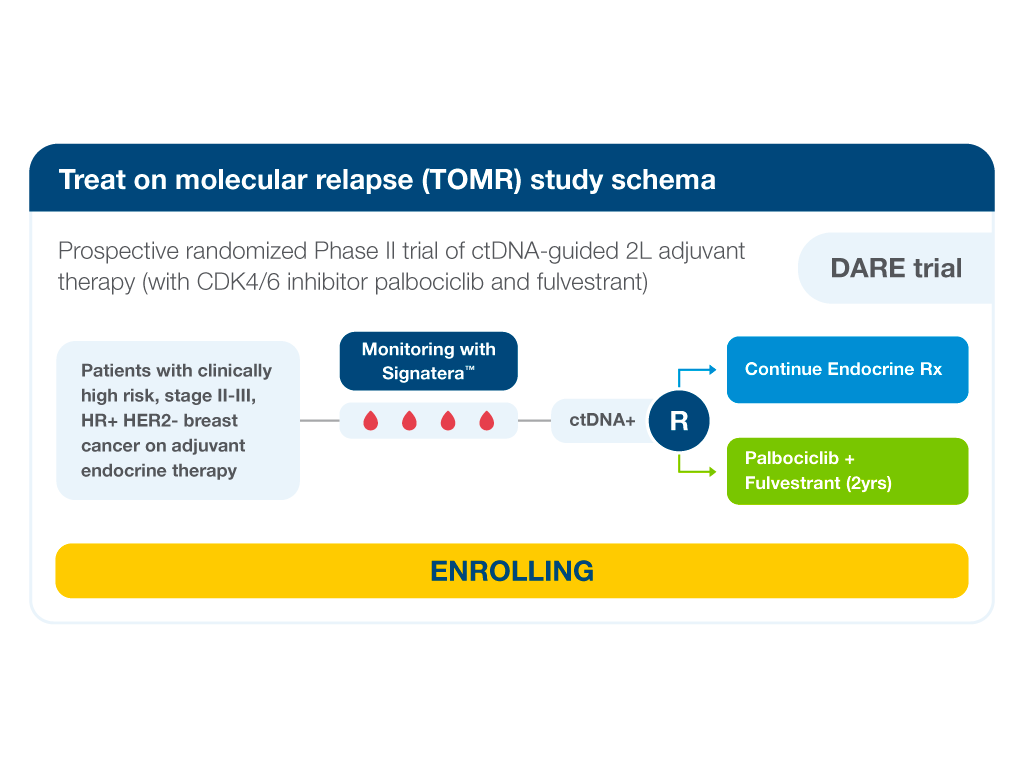
- >99% NPV: DARE showed nearly 100% NPV for relapse in persistently negative patients.
- HR 21.5: PALLAS demonstrated that positivity at EOT identifies a high-risk subgroup.
Metastatic Therapeutic Response Monitoring
Detail description about out technology
-
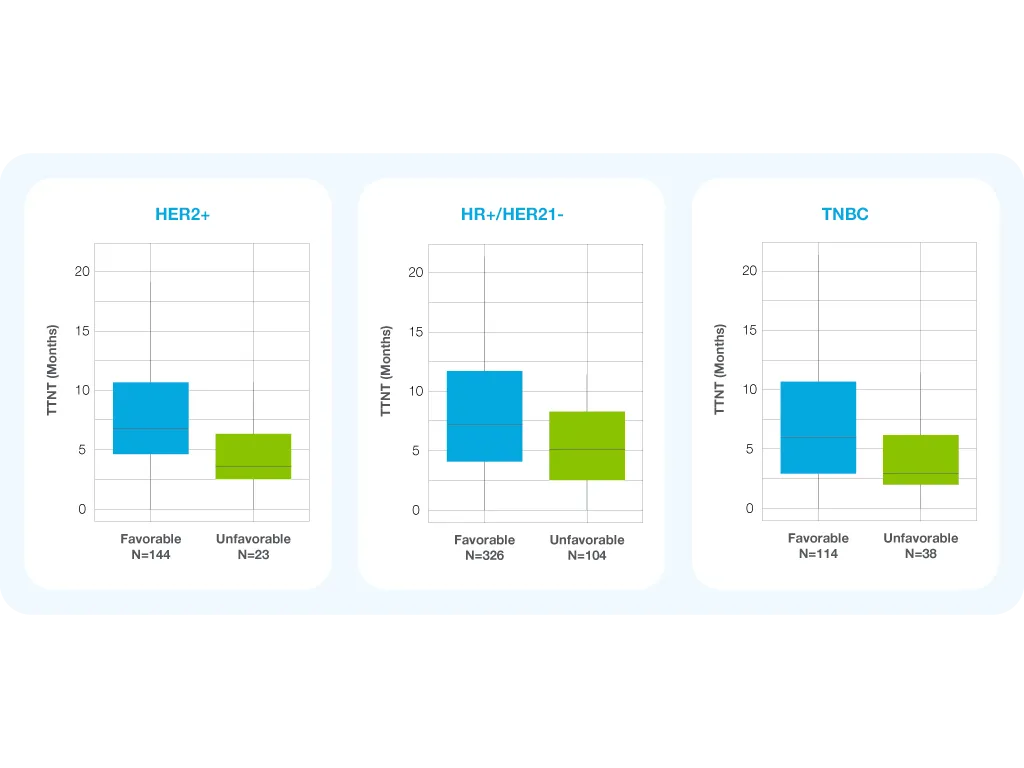
Predictive Value (reference: Razavi ASCO 2025): Favorable ctDNA dynamics correlate with longer Time to Next Treatment (TTNT) across all breast cancer subtypes.
-
Clinical Benefit (reference: Foldi Data):92% of patients with stable or decreasing ctDNA while on treatment demonstrated measurable clinical benefit.
-
IO & Metastatic Utility: Early ctDNA clearance by week 6 predicts superior OS and PFS for patients receiving immunotherapy and clarifies indeterminate imaging.
Comprehensive molecular insights across the breast cancer journey
Natera’s integrated portfolio combines the ultra-sensitivity of Signatera™ with the Breast STAT panel, Empower™, and Altera™ to provide a complete genomic picture for personalized treatment decisions.

Empower™
A hereditary cancer test that screens for genes associated with an increased risk for common hereditary cancers to guide personalized care and familial risk assessment.

Altera™
Comprehensive genomic profiling, delivering a deeper understanding of each cancer’s unique signature for targeted therapy selection.
Covered by Medicare for multiple solid tumor indications






Is Signatera™ for breast cancer right for your patients?
References
*Based on surveillance guidelines; cadence is suggested based on utility of other providers in this indication but does not replace clinical judgment or guidance as set forth in your institutions.
1 Magbanua MJM et al. Clinical significance and biology of circulating tumor DNA in high-risk early-stage HER2-negative breast cancer receiving neoadjuvant chemotherapy. Cancer Cell. 2023; 41(1):1–12.
2 Cutts R et al. Detection of ctDNA following surgery predicts relapse in breast cancer patients receiving primary surgery. Presented at SABCS; Dec 7–11, 2021.
3 Shaw JA, Page K, Wren E, et al. Serial postoperative circulating tumor DNA assessment has strong prognostic value during long-term follow-up in patients with breast cancer. JCO Precis Oncol. 2024; 8:e2300456. doi:10.1200/PO.23.00456.
4 Bratman SV et al. Nat Cancer. 2020; 1(9):873–881.
5 Early Breast Cancer Trialists’ Collaborative Group. Lancet. 2005; 365:1687–1717.
6 O'Connor T et al. Clin Adv Hematol Oncol. 2013; 11(6):341–347.
7 Magbanua MJM et al. Ann Oncol. 2021; 32(2):229–239.
8 Magbanua MJM et al. Comparison of the predictive and prognostic significance of circulating tumor DNA in patients with high-risk HER2-negative breast cancer receiving neoadjuvant chemotherapy. Presented at AACR; Apr 8–13, 2022.
9 Coombes RC et al. Clin Cancer Res. 2019 Jul 15; 25(14):4255–4263.
10 Pusztai L et al. Circulating tumor DNA (ctDNA) monitoring of ER+/HER2- high-risk breast cancer during adjuvant endocrine therapy. Presented at ASCO Annual Meeting; 2025. Abstract 1010.
11 Razavi P et al. Circulating tumor DNA (ctDNA) dynamics as a predictor of treatment response in metastatic breast cancer. Presented at ASCO Annual Meeting; 2025. Abstract 1011.
12 George et al. Clinical performance of Signatera Genome assay in a cohort of patients with solid tumors. Poster presented at ASCO Annual Meeting; Chicago, IL; 2025. Abstract 3142.
13 McHayleh et al. Poster presented at SABCS; 2025. Poster PS2-07-26.
14 Parsons et al. Poster presented at SABCS; 2025.
15 Medford A et al. LEADER study. Presented at SABCS; 2025.
16 Xu et al. Presented at SABCS; 2025.
17 Carleton, Neil, et al. “Use of ctDNA in Older Women with ER+ Breast Cancer to Facilitate Surgical De-escalation: A Prospective, Hybrid-Decentralized Trial with Correlative Studies.” Clinical Cancer Research, 2026.
18 Foldi, J., et al. (2025). Personalized Circulating Tumor DNA Testing for Detection of Progression and Treatment Response Monitoring in Patients With Metastatic Invasive Lobular Carcinoma of the Breast. JCO Precision Oncology, 9, e2400577.