

Questions Signatera™ may help support during and after lymphoma treatment
Signatera™ is used alongside standard lymphoma follow-up. Your care team may use it as one more source of information to support questions like:
- Is my treatment working? This test looks for tiny traces of cancer DNA in your blood to see if therapy is working early on, even before your next scan.
- Is the lymphoma really gone? Even if a scan looks clear, this test finds “hidden” signals to see if there is still a risk of it coming back.
- Can we catch a relapse earlier? This test can find early warning signs months before a standard scan may show anything.
- What is the best next step? If ctDNA levels change, it may help your doctor choose the best treatment strategy for your lymphoma.
Lymphoma care can vary a lot by subtype, treatment plan and timing. Your doctor will decide whether ctDNA monitoring is appropriate for your care.
Common challenges in lymphoma monitoring

Imaging can be hard to interpret
PET/CT is a key part of lymphoma care, but some findings can be unclear and may need repeat imaging or more follow-up.

Timing matters during treatment
In lymphoma, early response signals can be important when doctors are deciding whether a treatment plan is working.

Relapse risk can change over time
Lymphoma monitoring is a process. Trends across repeat tests (serial testing) may be more helpful than a single timepoint.

Lymphoma includes many subtypes
Diffuse large B-cell lymphoma and other lymphoma subtypes can behave differently, so monitoring plans are individualized.
What research says about ctDNA and lymphoma monitoring
Signatera™ has been evaluated in lymphoma research for treatment response monitoring, relapse risk assessment and follow-up across multiple lymphoma settings, including diffuse large B-cell lymphoma (DLBCL).

During treatment: ctDNA clearance and response
Published and presented lymphoma analyses have evaluated whether ctDNA clearance during treatment is associated with better outcomes. In these studies, falling or cleared ctDNA has been associated with improved outcomes compared with persistent ctDNA detection.

End-of-treatment ctDNA and relapse risk
End-of-treatment ctDNA testing has been studied as a way to help identify patients at higher risk of relapse. This may be especially helpful when imaging results are not straightforward.

Guideline context (DLBCL)
There is guideline context for ctDNA-MRD in DLBCL in specific follow-up situations. Your doctor can explain whether this applies to your lymphoma subtype and where you are in treatment.
A ctDNA result is one piece of information. Your doctor will interpret it with PET/CT imaging, labs, pathology, symptoms and your full treatment history.
Personalized first, then tracked with blood draws
Signatera™ is built one time from your tumor and then can be used for repeat blood-based monitoring over time.
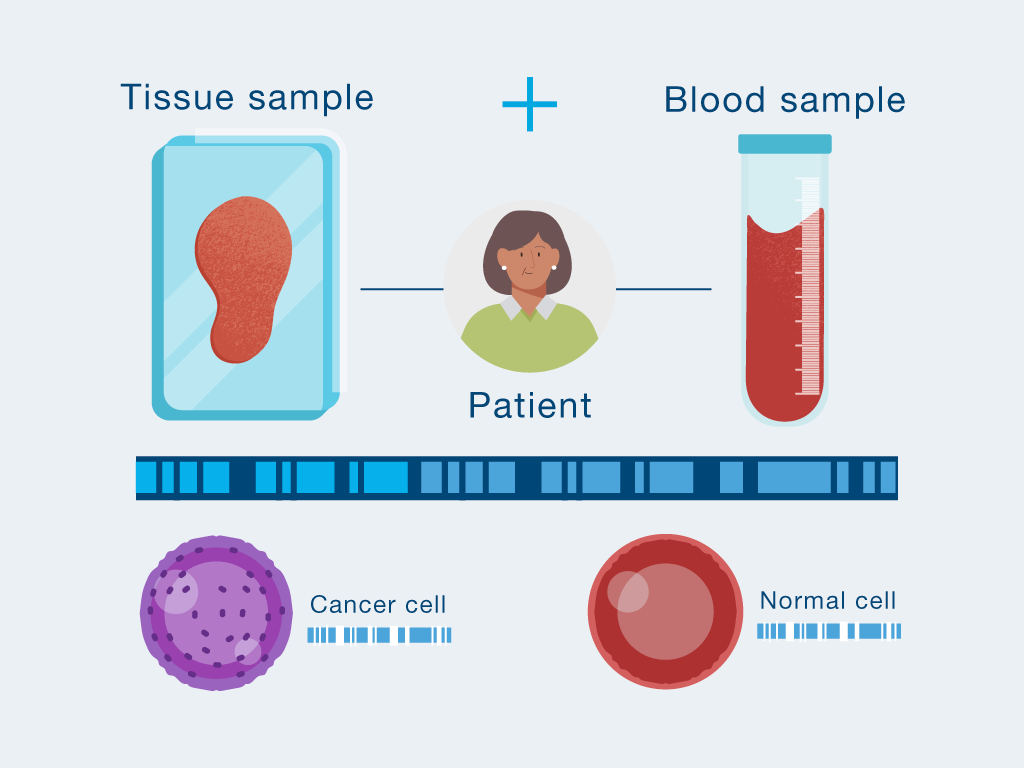
Personalized test design
A tumor tissue sample is used to build your personalized Signatera™ test so it is designed for your lymphoma’s DNA fingerprint.

Blood draw monitoring
Your blood sample is checked for ctDNA that matches your tumor. This helps your doctor monitor for ctDNA over time.
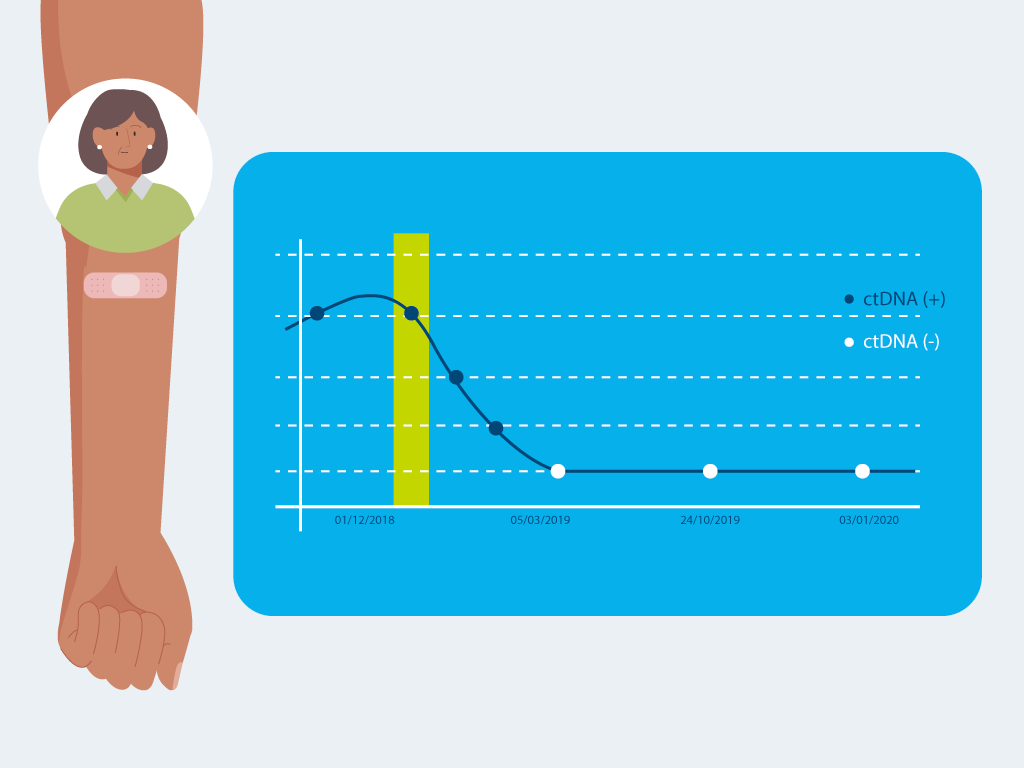
Repeat testing over time
Your doctor may order Signatera™ again during treatment or follow-up to track whether ctDNA is detected and how results change.
Built for longitudinal ctDNA monitoring in lymphoma
Signatera™ is a tumor-informed ctDNA test designed for serial monitoring. This is important in lymphoma because doctors often need to understand how disease signals are changing over time, not only at one visit.
For many patients, the goal is not to replace PET/CT or labs. The goal is to add another clinically meaningful data point that can support conversations about response, risk and follow-up planning.
FAQs
Answers to common questions about Signatera™, ctDNA and lymphoma follow-up care.
What is ctDNA in lymphoma?
ctDNA stands for circulating tumor DNA. These are small pieces of DNA that can come from lymphoma cells and be found in the blood. Signatera™ is designed to look for ctDNA that matches your lymphoma.
What is Signatera™?
Signatera™ is Natera’s personalized ctDNA blood test, also called a tumor-informed MRD test. It is built using your tumor tissue so it is designed to track your lymphoma’s specific DNA fingerprint over time.
Does Signatera™ replace PET/CT scans, lab work or clinic visits?
No. Signatera™ is designed to add information, not replace standard lymphoma follow-up. Your care team will still use imaging, labs, exams and symptoms to guide decisions.
What does a positive Signatera™ result mean in lymphoma?
A positive result means ctDNA was detected in that blood sample. In lymphoma studies, ctDNA detection has been associated with higher relapse risk or worse outcomes in some settings. Your doctor will interpret the result in the context of your scans, labs and treatment history.
What does a negative Signatera™ result mean?
A negative result means ctDNA was not detected at that timepoint. This can be reassuring, but it does not guarantee lymphoma will not return. Your doctor will still recommend follow-up based on your care plan.
Can Signatera™ be used during treatment, not just after treatment?
Yes, in some cases. ctDNA monitoring has been evaluated during lymphoma treatment to help assess how disease signals are changing over time. Your doctor can explain whether this is useful in your situation.
Can Signatera™ help if my scan results are unclear?
It may help add information. ctDNA testing has been evaluated as a complementary tool when imaging is ambiguous. Your doctor may use ctDNA results together with imaging, labs and clinical findings to guide next steps.
Is Signatera™ used for all lymphoma subtypes?
Lymphoma includes many subtypes and care plans differ across them. Signatera™ has been studied in lymphoma settings including DLBCL and other subtypes. Your doctor can tell you whether ctDNA monitoring is appropriate for your lymphoma type.
Do I need tumor tissue for Signatera™?
Yes. Signatera™ is tumor-informed, which means it is built using tumor tissue first. After the personalized test is created, follow-up testing is done with blood draws.
Can Signatera™ be used around CAR-T therapy or transplant?
ctDNA monitoring has been evaluated in relapsed or refractory lymphoma settings, including around CAR-T cell therapy and autologous stem cell transplant. Your care team can explain whether ctDNA trends may be useful in your treatment plan.
Is Signatera™ for Lymphoma right for you?
1Tumor-informed ctDNA assessment as a valuable prognostic and predictive biomarker in diffuse large B-cell lymphoma (DLBCL). Frontiers in Oncology. 2024.