

How Signatera™ may be used in liver cancer care
Your care team may use Signatera™ to support follow-up questions such as:
- After surgery or curative-intent treatment: Is there any ctDNA signal that may suggest a higher risk the cancer could come back, even if scans look clear?
- Over time: Do ctDNA results stay negative, or do they change across follow-up visits?
- During treatment (in some cases): Are ctDNA results changing while you are on treatment, alongside scans and other tests?
Understanding ctDNA
Signatera™ is personalized, built using your tumor tissue to identify relapse earlier that standard of care tools
Built from your tumor, then tracked with blood draws
Signatera™ is personalized once, then it can be used again and again over time.
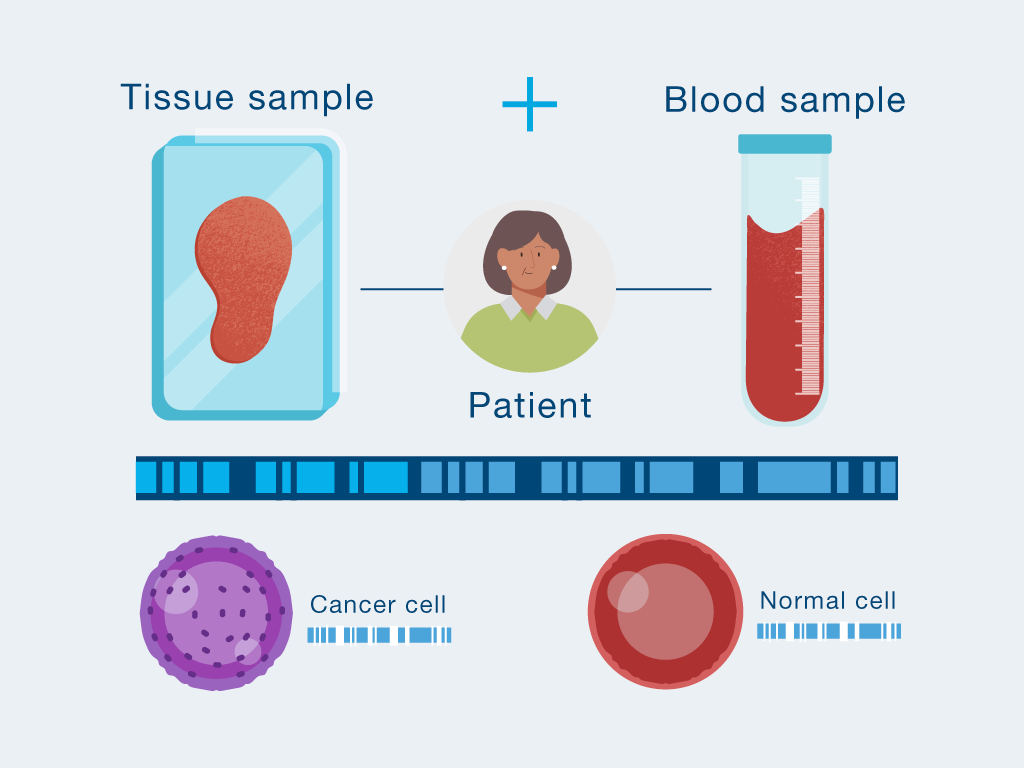
Personalized, tumor-informed test
A one-time tumor tissue sample is used to build your personalized Signatera™ test.

Ultrasensitive ctDNA detection
Signatera™ uses a tumor-informed approach designed to filter out certain non-tumor DNA changes that can appear in blood.
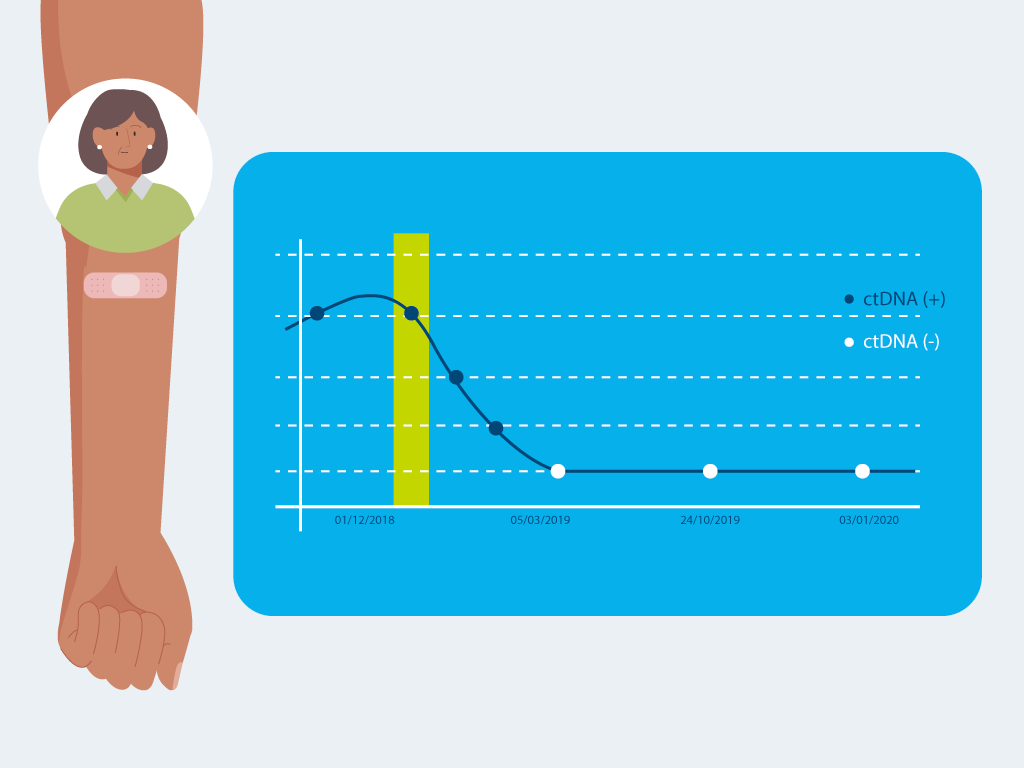
Optimized for monitoring over time
After your test is created, future testing is done with a blood draw each time it is ordered.
Common questions about Signatera™ in liver cancer (HCC)
What is ctDNA?
ctDNA is small pieces of tumor DNA that can sometimes be found in the blood.
What does “tumor-informed” mean?
It means the test is built using your tumor tissue, so it is designed to look for DNA changes that match your cancer.
How is Signatera™ different from imaging?
Scans look for tumors you can see. Signatera™ looks for tumor DNA in the blood. Doctors may use both because they answer different questions.
What does a positive result mean in HCC follow-up?
A positive result means ctDNA was detected. In published HCC studies, ctDNA detection has been associated with higher recurrence risk and worse outcomes. Your doctor will use this alongside scans, labs and how you feel to help make therapy decisions.
What does a negative result mean?
A negative result means ctDNA was not detected at that timepoint. This can be reassuring, but it is not a guarantee. Your doctor will still recommend routine follow-up.
Will Signatera™ replace my scans or AFP testing?
No. Standard monitoring tools remain important. Signatera™ is designed to add information, not replace other tests.
Do I need a tumor sample for Signatera™?
Yes. Signatera™ uses tumor tissue to build your personalized test. After that, testing is done with blood draws.
How often is Signatera™ ordered for liver cancer?
There is not one schedule for everyone. Your doctor decides timing based on your treatment plan and follow-up schedule.
Is Signatera™ for Liver cancer right for you?
1Abdelrahim M, et al. Feasibility of Personalized and Tumor-Informed Circulating Tumor DNA Assay for Early Recurrence Detection in Patients With Hepatocellular Carcinoma. JCO Precision Oncology. 2025.
2Personalized circulating tumor DNA (ctDNA) monitoring for recurrence detection and treatment response assessment in hepatocellular carcinoma (HCC).
3Natera news release summarizing updated MRD/ctDNA analyses including HCC recurrence monitoring context (ESMO 2023).