
Inform clinical challenges in liver cancer

Identify high risk patients
50%
of resected HCC patients relapse within 2 years.

Risk stratify
100%
of Signatera™-positive patients in the MRD window went on to recur.1

Catch recurrence sooner
7.9
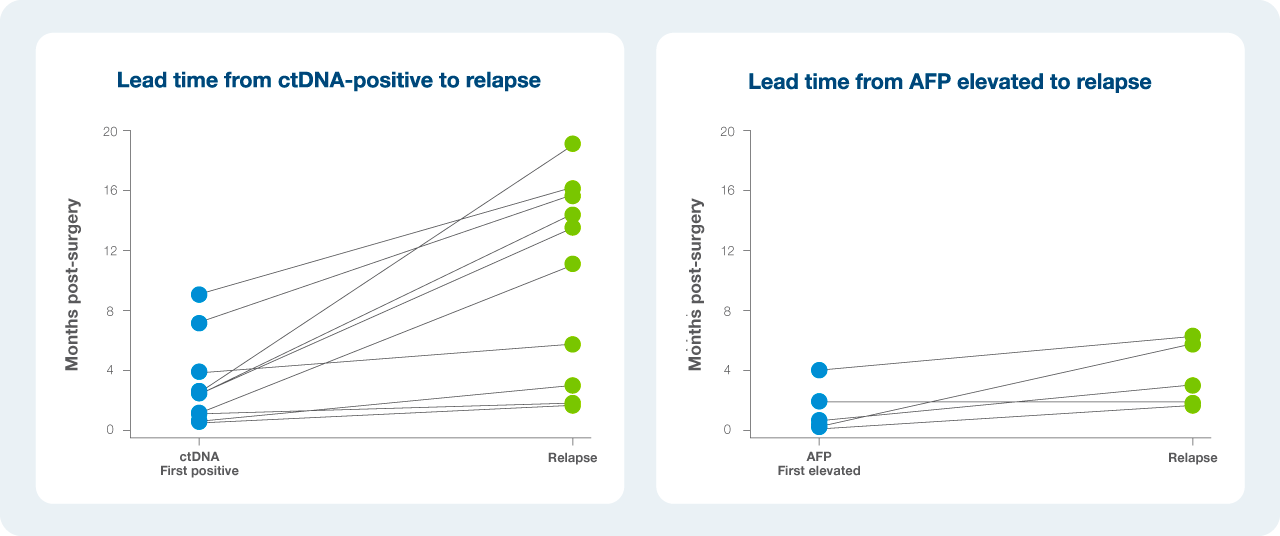
months was the median lead time Signatera™ detected recurrence ahead of imaging, compared to 2.2 months for AFP (P<0.04).1
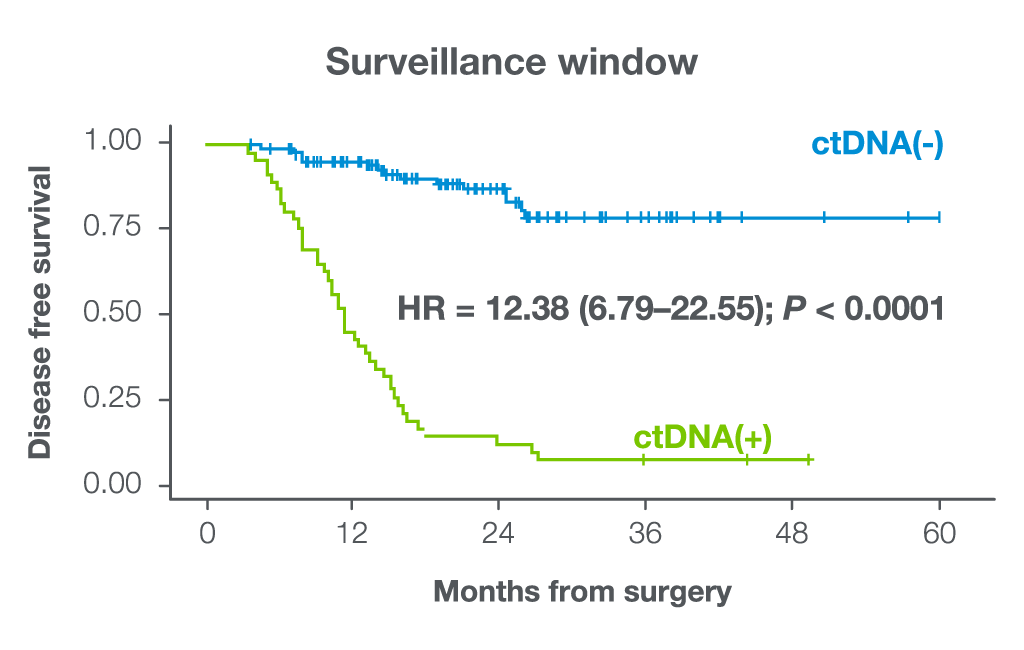
Risk stratify based on Signatera™ status at the MRD window
The real world study analyzes 125 HCC patients across four clinical scenarios to assess the utility of Signatera™ after liver transplantation, surgery, or during systemic therapy:
Signatera™ demonstrated strong prognostic utility All patients with Signatera™ positivity after resection relapsed (MRD: HR 7.2, P < 0.0001, Surveillance: HR = 18.0, P < 0.0001).10
Catch recurrence sooner while intervention is still possible
Signatera™ detected recurrence earlier than imaging or AFP In post-surgical patients, Signatera™ detected relapse 7.9 months earlier than clinical recurrence, outperforming AFP (median lead time 2.2 months).¹
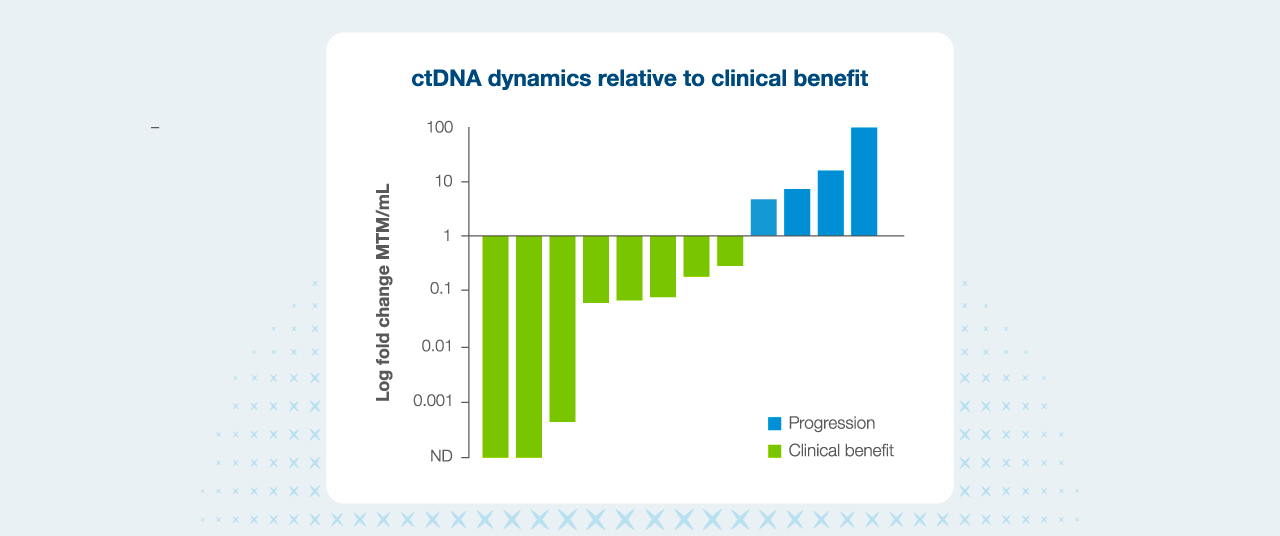
Signatera™ ctDNA dynamics correlated with clinical benefit and utility
Changes in Signatera levels during treatment correlated with clinical outcomes: All patients with decreasing ctDNA experienced clinical benefit* while those with rising ctDNA had progression or relapse.¹
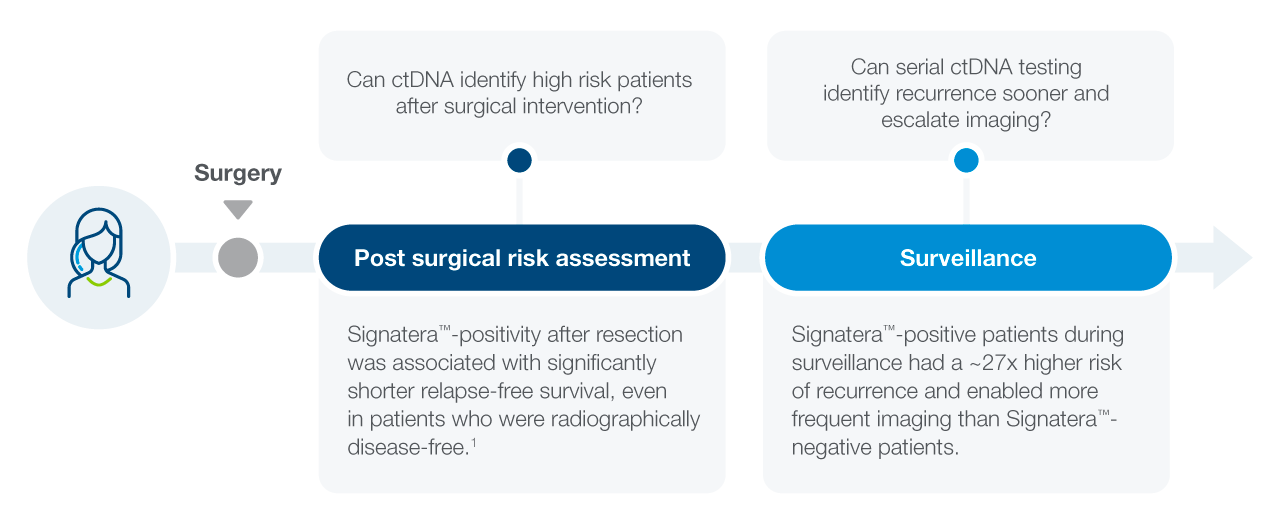
Clinical questions Signatera™ may help answer in liver cancer
Is Signatera™ for Liver cancer right for your patients?
References
1Abdelrahim, et al. The Feasibility of Personalized and Tumor-Informed ctDNA Assay for Early Recurrence Detection in Patients with Hepatocellular Carcinoma. JCO precision oncology, 2025