
Where Signatera™ may be used in uterine cancer care
Timing depends on your diagnosis, your treatment plan and where you are in follow-up. Your doctor decides when Signatera™ may be useful.
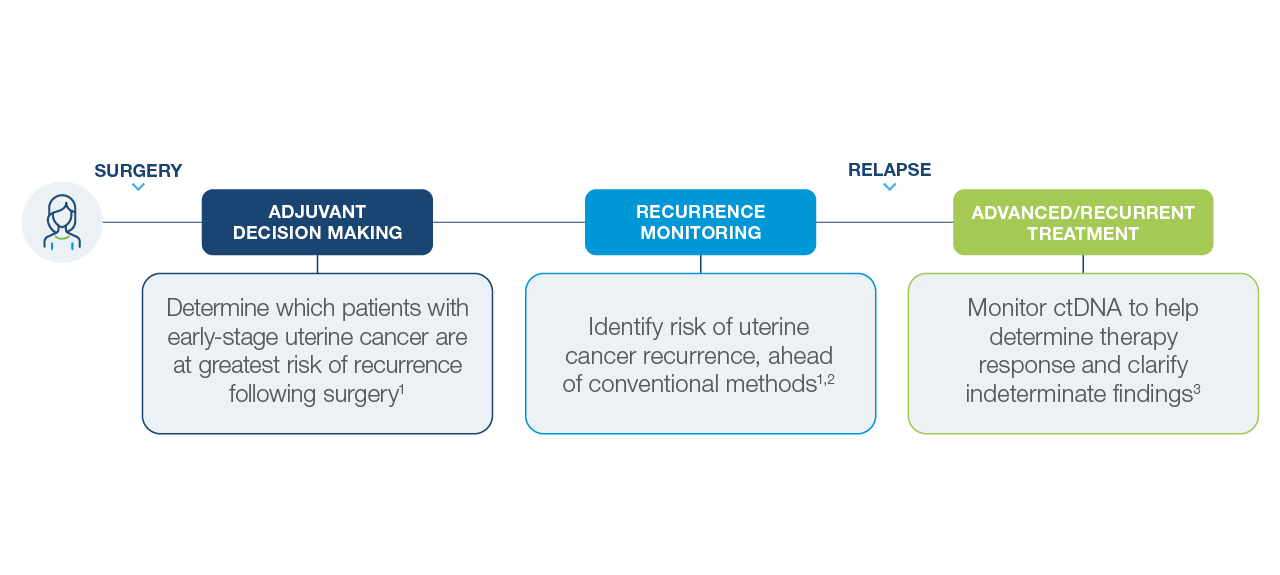
Questions Signatera™ may help support in uterine cancer care
Signatera™ is used alongside standard follow-up care and does not replace office visits, scans or pelvic exams. Your care team may review your test results along with pathology, stage, imaging findings and symptoms in order to add information to questions like:
- Is there any cancer left after surgery or treatment (molecular residual disease, or MRD)?
- Could the cancer be coming back during surveillance?
- How, and when, will we know if the treatments is working?
A blood test designed for your tumor
Signatera™ is personalized first, then your doctor can use repeat blood draws to track changes over time.
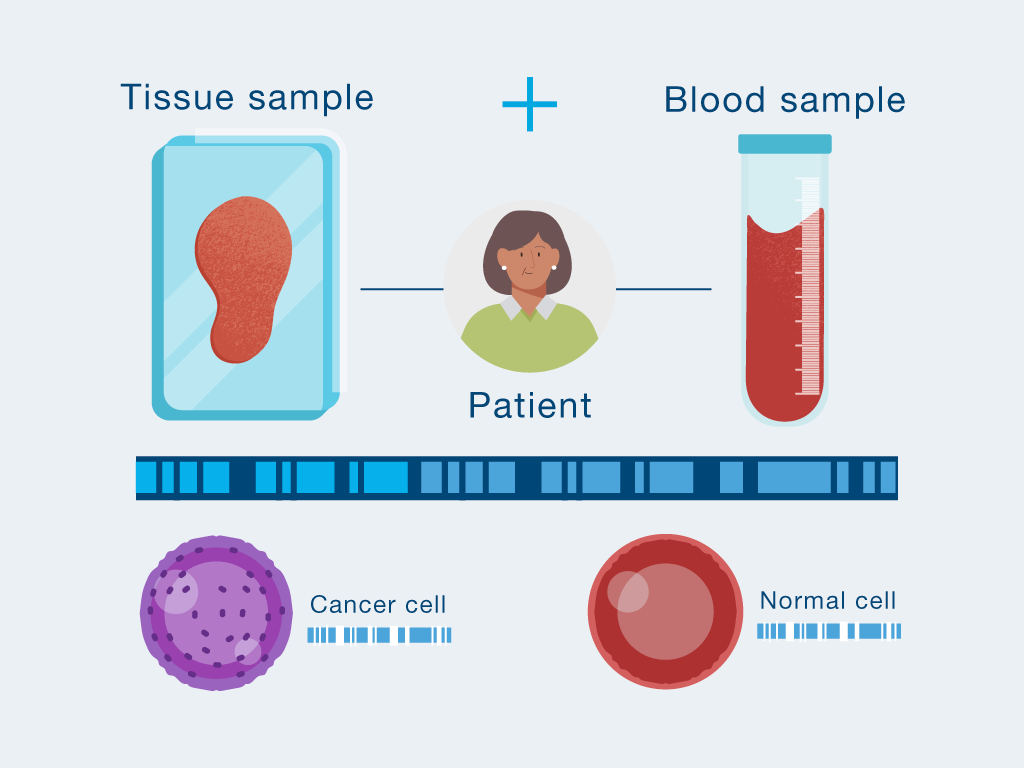
Personalized setup
A sample of your tumor tissue is used to build your personalized Signatera™ test.

Blood draw testing
A blood sample is checked for ctDNA that matches your tumor’s DNA fingerprint.
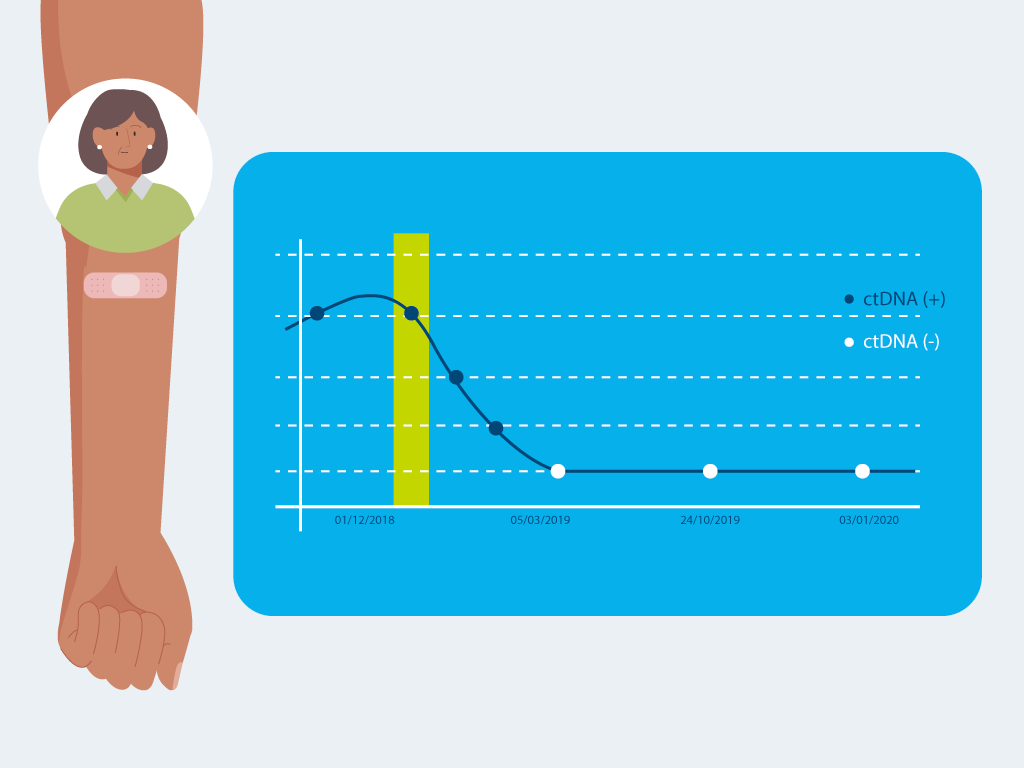
Repeat testing over time
After your test is built, your doctor can order Signatera™ again to monitor changes during follow-up or treatment.
What research says about ctDNA and endometrial cancer monitoring
- Accurately predicts uterine cancer recurrence compared to existing tools
- Detects recurrences months earlier than existing
- Provides strong reassurance when test results are negative
Other tests your doctor may use in endometrial cancer care
Endometrial cancer care may include different types of testing at different times. Along with Signatera™ monitoring, your doctor may also discuss hereditary testing and tumor profiling.

Altera™ comprehensive genomic profiling (CGP)
Altera™ looks at genomic changes and biomarkers in the tumor. This information may help support treatment planning and clinical trial discussions.

Empower™ hereditary cancer testing
Some endometrial cancers are linked to inherited gene changes, including Lynch syndrome. Empower™ is our hereditary cancer test that can help identify inherited risk and may help guide care for you and your family.
Help understanding coverage and cost
Coverage for Signatera™ can vary based on your diagnosis, stage, insurance plan and how your doctor is using the test. We offer billing support resources to help patients understand coverage and potential financial assistance options when available.
Endometrial cancer ctDNA monitoring FAQs
Answers to common questions about Signatera™ and follow-up after endometrial cancer treatment.
What is endometrial cancer monitoring?
Endometrial cancer monitoring is the follow-up care you have after treatment. It often includes pelvic exams, imaging and office visits. Some doctors may also use blood tests. Signatera™ is a personalized ctDNA blood test that may be used as part of monitoring over time.
What is MRD in endometrial cancer?
MRD stands for molecular residual disease. It means there may be a very small amount of cancer left after treatment, even when it is too small to see on imaging. Signatera™ is designed to look for MRD in the form of ctDNA.
What does a positive Signatera™ result mean?
A positive result means ctDNA was detected in that blood sample. In published uterine and endometrial cancer studies, Signatera™-positive results after treatment were associated with a higher risk of recurrence. A positive result does not confirm everything by itself. Your doctor will interpret it with exams, imaging and other tests.
What does a negative Signatera™ result mean?
A negative result means ctDNA was not detected in that sample at that time. Many patients find that reassuring. A negative result does not guarantee the cancer will not return, so your doctor will still recommend regular follow-up visits and testing.
Can Signatera™ replace scans or pelvic exams?
No. Signatera™ is designed to add information, not replace standard follow-up care. Your doctor will still use imaging, exams, symptoms and other labs when making decisions.
How often is Signatera™ done for endometrial cancer?
Signatera™ can be ordered more than once so your care team can track changes over time. Timing depends on your diagnosis, your treatment plan and where you are in follow-up. Your doctor decides the schedule.
Can Signatera™ be used if I need treatment again?
In some cases, yes. Signatera™ has been evaluated in advanced or recurrent uterine cancer for ctDNA detection and treatment response monitoring over time. Your doctor can explain whether that use fits your situation.
What is the difference between Signatera™ and CA-125 or other tumor markers?
Tumor markers and ctDNA tests measure different things. Signatera™ is a tumor-informed test built from your tumor tissue and designed to detect ctDNA that matches your cancer. Your doctor may use different tests together depending on your diagnosis and follow-up plan.
Is endometrial cancer the same as uterine cancer on this page?
Endometrial cancer is the most common type of uterine cancer. Some studies and publications may use the term uterine cancer, especially when describing study populations. Your doctor can help explain which findings are most relevant to your diagnosis.
Is Signatera™ right for you?
1Recio F, Scalise CS, Loar P, et al. Post-surgical ctDNA-based molecular residual disease detection in patients with stage I uterine malignancies. Gynecologic Oncology. 2024.
2Toboni M, et al. JCO Precision Oncology study validating Signatera for recurrence monitoring and treatment response assessment in early-stage uterine cancer (multi-center real-world study; stage I/II uterine cancer). JCO Precision Oncology. 2025.
3Personalized circulating tumor DNA analysis used for ctDNA detection and response monitoring in patients with advanced or recurrent uterine cancer.