
Inform clinical decisions in anal cancer
For ~14% of patients who are the highest risk of treatment failure there is no validated tool to identify who is at risk during or immediately after treatment.1

Risk stratify patients
100%
1-year OS and PFS were observed in patients who cleared Signatera™ during treatment, with no locoregional failures.2

Catch recurrence sooner
100%
treatment failure when SignateraTM is detectable during surveillance.2
Risk-stratify anal cancer during and after CRT via Signatera™
Identify high-risk patients earlier. Recent data demonstrates 100% locoregional failure-free survival in patients who achieve ctDNA clearance.
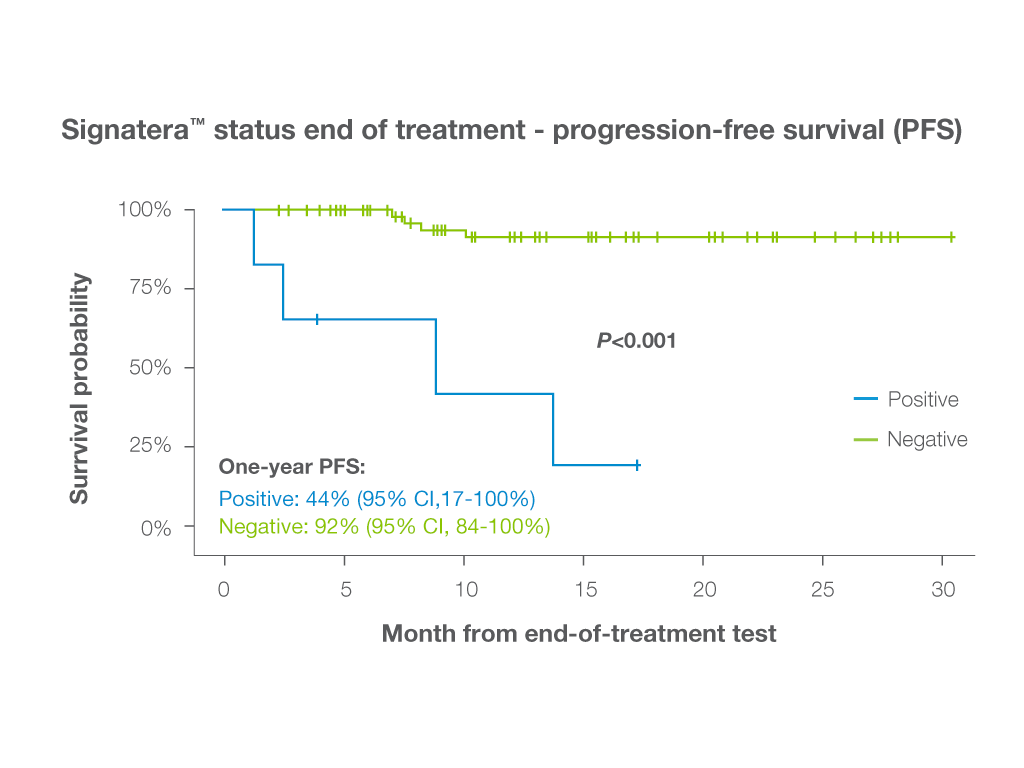
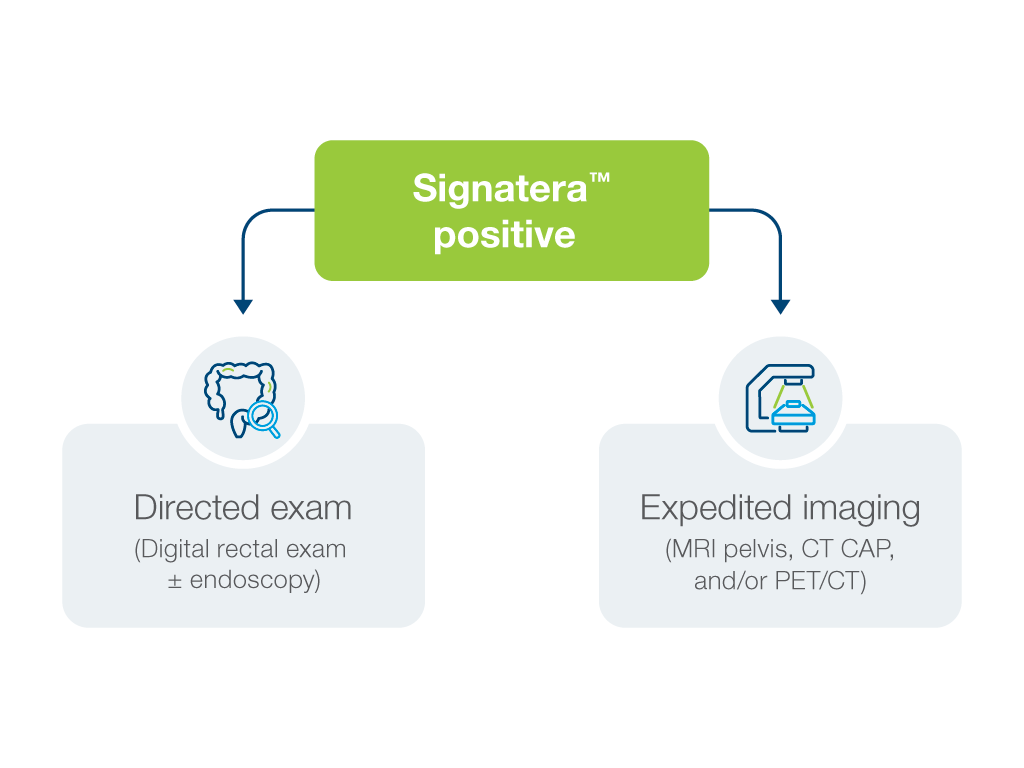
Proven in ASCC: 100% correlation between detectable ctDNA and treatment failure
- Patients who converted from Signatera™-negative to Signatera™-positive during surveillance were identified as a high-risk population and underwent expedited clinical evaluation
- Signatera™ surveillance is highly predictive: 0% recurrence with sustained cDNA clearance vs. 100% treatment failure when cDNA is detectable
Is Signatera™ for anal cancer right for your patients?
References
1James RD et al. Mitomycin or cisplatin chemoradiation ± maintenance chemo for anal SCC (ACT II): phase 3 trial. Lancet Oncol. 2013;14(6):516–24. doi:10.1016/S1470-2045(13)70086.
2Bercz et al., Circulating tumor DNA as an early response indicator in anal squamous cell carcinoma treated with chemoradiation. American Society of Clinical Oncology 2025, Chicago May 30th–June 3rd 2025.