

How Signatera™ may be used in kidney cancer care
Your care team may use Signatera™ as one more tool alongside scans and routine follow-up to help answer questions like:
- After surgery: Is there a molecular signal of remaining cancer (MRD), even if scans look clear?
- During surveillance: Are ctDNA results staying negative or changing over time?
- During treatment (in some cases): Do ctDNA trends provide another data point while monitoring response or progression?
- When the picture is unclear: Can ctDNA add information between imaging timepoints?
Why ctDNA testing can be helpful in kidney cancer
Scans are essential in kidney cancer follow-up, but they are done at set intervals and small changes may not be clear right away. ctDNA testing looks for tiny pieces of tumor DNA that may be found in the blood. Signatera™ is tumor-informed, which means it is built from your tumor tissue to focus on tumor-specific DNA changes.
This can give your care team another source of information to review alongside scans, symptoms and office visits.

Published RCC evidence includes surgery and treatment settings
Published Signatera™ RCC research includes:
- Surgically resected RCC: A The Oncologist study reported ctDNA associations with recurrence outcomes after surgery, including hazard ratios for relapse-free survival when ctDNA was detected before surgery or at any post-operative timepoint.
- Metastatic RCC: A JCO Precision Oncology publication evaluated ctDNA assays in metastatic renal cell carcinoma, supporting continued study of ctDNA for treatment monitoring.
Built from your tumor, then tracked with blood draws
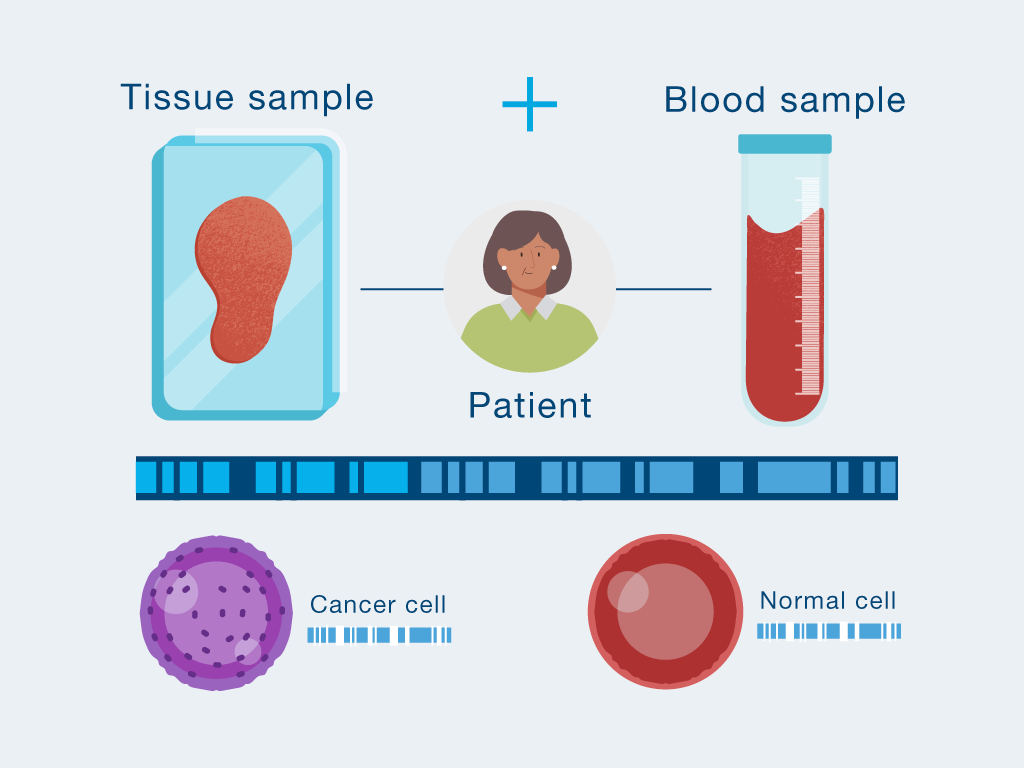
Personalized, tumor-informed test created
A one-time tumor tissue sample is used to build your personalized Signatera™ test.

Blood draw checks for tumor DNA
Your blood sample is checked for ctDNA that matches your tumor’s DNA fingerprint.
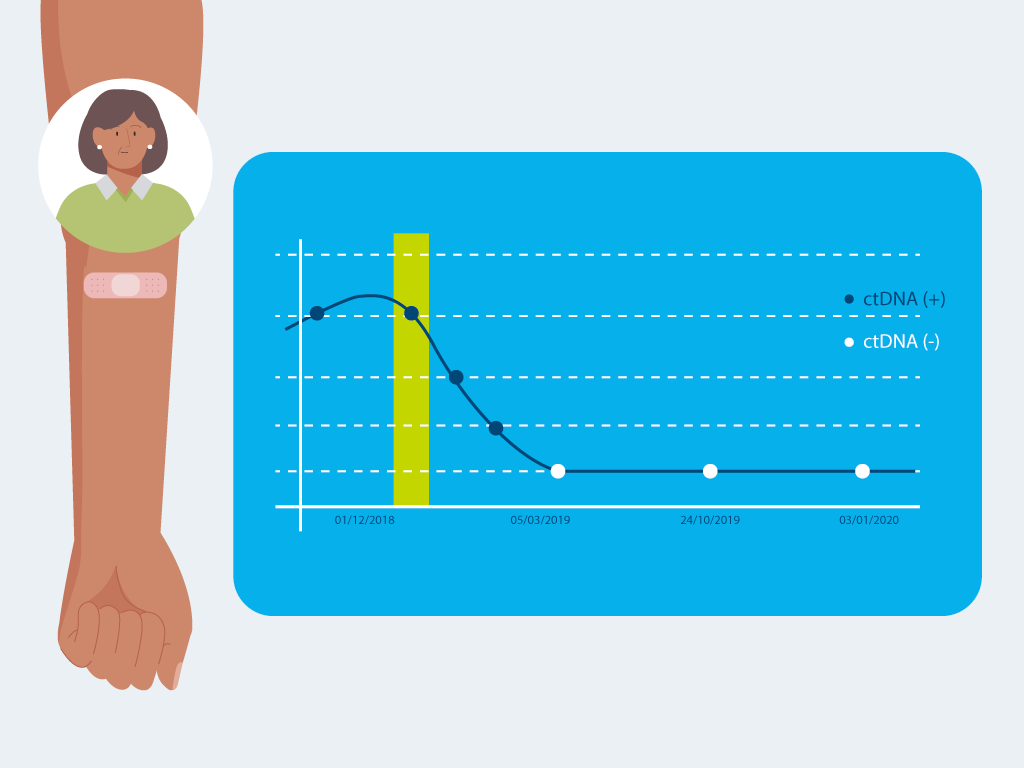
Designed for monitoring over time
After your test is created, future testing is done with a blood draw each time it is ordered so your doctor can track changes over time.
Designed to support follow-up conversations
Many people want real-time information about their cancer, between diagnosis and follow up visits. Signatera adds another piece of information along with scans, lab work and how you are feeling.
Because kidney cancer follow-up plans vary by stage, subtype and treatment history, your doctor will decide whether ctDNA testing fits your situation and how often to use it.
When Signatera™ may be used
Your care team may order Signatera™ at different points, such as:
- After surgery or treatment, to look for molecular residual disease (MRD)
- During follow-up, to monitor results over time
- During treatment (in some cases), to help track ctDNA changes alongside imaging and other tests
Because Signatera is personalized, it is built using tumor tissue first. After that, ongoing testing can be done with a blood draw.
Common questions about Signatera™ and kidney cancer monitoring
What is ctDNA in kidney cancer?
ctDNA stands for circulating tumor DNA. These are small pieces of DNA that can come from cancer cells and may be found in the blood. Signatera™ is designed to look for ctDNA that matches your tumor.
What is MRD in kidney cancer?
MRD means molecular residual disease. It refers to a very small amount of cancer that may remain after treatment and may not be visible on scans. Signatera™ is designed to look for MRD in the form of ctDNA.
Does Signatera™ replace scans for kidney cancer follow-up?
No. Scans and clinic visits are still essential. Signatera™ is a blood test that may add information, but it does not replace imaging or standard follow-up care.
What does a positive Signatera™ result mean?
A positive result means ctDNA was detected at that timepoint. In published RCC research, ctDNA detection after surgery was associated with higher risk of recurrence in the study population. Your doctor will interpret what the result means for you using scans, exams and your full history.
What does a negative Signatera™ result mean?
A negative result means ctDNA was not detected at that timepoint. That can be reassuring, but no test can guarantee the cancer will not return. Your follow-up plan still matters.
Can Signatera™ be used during treatment for advanced kidney cancer?
ctDNA monitoring has been studied in metastatic renal cell carcinoma, including published research evaluating ctDNA assays during treatment. Your care team can explain whether ctDNA monitoring may be useful in your situation.
How often is Signatera™ done in kidney cancer?
Testing timing is individualized. Your doctor decides if and when to order Signatera™ based on your diagnosis, treatment plan and follow-up schedule.
Do I need tumor tissue for Signatera™?
Yes. Signatera™ is tumor-informed, which means it is built using tumor tissue first. After that, repeat testing is done with blood draws.
Is Signatera™ right for you?
1Correa AF, Kalashnikova E, Wu HT, et al. Association of circulating tumor DNA with patient prognosis in surgically resected renal cell carcinoma. The Oncologist. 2024. doi:10.1093/oncolo/oyae180.
2Kalashnikova E, et al. Tumor-informed and tumor-naive ctDNA assays in metastatic renal cell carcinoma. JCO Precision Oncology. 2025.