
Why ctDNA matters in esophageal and stomach cancer
Esophageal and stomach cancers don’t have a widely used blood test to track them after treatment. Doctors mainly rely on CT scans, PET scans, and endoscopy. These tools are helpful, but small recurrences can take time to become visible on imaging, and endoscopy mainly looks at the area where surgery was done, not the rest of the body.
ctDNA testing looks for tiny fragments of tumor DNA in your blood that may appear before other tests change. Signatera™ is tumor-informed, built from your own tumor, so it watches for your cancer’s specific signals. In studies of esophageal and stomach cancer, those signals have shown up months before imaging.1
Signatera™ in esophageal and stomach cancer
Monitoring for cancer recurrence.
How Signatera™ may be used in esophageal and stomach cancer care.
Many patients with esophageal or stomach cancer receive therapy before surgery, and continue to be watched closely afterward. At each step, your doctor may use CT scans, PET scans, and endoscopy to track your cancer. These tools are helpful, but they don’t always catch a recurrence early.1
- Signatera™ can help your care team see if your treatment is working, decide if you may benefit from more intensive chemotherapy, see if you qualify for a clinical trial, or plan closer monitoring.
- In published studies of esophageal and stomach cancer, patients whose Signatera™ result cleared during chemotherapy had more favorable outcomes, while patients with a positive Signatera™ result after treatment had a much higher chance of cancer returning than patients with a negative result.¹
- Repeated Signatera™ testing over time can show whether cancer signals are clearing or persisting. A positive result during follow-up may signal that cancer is returning — and Signatera™ has detected recurrence in the blood more than 6 months before it appeared on imaging.²
- This earlier signal can give your care team time to adjust treatment or watch you more closely.


Check for signs of cancer still in the body after treatment
After surgery and chemoradation, Signatera™ may be used to look, Signatera™ may be used to look for molecular residual disease (MRD), meaning very small traces of cancer that may be left behind.

Detect earlier if cancer may be coming back
Studies in esophageal and gastric cancers have found that ctDNA detected after treatment is linked with a higher risk of recurrence.

Monitor results over time during surveillance
Some studies have followed ctDNA results over time after treatment to understand how changes in ctDNA relate to recurrence and outcomes.

When scans are unclear
Scans remain essential, but they do not always give a clear answer right away. Signatera™ may be used alongside imaging and other tests to help your care team decide what to do next.
How the Signatera™ test is made
Signatera™ is designed using your tumor. This personalized test is used to detect recurrence through simple, repeating blood draws which can detect cancer recurrence over time.
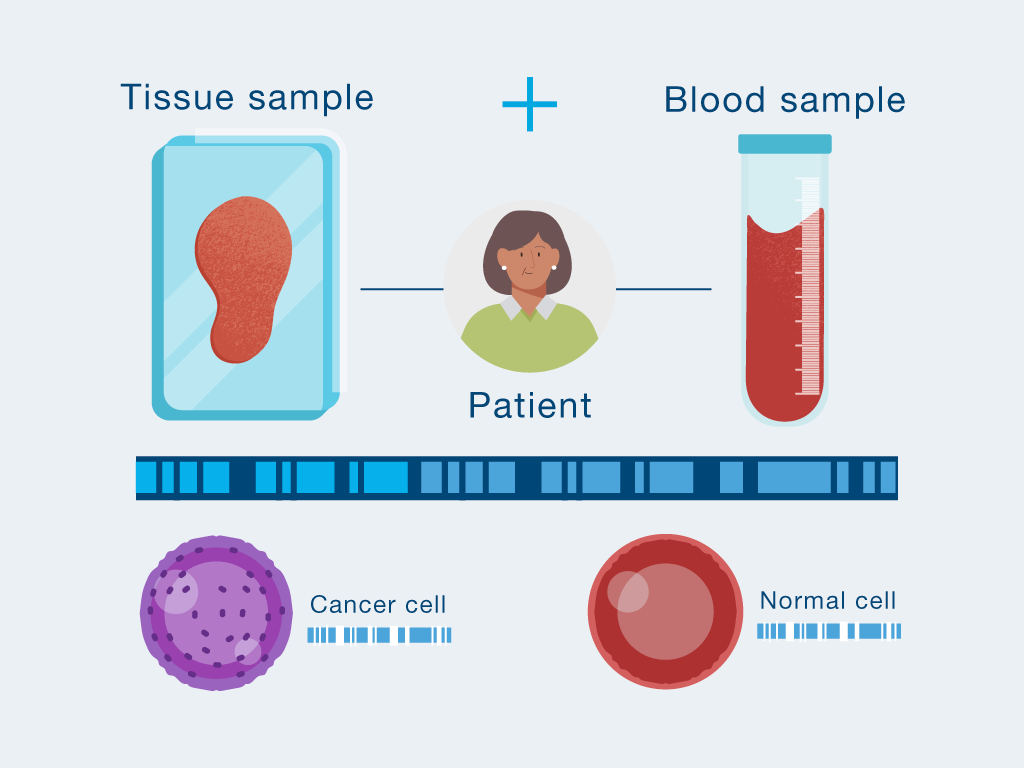
Built from your tumor
Signatera™ is designed using DNA from your tumor tissue, so the test is personalized for you.

A blood draw looks for ctDNA
Your blood sample is checked for small pieces of tumor DNA that match your tumor “fingerprint.”
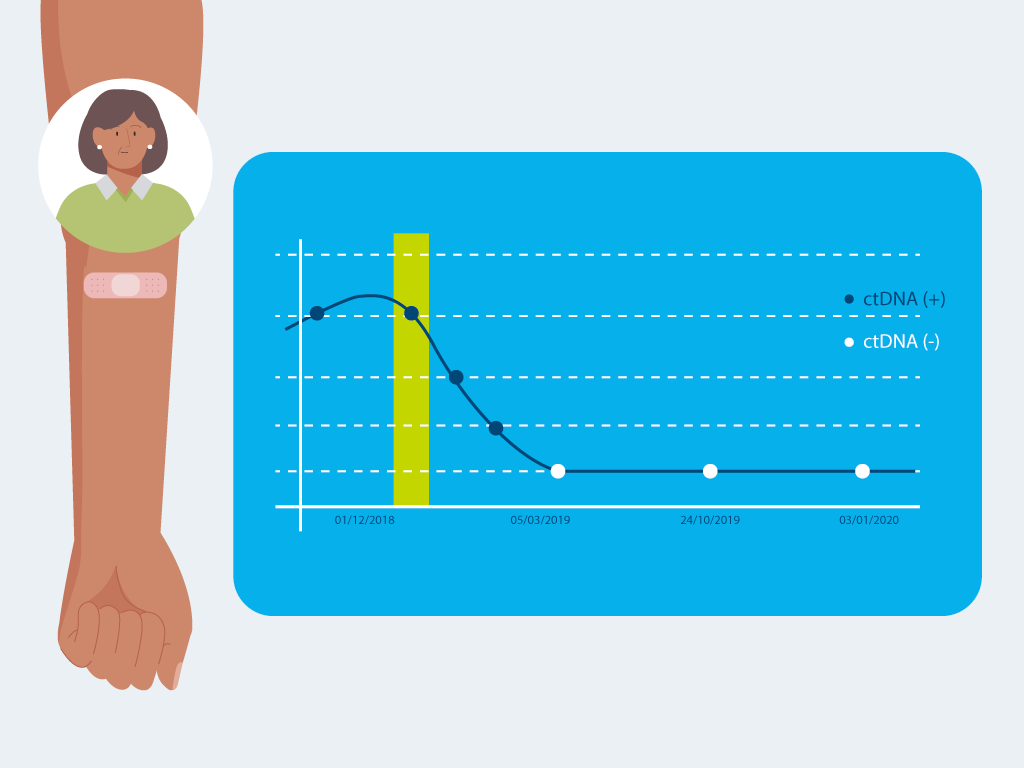
Designed for repeat monitoring
Your doctor may order repeat testing during follow-up to see how results change over time.

When might your doctor order Signatera™?
Your doctor may talk with you about Signatera™ at times like:
- After surgery, once you are far enough into recovery for follow-up bloodwork
- After chemoradiation or other treatment, to help assess follow-up risk
- During routine follow-up visits, to monitor over time alongside scans
Timing and frequency can differ based on your cancer type (esophagus vs stomach), stage, and treatment plan.
Common questions about Signatera™ in esophageal and stomach (gastric) cancer
Is Signatera™ used for esophageal cancer and stomach (gastric) cancer?
Yes. Signatera™ has published studies in esophageal and gastric cancers, including testing after treatment and during follow-up to understand how ctDNA results relate to recurrence risk and outcomes. Ask your care team if it fits your specific diagnosis (for example, esophageal adenocarcinoma vs other subtypes, or gastric vs gastroesophageal junction cancer) and treatment plan.
What does a “positive” ctDNA result mean after surgery or treatment?
A positive result means Signatera™ detected tumor DNA (ctDNA) in your blood that matches your tumor. In published research in esophageal and gastric cancers, ctDNA detection after treatment has been associated with a higher chance of recurrence and with worse outcomes over time. A positive result is not the same as a scan-confirmed recurrence, but it is a strong signal your doctor may consider when deciding next steps in your treatment.
What does a “negative” ctDNA result mean?
A negative result means ctDNA was not detected at that timepoint. That can be reassuring, but it is not a guarantee the cancer will not return. Your doctor will still recommend standard follow-up, such as scans, labs, and physical exams.
If my scan looks clear but Signatera™ is positive, what happens next?
This can happen. ctDNA may sometimes be detected before a recurrence is visible on imaging. Your doctor may repeat the test, move up imaging, or order additional evaluation based on your situation. Decisions are made using the full picture, scans, symptoms, physical exams, and other labs.
Can Signatera™ help show whether treatment is working in esophageal or stomach cancer?
Published studies in gastroesophageal cancers, have evaluated how ctDNA changes during and after treatment relate to therapy response and future risk. Your doctor may analyze ctDNA trends alongside imaging and other tests when discussing response and follow-up planning.
Do I need a tumor sample for Signatera™?
Yes. Signatera™ is a tumor-informed test, which means it is built using DNA from your tumor tissue. After your personalized test is created, follow-up testing is done through blood draws. Your care team can use tumor tissue from your surgery or biopsy.
How often is Signatera™ ordered during follow-up for esophageal or gastric cancer?
There is not one schedule for everyone. Some doctors test patients after surgery, after chemoradiation, and then during surveillance. Your doctor will decide timing and frequency based on your cancer type, stage, and treatment plan, and whether the goal is risk assessment, response monitoring, or ongoing surveillance.
Will Signatera™ replace CT scans, PET scans, endoscopy, or other follow-up tests?
No. Imaging, endoscopy (when needed), lab tests, and clinic visits remain essential parts of care. Signatera™ is designed to add another source of information, not replace standard monitoring tools.
Is Signatera™ for Gastroesophageal cancer right for you?
1Huffman BM, Aushev VN, Budde GL, et al. Analysis of circulating tumor DNA to predict risk of recurrence in patients with esophageal and gastric cancers. JCO Precision Oncology. 2022.
2Ococks E, Sharma S, Ng AWT, et al. Serial ctDNA detection using a personalized, tumor-informed assay in esophageal adenocarcinoma patients following resection. Gastroenterology. 2021.
3Nature Medicine (PANDA). ctDNA findings in gastric and gastroesophageal junction cancers.