
Personalized ctDNA insights in testicular cancer
Signatera™ enables risk stratification and disease monitoring in testicular cancer.¹

Identify
high-risk patients
>5×
higher risk of recurrence.1

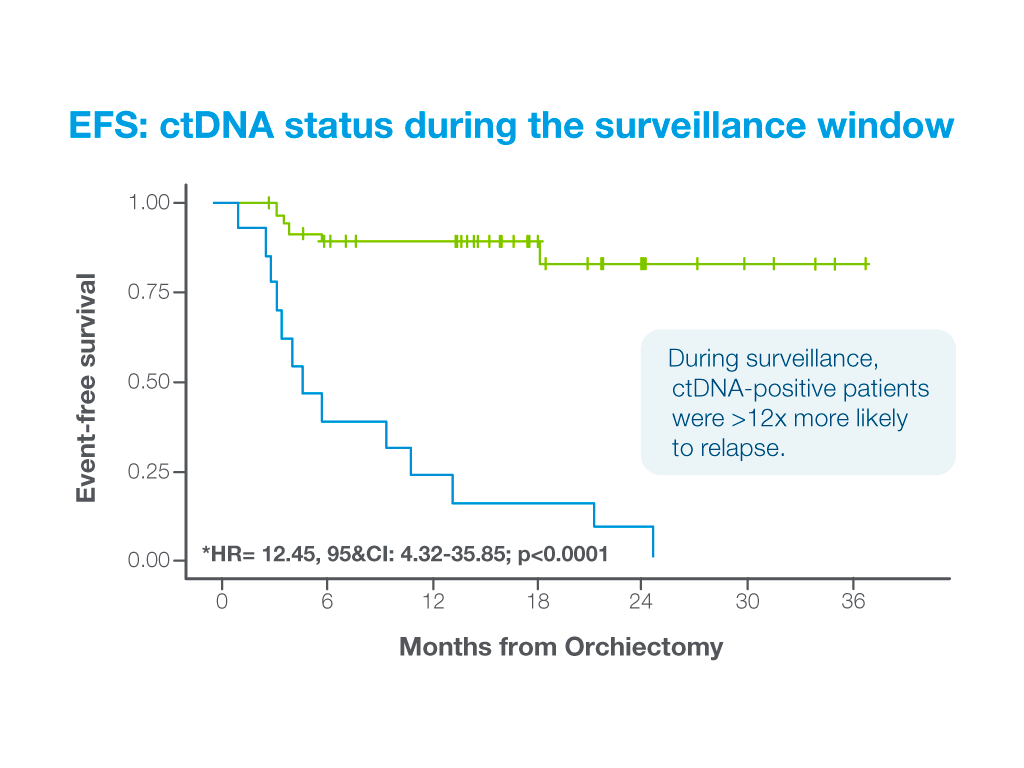
Early detection
during surveillance
>12×
higher likelihood of relapse.1

Superior
to serum tumor markers
100%
vs 0% recurrence in discordant cases.1
Superior prognostic insight beyond serum tumor markers
Serum tumor markers such as AFP, β-hCG, and LDH are routinely used in testicular cancer management, but are normal in up to 40% of patients and can be falsely elevated.¹
Tumor-informed ctDNA testing with Signatera™ may provide a more sensitive and specific approach to detecting molecular residual disease and recurrence.¹
Largest ctDNA cohort in testicular cancer to date
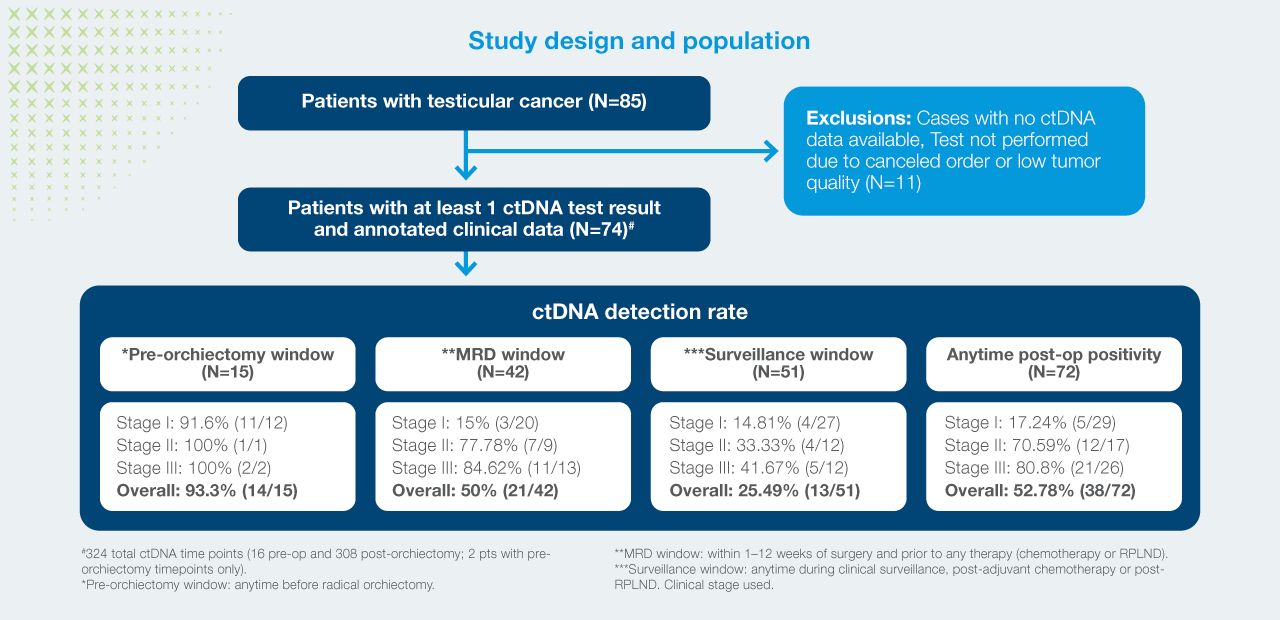
Clinically validated in testicular cancer
Multi-institutional clinical evidence demonstrates Signatera™ ctDNA testing’s prognostic value in testicular cancer.¹
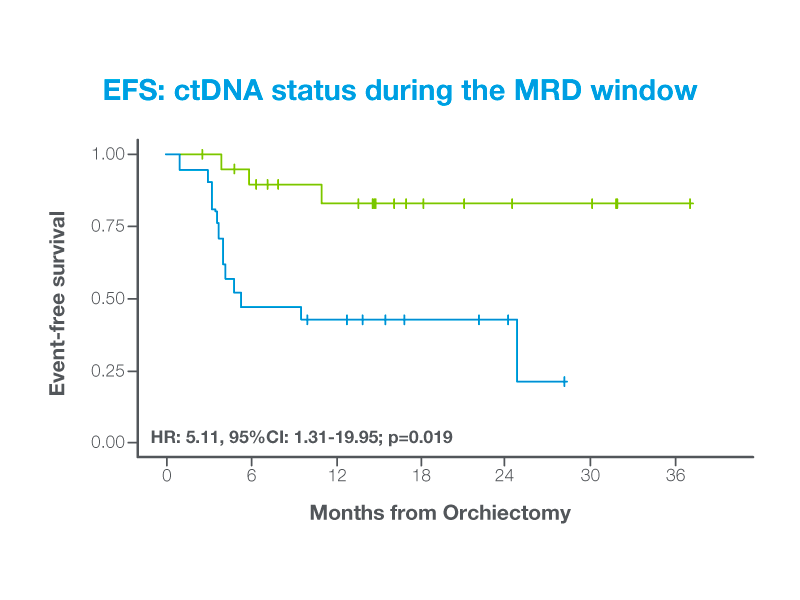
Post-Orchiectomy MRD Window
- ctDNA-positive patients had >5× higher recurrence risk compared with ctDNA-negative patients.¹
- ctDNA positivity during the MRD window was associated with significantly inferior event-free survival (HR=5.11; p=0.019).¹
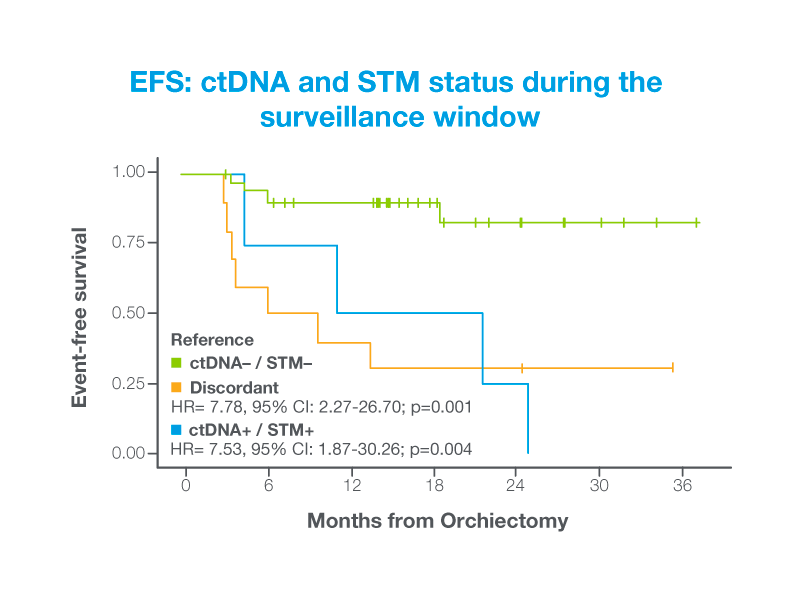
ctDNA vs Serum Tumor Markers
- In the surveillance dataset, all ctDNA-positive/STM-negative patients recurred.¹
- In contrast, no ctDNA-negative/STM-positive patients recurred.¹
- ctDNA status—not serum tumor markers—drove recurrence risk during surveillance.¹
FAQs
How does Signatera™ compare to serum tumor markers in testicular cancer?
Signatera™ demonstrated superior prognostic performance compared with AFP, β-hCG, and LDH. During surveillance ctDNA status, not serum tumor markers, drove recurrence risk.¹
When should Signatera™ be used in testicular cancer?
Signatera™ can be used post-orchiectomy to assess molecular residual disease and during surveillance to monitor for recurrence and guide clinical decision-making.¹
Is Signatera™ for Testicular Cancer right for your patients?
1Hassoun R, et al. Longitudinal Evaluation of Circulating Tumor DNA (ctDNA) as a Prognostic Biomarker to Detect Molecular Residual Disease in Germ Cell Tumors. JCO Precision Oncology. 2025.