
Latitude™ MRD test for colorectal cancer
Latitude™ is a blood test your doctor may use after a colorectal cancer treatment to look for molecular residual disease (MRD), or tiny fragments of cancer that may still be in the body but cannot yet be seen on scans. Latitude™ is a tissue-free test, meaning it does not require a tumor sample to begin testing.
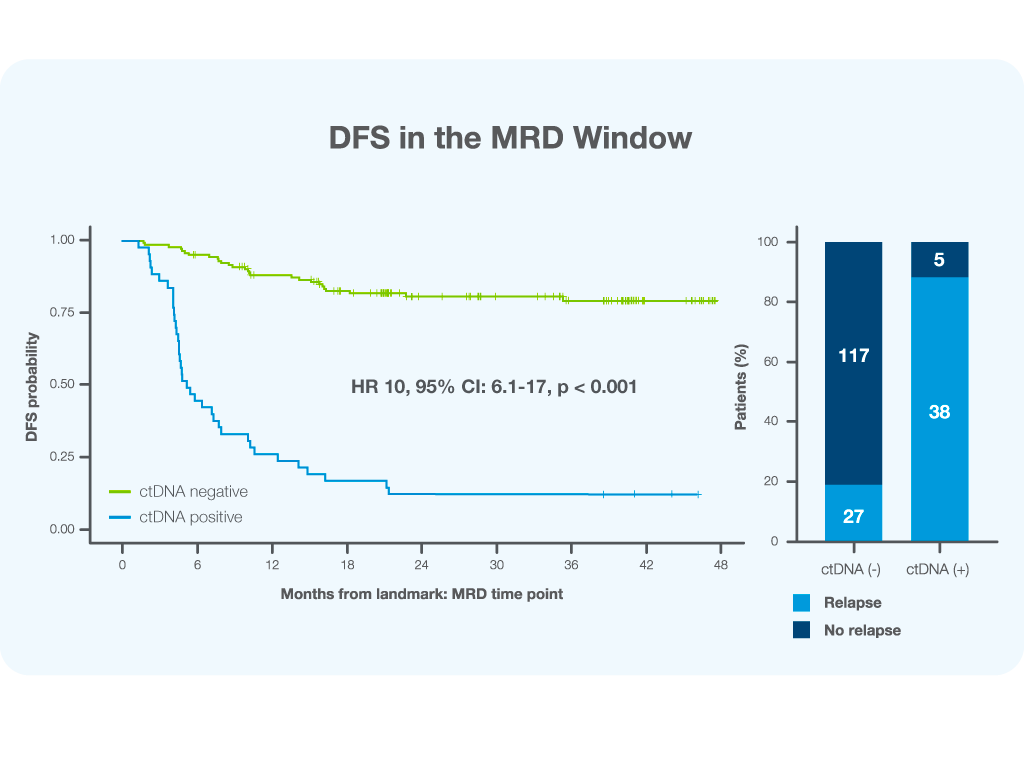
Latitude™ provides clarity after colorectal cancer diagnosis
After surgery or treatment, small fragments of cancer may remain in the body. This is called molecular residual disease (MRD).
Latitude™ is a blood test that looks for MRD to help your doctor better understand your risk of recurrence. Test results may help your care team:
- Identify if cancer may still be present after treatment
- Clarify which patients may need closer monitoring
- Support conversations about next steps
- Additional information alongside scans and other tests
Latitude™ offers a tissue-free approach to MRD testing
Latitude™ is a tissue-free MRD test, meaning it uses only a blood sample and does not require tumor tissue to begin testing.
This may help:
- Simplify the testing process with a result in 14 days
- Avoid delays in getting tumor samples
- Provide another option for monitoring colorectal cancer
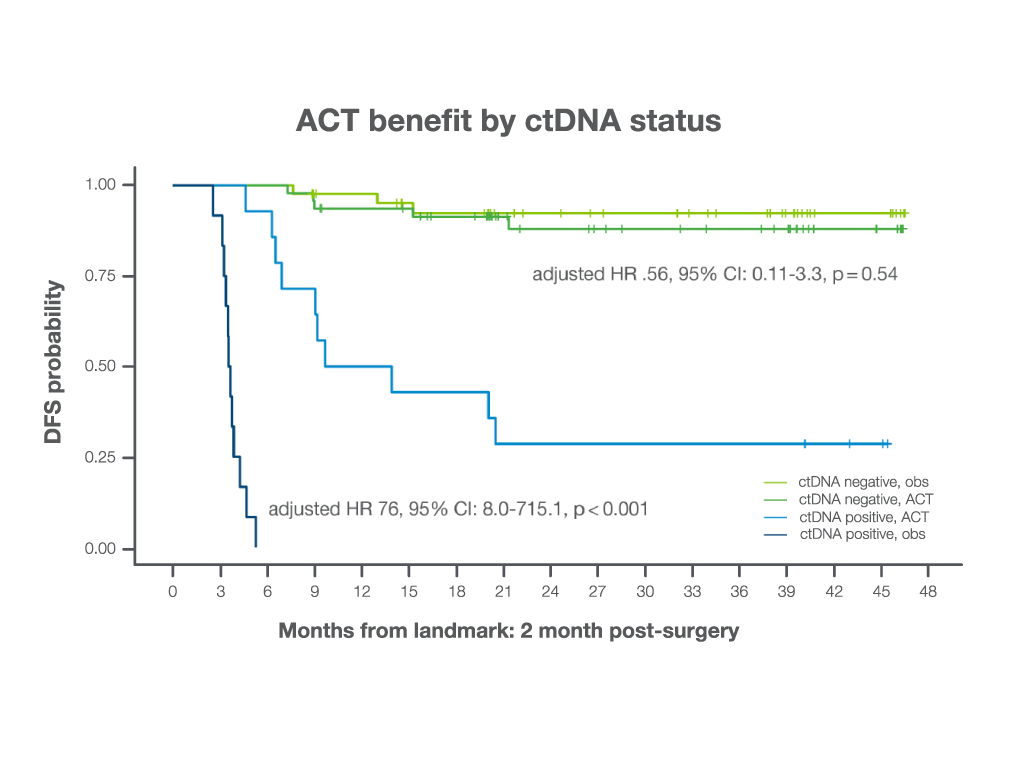
When to talk to your doctor about MRD testing
You may want to talk to your doctor about Latitude™ if you have one or more of the following:
-
Recent surgery
- You have had surgery for colorectal cancer
-
Completed treatment
- You have finished treatment and are entering follow-up care
-
Questions about recurrence
- You want more information about your risk of cancer returning
-
Planning next steps
- You are discussing monitoring or treatment decisions with your care team
-
Ongoing follow-up care
- You are being monitored after treatment and want additional insight beyond imaging
A simple blood test ordered by your doctor
Latitude™ is a blood test your doctor orders to help monitor for molecular residual disease.

Your doctor orders the test
Latitude™ must be ordered by a healthcare provider as part of your care

You provide a blood sample
The test is performed from a blood draw and does not require tumor tissue

Your doctor reviews your results
Your doctor will discuss what your results may mean for your care and follow-up plan
There are two possible results from a Latitude™ test
Your Latitude™ result is one piece of information your doctor may use to guide your care.
MRD Detected
A signal associated with cancer was detected in your blood. Your doctor may use this information to consider closer monitoring or discuss next steps in your care.
MRD Not Detected
No signal associated with cancer was found in your blood at the time of testing. Your doctor will continue to monitor you and use this result along with other clinical information.
What is MRD testing?
Watch this short video to learn how MRD testing works and how it may be used after colorectal cancer treatment.
Affordable access to testing
Natera is committed to making testing accessible.
The cost of Latitude™ may vary depending on your insurance coverage. Natera offers support to help you understand your options, including:
- Insurance verification support
- Self-pay options
- Financial assistance programs for eligible patients

Frequently asked questions about Latitude™ testing
What is MRD?
MRD stands for molecular residual disease. It refers to very small fragments of cancer that may remain in the body after treatment and may not be visible on imaging.
How is Latitude different from Signatera?
Latitude™ is a tissue-free MRD test, meaning it does not require a tumor sample and uses a blood draw only.
Do I need tumor tissue for this test?
No. Latitude™ does not require tumor tissue.
Can I order Latitude™ myself?
No. Latitude™ must be ordered by a healthcare provider.
How is this test used?
Latitude™ may be used after colorectal cancer diagnosis to help monitor for molecular residual disease as part of your follow-up care.
Will my insurance cover this test?
Coverage varies depending on your insurance plan. Natera offers support to help you understand your coverage and options.
Is Latitude™ right for you?
1Nakamura Y, et al. Validation of a methylation-based, tissue-free MRD assay in colorectal cancer patients from the GALAXY study. npj Precision Oncology. 2026.