
Sarcoma is rare, heterogeneous and has a surveillance paradox
A surveillance gap: Current sarcoma follow-up guidelines lack a tailored, evidence-based approach for early recurrence detection. The frequency and timing of follow-up and appropriate screening modalities continue to be significant clinical gaps.

Year 1: Annual Recurrence Risk
~28%
HIGH-GRADE STS
Nearly 1 in 3 high-grade soft-tissue sarcoma (STS) patients will develop a recurrence within the first year alone.¹

Year 1: Guideline-Concordant Follow-Up
24%
PATIENTS COMPLIANT
Only 1 in 4 patients received the ASMO-EURACAN / NCCN-advised three follow-up visits.¹
Sarcoma surveillance needs personalized approach
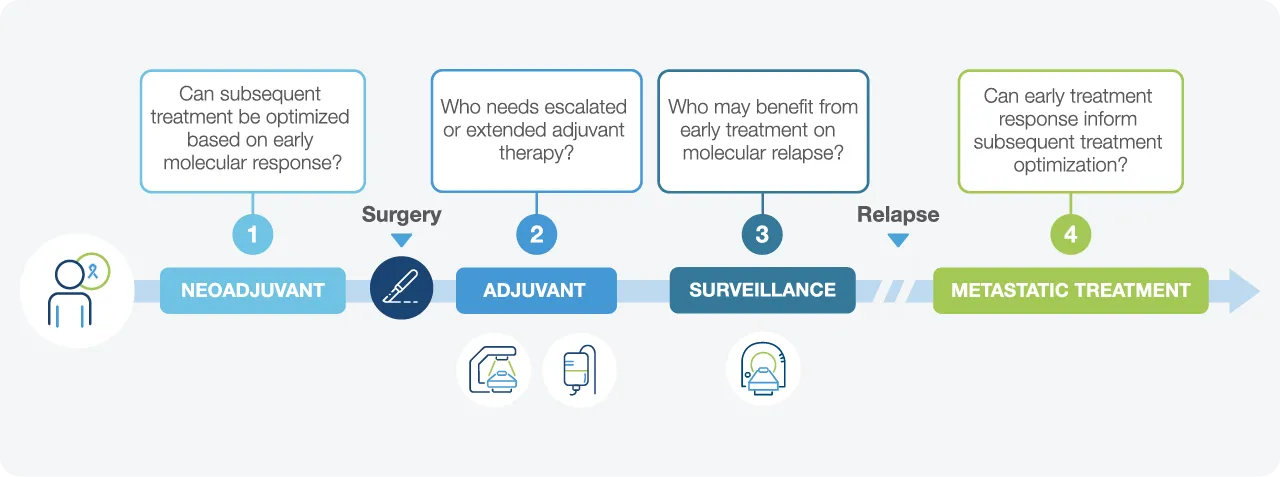
Signatera™ addresses the surveillance gap
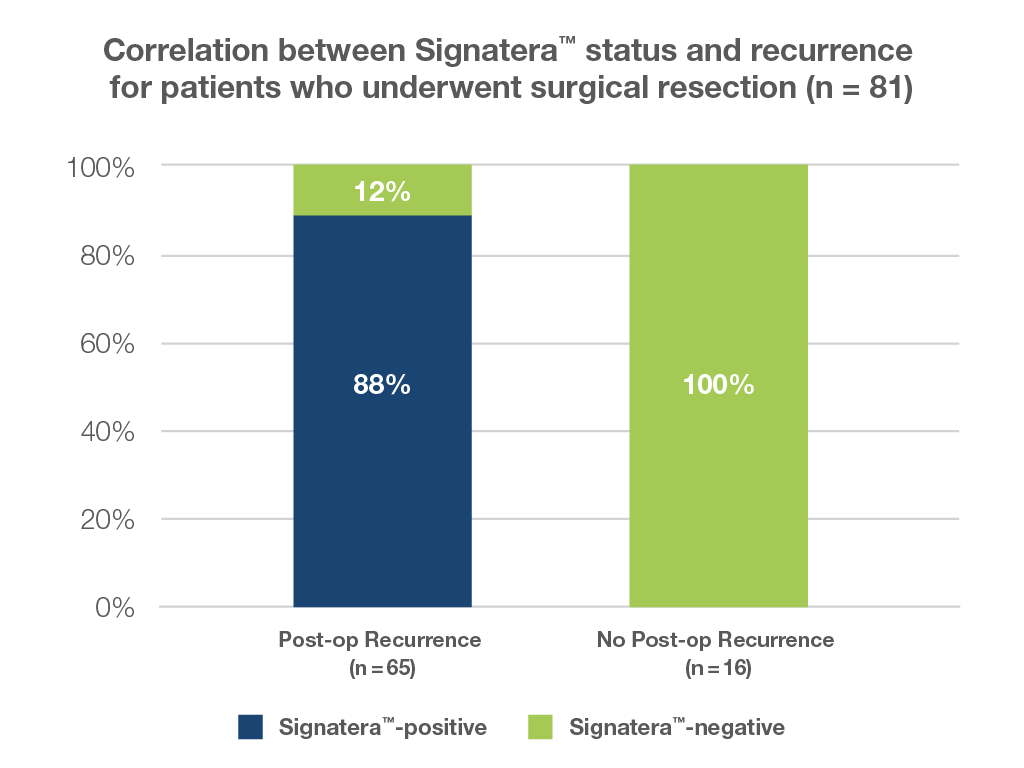
Largest sarcoma study in >15 subtypes demonstrated Signatera™ could help better detect recurrences and measure response to treatment. The study assessed the correlation of Signatera™ results with imaging, stratified by sarcoma subtype, and followed patients through treatment, progression, and surveillance.²
Detect recurrence early and monitor treatment response with Signatera™
Signatera™ detected sarcoma recurrence with 89% sensitivity and 100% specificity across tumor sites and subtypes
Is Signatera™ for Sarcoma right for your patients?
We’re here to help you find out
1Kruiswijk AA, et al. Follow-Up after Curative Surgical Treatment of Soft-Tissue Sarcoma for Early Detection of Recurrence: Which Patients Have More or Fewer Visits than Advised in Guidelines? Cancers (Basel). 2023 Sep 18;15(18):4617.
2Sun B, et al. Using circulating tumor DNA to monitor sarcoma treatment and recurrence. Presented at the 2025 SSO Annual Meeting.