


The signal that changes everything
Signatera™ Genome is the only MRD test capable of tracking Phased, Structural, and Single Nucleotide Variants, with market-leading detection demonstrated below 0.1 PPM.1


Redefining the standard for ultrasensitive MRD

Phased and Structural Variants lower background error rate, enabling
market-leading detection below 0.1 PPM1,2
-
Clonal SNVs

-
Phased Variants

-
Structural Variants

Higher prevalence
Lower prevalence

Lower error suppression
Higher error suppression
-
Probability of error
1/10K
-
Probability of error
1/100M
-
Probability of error
<1/100M

Higher prevalence
-
Clonal SNVs
Probability of error
1/10K
-
Phased Variants
Probability of error
1/100M
-
Structural Variants
Probability of error
<1/100M
Lower prevalence
Signatera Genome with Phased and Structural Variants



-
Identify tumor-specific variants
Whole Genome Sequencing of
tumor + matched normal Tumor tissue
Germline sample
-
Design Personalized Assay
Custom assay targeting patient-specific PVs, SVs, and SNVs
- SNVs
- Phased Variants (PVs)
- Structural Variants (SVs)
- SNVs
-
Track ctDNA over time
Serial plasma monitoring using the patient-specific assay
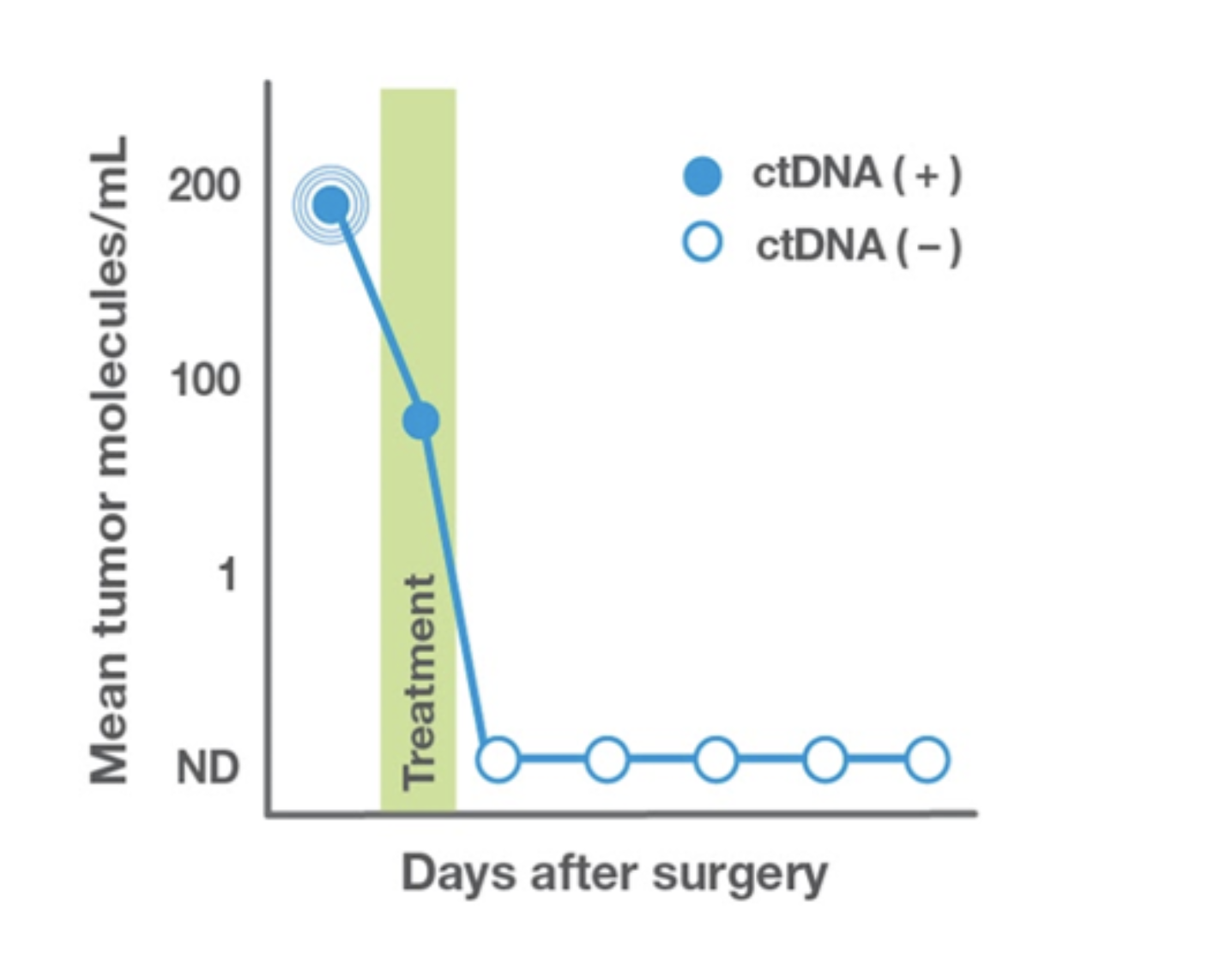
Breaking barriers in clinical performance
Signatera status was prognostic during post-1L surveillance4
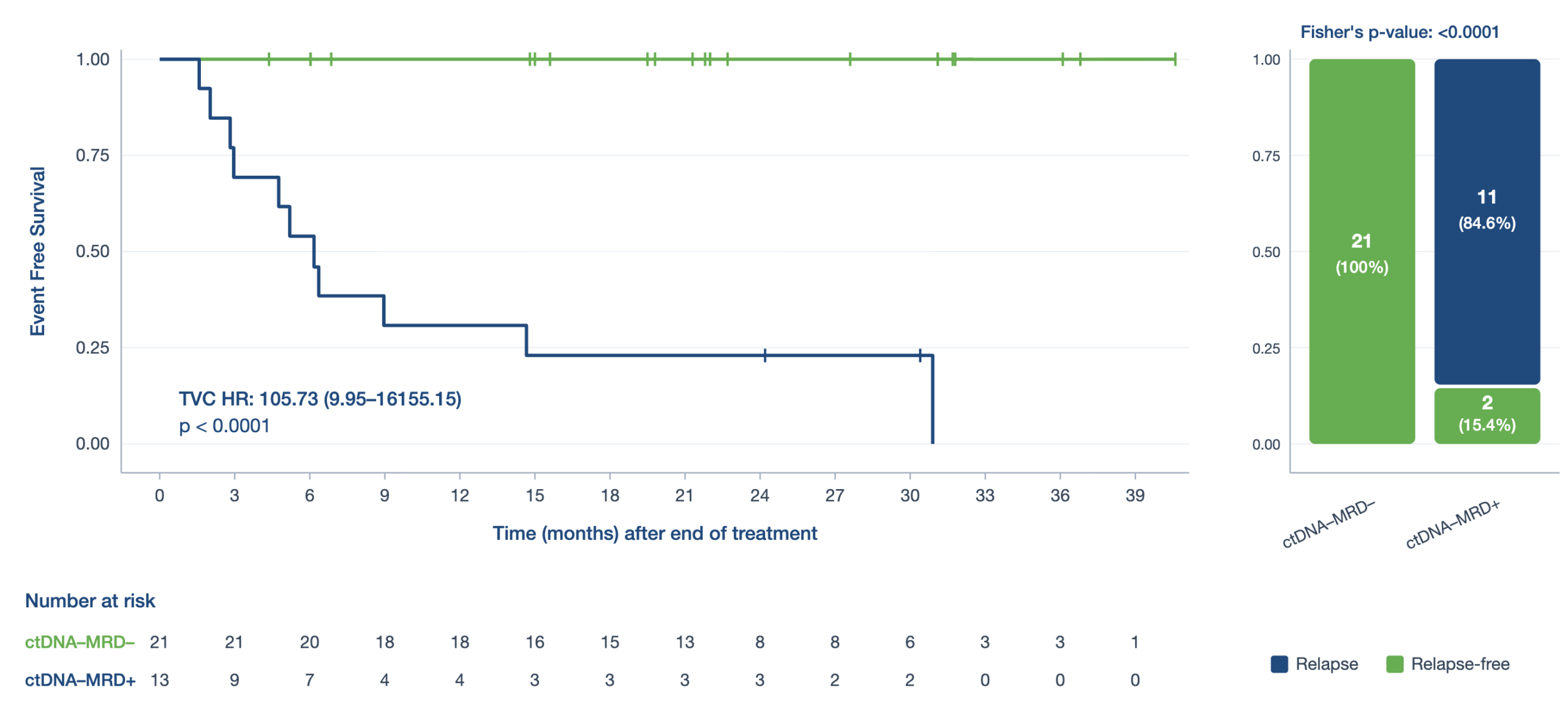
Applications in clinical development
Lower detection thresholds for higher-confidence decisions
-
Broader patient selection
Lower detection thresholds for higher-confidence decisions
-
Deeper response assessment
Greater confidence in ctDNA clearance for earlier
efficacy assessment
Updates & resources
 Webinar
Signatera Genome: Unlocking the next level of ultrasensitive MRD detection with Phased Variant technology
 Article
The signal that changes everything: understanding MRD in oncology drug development
 Press Release
Natera Expands Precision Diagnostics Portfolio for Biopharma at ESMO Congress 2026

Request more information
Access technical and clinical performance data, or schedule a consultation for your assay design and trial strategy.
* Indicates a required field
References
- Analytical limit of detection demonstrated by Signatera Genome in a cell line dilution study. Signatera Genome with PVs and SVs available as a Research Use Only (RUO) assay. Natera data on file.
- Data Source: Kurtz et al. Nature Biotechnol 2021, Isbell et al. AACR Annual Mtg 2023, Cabel et al. ESMO Annual Mtg 2024. Error rates shown are for hybrid capture-based sequencing
- Natera internal data, as of Jan 2026
- William B, Galanina N, Iqbal M, et al. ctDNA-Based MRD as a Dynamic Biomarker for Monitoring Treatment Response and Relapse in Lymphoma. SOHO 2026 Annual Meeting, Houston, TX, September 9-12, 2026


